Chapter 1: Breakfast
Podhale (Tatra foothills)
Podhale sits at the foot of the Tatra Mountains in southern Poland, a highland region long defined by shepherding and a farming tradition suited to steep terrain and short growing seasons. Its mountain pastures produce some of Poland’s most distinctive dairy, including the smoked sheep’s cheese oscypek, and its farmhouses have historically run on an early, substantial breakfast before a full day tending animals or working the land.
Keep reading about Podhale (Tatra foothills)
That highland rhythm — up before dawn, fed well before the real work starts — still shapes the way breakfast is treated across rural Poland more broadly, even far from the mountains themselves.
It felt like the right anchor for a chapter about Polish breakfast. Few regions tie an early start, hard work, and a genuinely hearty morning table together as directly as the highlands of Podhale.
Recipes in this chapter
- Polish Jajecznica, Scrambled Eggs with Kielbasa
- Polish Placki-less Cauliflower Pancakes & Eggs
- Polish Twaróg & Egg Skillet, Farmer’s Cheese
- Polish Kiełbasa & Egg Hash, Cauliflower Base
- Polish Racuchy-less Almond Pancakes, Sugar-Free
- Polish Boczek & Egg Skillet, Smoked Bacon
- Polish Serowe Naleśniki-less Crepe, Almond Flour, Cheese Filling
Chapter 2: Snacks & Appetizers
Rynek Główny / Sukiennice (Cloth Hall)
Rynek Główny in Kraków is one of the largest medieval town squares still in continuous use in Europe, its layout essentially unchanged since the 13th century. At its center stands the Sukiennice, the Cloth Hall, a covered market that has sold goods on the same spot for over 700 years, its ground floor still lined with stalls today.
Keep reading about Rynek Główny / Sukiennice (Cloth Hall)
That unbroken market tradition — vendors, cured meats, cheese, and small bites sold and eaten standing up — is a fitting anchor for a chapter built around exactly that kind of food.
It felt like the obvious place to open a chapter about Polish snacks and appetizers. Few squares in Europe have functioned as a working market for as long, or as continuously, as this one.
Recipes in this chapter
Chapter 3: Soups & Stews
Old Town (Stare Miasto)
Warsaw’s Old Town was almost entirely destroyed during the Second World War, then rebuilt from the 1940s onward using historical paintings, photographs, and architectural records to reconstruct it with remarkable accuracy. UNESCO recognized the reconstruction itself as a landmark achievement, a rare case where a place earned World Heritage status for how faithfully it was rebuilt rather than for surviving unchanged.
Keep reading about Old Town (Stare Miasto)
That same instinct — painstakingly preserving something worth keeping — runs through Poland’s soup tradition too, recipes passed down and guarded through generations of change.
It felt like a fitting anchor for a chapter about Polish soups and stews. Few places capture the country’s determination to hold onto what matters quite as directly as a square rebuilt stone by stone.
Recipes in this chapter
- Polish Żurek, Sour Rye Soup, Cauliflower Adapted
- Polish Bigos, Hunter’s Stew
- Polish Flaki, Tripe Soup
- Polish Barszcz Czerwony, Beet Soup
- Polish Zupa Ogórkowa, Dill Pickle Soup
- Polish Zupa Grzybowa, Wild Mushroom Soup
- Polish Kapuśniak, Cabbage Soup
- Polish Zupa Szczawiowa, Sorrel Soup
- Polish Chłodnik, Cold Beet Soup
Chapter 4: Seafood
Gdańsk
Gdańsk has been a major Baltic port for over a thousand years, its wealth built on the amber and grain trade that once made it one of the richest cities in the Hanseatic League. The city’s long waterfront, lined with historic granaries and crane towers, still faces the same cold Baltic waters that have supplied Polish tables with herring, cod, and smoked fish for generations.
Keep reading about Gdańsk
That coastal trading history runs directly through Poland’s seafood tradition — smoking and curing techniques refined over centuries of needing to preserve a catch before it could travel inland.
It felt like the natural anchor for a chapter about Polish seafood. Few Polish cities are tied to the Baltic quite as deeply, or for quite as long, as Gdańsk.
Recipes in this chapter
Chapter 5: Chicken & Poultry
Masurian Lake District (Mazury)
The Masurian Lake District in northeastern Poland is home to over two thousand lakes, carved by retreating glaciers thousands of years ago into a landscape of forests, waterways, and small farming villages. Its rural communities have long raised chickens, ducks, and geese alongside the region’s farming and fishing traditions, poultry roasted whole for Sunday meals and holiday gatherings.
Keep reading about Masurian Lake District (Mazury)
That farmhouse rhythm — a bird in the oven most of the day, filling the house with smell before the meal itself — still defines Sunday cooking across much of rural Poland.
It felt like a fitting anchor for a chapter about Polish poultry. Few regions hold onto that unhurried, farmhouse Sunday tradition quite as visibly as the lake country of Mazury.
Recipes in this chapter
- Polish Kurczak Pieczony, Roast Chicken, Farmhouse Style
- Polish Rosół Chicken, Shredded from Broth
- Polish Kurczak w Śmietanie, Chicken in Sour Cream
- Polish Kaczka Pieczona, Roast Duck
- Polish Kotlet Schabowy-Adjacent Chicken Cutlet, Almond Crust
- Polish Kurczak z Rożna, Rotisserie Chicken
- Polish Gęś Pieczona, Roast Goose
- Polish Indyk Pieczony, Roast Turkey, Herb Butter
- Polish Grilled Chicken Skewers, Marjoram
Chapter 6: Beef
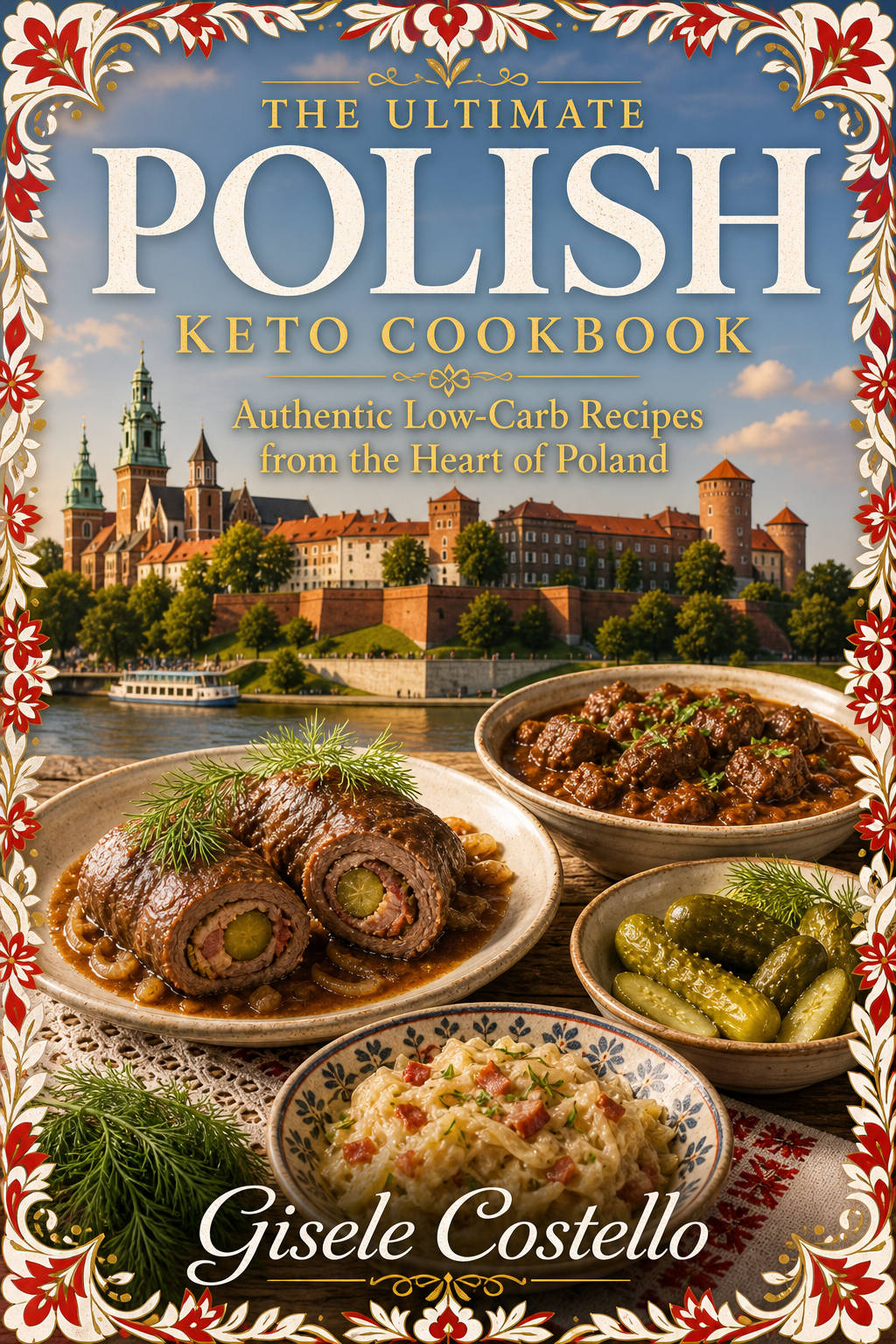
Wawel Castle
Wawel Castle has stood above Kraków on its limestone hill for nearly a thousand years, serving as the residence of Polish kings for centuries before the capital moved to Warsaw. Its royal kitchens once prepared elaborate feasts for coronations and state occasions, beef and game roasted whole for banquets that could last for days.
Keep reading about Wawel Castle
That sense of occasion — beef reserved for something worth marking — still runs through the way many Polish households treat it today, a Sunday roast rather than a Tuesday dinner.
It felt like a fitting anchor for a chapter about Polish beef. Few places in the country carry quite the same weight of royal feasting and formal occasion as the hill above the Vistula.
Recipes in this chapter
- Polish Zrazy Zawijane, Beef Roulade
- Polish Gulasz Wołowy, Beef Goulash, Polish Style
- Polish Rolada Śląska, Silesian Roulade
- Polish Sztuka Mięsa, Boiled Beef with Horseradish
- Polish Befsztyk Tatarski, Keto Adapted
- Polish Klopsiki in Dill Sauce
- Polish Pieczeń Wołowa, Roast Beef, Farmhouse Style
- Polish Flaki Wołowe, Beef Tripe Stew
- Polish Grillowany Antrykot, Grilled Ribeye
Chapter 7: Pork
Silesia (Śląsk)
Śląsk — Silesia — in southwestern Poland has long been one of the country’s most industrious regions, its coal mining and heavy industry historically supporting large working populations that needed substantial, satisfying meals. That practical, hearty food culture produced some of Poland’s most iconic pork dishes, kotlet schabowy and rolada śląska chief among them.
Keep reading about Silesia (Śląsk)
That same instinct — real, filling food built to fuel a full day of hard physical work — still defines the region’s approach to pork today.
It felt like the obvious anchor for a chapter about Polish pork. Few regions are as closely tied to the country’s most iconic pork dishes as the industrious heartland of Silesia.
Recipes in this chapter
- Polish Kiełbasa, Grilled with Mustard
- Polish Schab Pieczony, Roast Pork Loin
- Polish Golonka, Braised Pork Hock
- Polish Kotlet Schabowy, Almond Flour Crust
- Polish Boczek Wędzony, Smoked Bacon
- Polish Karkówka Grillowana, Grilled Pork Neck
- Polish Żeberka, Pork Ribs, Sugar-Free Glaze
- Polish Bigos Myśliwski, Extra Meat Variation
Chapter 8: Regional Meats & Game
Białowieża Forest
Białowieża Forest, straddling the border between Poland and Belarus, is one of the last and largest remaining fragments of the primeval forest that once covered much of the European lowlands. It’s home to the European bison, reintroduced here after near-extinction, alongside wolves, lynx, and a genuinely wild population of deer and boar that has shaped hunting tradition in this region for centuries.
Keep reading about Białowieża Forest
That deep forest, largely untouched by modern agriculture, is precisely the kind of landscape that produced Poland’s game-hunting tradition in the first place.
It felt like the only honest place to anchor a chapter about Polish game. Few forests in Europe carry the same weight of wildness, or the same direct connection to what actually ends up on a hunter’s table.
Recipes in this chapter
Chapter 9: Vegetables & Side Dishes
Greater Poland (Wielkopolska)
Wielkopolska — Greater Poland — in the west-central part of the country is considered the historical birthplace of the Polish state, its fertile plains supporting agriculture since the earliest days of Polish settlement. The region’s farmland has long produced the cabbage, beets, and root vegetables that anchor so much of the country’s everyday side-dish tradition.
Keep reading about Greater Poland (Wielkopolska)
That deep agricultural history — vegetables grown to store through a long winter, not just for a single summer meal — runs directly through the way Poland still treats its sides today.
It felt like the fitting anchor for a chapter about Polish vegetables and sides. Few regions carry quite the same weight as the historic farmland where Poland itself began.
Recipes in this chapter
- Polish Kapusta Kiszona, Braised Sauerkraut
- Polish Buraczki, Braised Beetroot Side
- Polish Mizeria, Cucumber & Sour Cream Salad
- Polish Kapusta Zasmażana, Braised Cabbage
- Polish Cauliflower Kluski, Almond Flour Dumplings
- Polish Carrot & Cauliflower Sauté
- Polish Grzyby Marynowane, Pickled Mushrooms
- Polish Cauliflower & Bacon Bake
- Polish Buraki Zasmażane, Sautéed Beets
Chapter 10: Salads
Mazovia (Mazowsze)
Mazowsze — Mazovia — sits at the geographic and historical center of Poland, its flat, fertile plains surrounding Warsaw and supporting agriculture since the region’s earliest settlement. Its farms have long grown the cabbage, cucumber, and root vegetables that anchor Polish salads, close enough to the capital to supply its markets directly for centuries.
Keep reading about Mazovia (Mazowsze)
That central, practical position — neither coastal nor mountainous, just steady and productive — mirrors the role these salads play on a Polish table: not the centerpiece, but essential all the same.
It felt like a fitting anchor for a chapter about Polish salads. Few regions are as quietly central to the country’s everyday table as the plains surrounding its capital.
Recipes in this chapter
Chapter 11: Sauces & Condiments
Toruń
Toruń, a well-preserved medieval city on the Vistula River, built much of its historic wealth on the spice trade, its merchants importing and reselling the ingredients that flavored Polish kitchens for centuries. The city is still famous today for pierniki, its traditional spiced gingerbread, a direct legacy of that trading history.
Keep reading about Toruń
That connection to spice and flavor — the small, concentrated ingredients that transform a dish — felt like the natural anchor for a chapter about sauces and condiments.
It felt like the right anchor for a chapter about spice blends and sauces. Toruń is where so much of what flavors this book’s dishes would have actually entered Poland, bought by the sack rather than the jar.
Recipes in this chapter
Chapter 12: Desserts
Stary Rynek (Old Market Square)
Poznań’s Stary Rynek is one of Poland’s most beautiful town squares, its colorful Renaissance merchant houses surrounding a town hall famous for its mechanical goats that emerge and butt heads every day at noon. The city has long been a center of trade and craft, its bakeries and confectioners producing the kind of elaborate holiday sweets — St. Martin’s croissants chief among them — that this region is still known for.
Keep reading about Stary Rynek (Old Market Square)
That same tradition of careful, celebratory baking runs through this chapter, sernik and mazurek both genuinely occasion-worthy desserts rather than everyday treats.
It felt like a fitting anchor for a chapter about Polish desserts. Few squares in the country carry quite the same reputation for confectionery and craft as the market square at Poznań’s heart.
Recipes in this chapter
- Polish Sernik, Keto Cheesecake
- Polish Pierniki-Style Almond Spice Cookies, Sugar-Free
- Polish Szarlotka-less Almond Tart, Sugar-Free
- Polish Mazurek-Style Almond Bites, Sugar-Free
- Polish Faworki-Style Almond Crisps, Sugar-Free
- Polish Kisiel-Style Berry Pudding, Sugar-Free
- Polish Makowiec-Style Poppy Seed Roll, Sugar-Free
- Polish Racuchy Almond Bites, Sugar-Free
- Polish Budyń Waniliowy, Vanilla Pudding, Sugar-Free
Chapter 13: Beverages
Vistula River (Wisła)
The Wisła — the Vistula — runs the full length of Poland, from the Carpathian foothills in the south through Kraków and Warsaw before reaching the Baltic at Gdańsk. It has shaped Polish life for millennia, its banks home to the country’s largest cities and its waters a source of both trade and, historically, drinking water for the towns along its length.
Keep reading about Vistula River (Wisła)
That sense of something flowing quietly through the whole country, connecting everything else in this book, felt like the right note to end on.
It felt like the fitting way to close this book. The Vistula runs through nearly everywhere else in these pages — Kraków, Warsaw, Toruń, Gdańsk — much the way a simple cup of something warm closes out a Polish meal.
Recipes in this chapter