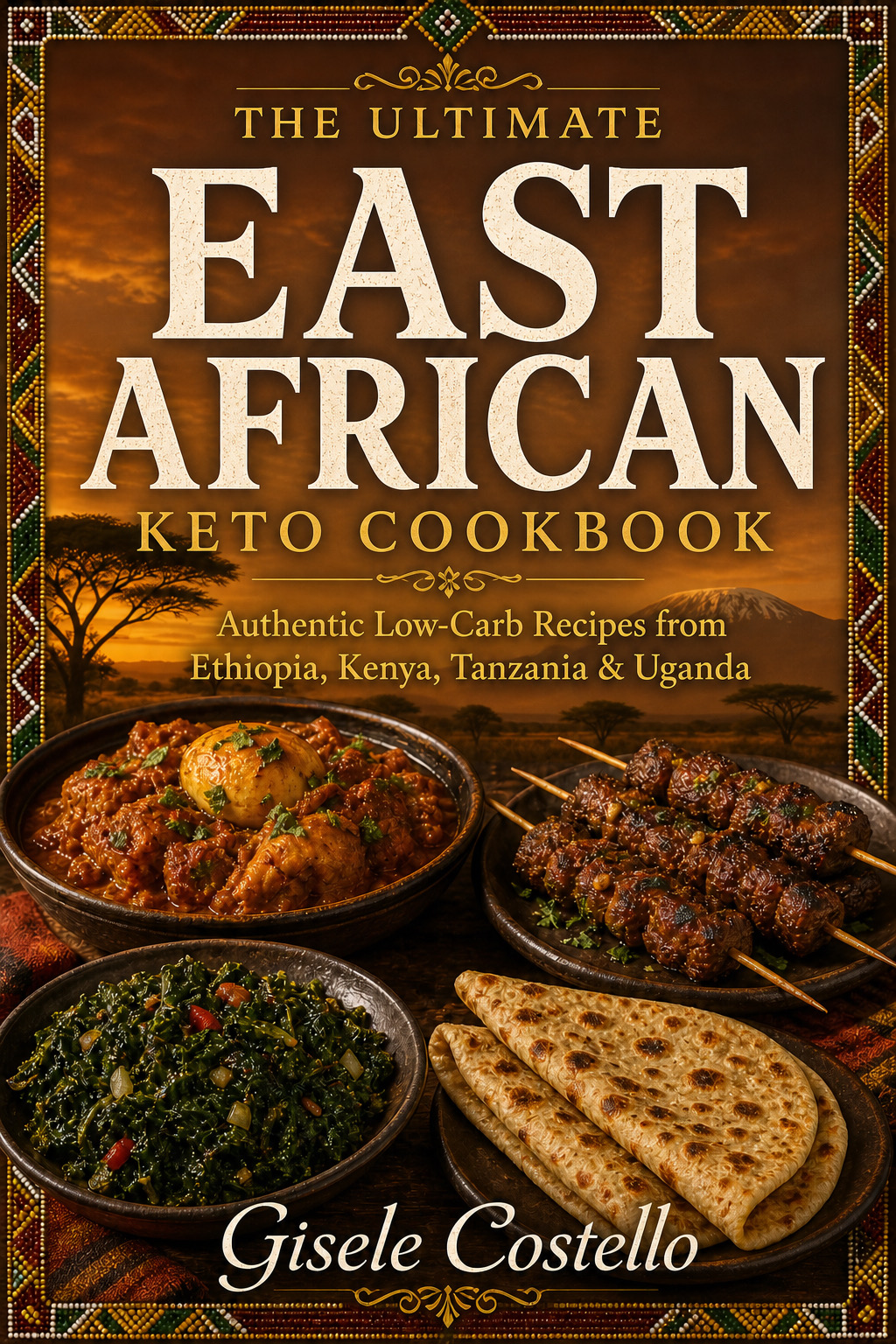
East Africa Keto Cookbook
Table of Contents · 78 recipes in 13 chapters
Chapter 1: Breakfast
Rock-hewn churches of Lalibela
In the 12th century, King Lalibela set out to build a “New Jerusalem” in the Ethiopian highlands — eleven churches carved directly downward into solid volcanic rock, rather than built up from the ground. Legend holds that angels finished the work overnight whenever the human laborers rested. Today, Lalibela remains one of the most extraordinary religious sites on Earth, and one of the most visited destinations in Ethiopia — a genuine UNESCO World Heritage Site that draws pilgrims and travelers alike.
Keep reading about Rock-hewn churches of Lalibela
The town around the churches sits at nearly 8,000 feet, in the cool northern highlands where Ethiopia’s oldest culinary traditions still run strongest — thick spiced stews, fermented flatbread, and coffee ceremonies that can last an hour. It’s a landscape of stone and incense and quiet, unhurried mornings.
It felt like the obvious place to open a book about East African breakfast. Few images capture the region’s depth and history quite as completely as eleven churches, still standing, still in daily use, nearly nine centuries after the first stone was cut.
Recipes in this chapter
Chapter 2: Snacks & Appetizers
Maasai Mara
Each year, roughly two million wildebeest, zebra, and gazelle cross between Kenya’s Maasai Mara and Tanzania’s Serengeti in one of the largest land migrations on Earth — a spectacle that has made the Mara one of the most visited wildlife destinations anywhere in the world. Named for the Maasai people who have herded cattle across this savanna for centuries, the reserve remains as much a living cultural landscape as a wildlife one.
Keep reading about Maasai Mara
The Maasai themselves are inseparable from this land — their red shuka cloth, their beadwork, and their deep cattle-centered way of life have shaped the region’s food culture as much as its visual identity. Grilled meat, eaten simply and without excess, remains central to how people gather here.
It’s fitting ground for a chapter built on quick, portable, grilled food — the same instinct for simple, direct cooking over open flame that has defined this landscape for generations, still visible today in every roadside skewer stand across the region.
Recipes in this chapter
Chapter 3: Soups & Stews
Simien Mountains
Rising sharply out of the Ethiopian highlands, the Simien Mountains form one of Africa’s most dramatic landscapes — a UNESCO World Heritage Site since 1978, carved by millions of years of erosion into jagged peaks, sheer escarpments, and valleys that drop more than a mile straight down. Ras Dashen, Ethiopia’s tallest peak at over 14,000 feet, anchors the range and draws trekkers from across the world.
Keep reading about Simien Mountains
This high, cool country is where Ethiopia’s oldest highland cooking traditions took shape — thick, spiced stews built to sustain herders and farmers through cold mountain nights, simmered for hours over open fire while the weather did what it does at altitude. The wat stews that define this chapter owe as much to this landscape as to any spice blend.
It felt like the natural anchor for a chapter built on slow-simmered stews. Few landscapes on the continent have shaped a cuisine’s patience quite as directly as these mountains have shaped Ethiopia’s.
Recipes in this chapter
- Ethiopian Doro Wat, Berbere-Spiced Chicken Stew
- Kenyan Mchuzi wa Samaki, Fish Curry
- Tanzanian Mtori, Beef & Cauliflower Soup
- Ugandan Groundnut Stew, Vegetable-Forward Style
- Ethiopian Shiro Wat, Almond Flour Base
- Kenyan Sukuma Wiki Stew-Side
- Ethiopian Misir Wat, Cauliflower Lentil-Free Stew
- Tanzanian Coconut Fish Stew, Zanzibar Style
- Ugandan Chicken & Peanut Stew
Chapter 4: Seafood
Stone Town
Stone Town has sat at the center of Indian Ocean trade for over a thousand years — a genuine UNESCO World Heritage Site where Omani, Persian, Indian, and African influences layered into a single, unmistakable architectural and culinary identity. Its narrow coral-stone streets, carved wooden doors, and rooftop spice markets still carry the same trading energy that first drew merchants here centuries ago.
Keep reading about Stone Town
That trade is exactly what built the coastal cooking in this chapter. Cardamom, clove, cinnamon, and coconut arrived by dhow long before refrigeration or modern shipping, and local cooks folded them permanently into the region’s fish and shellfish traditions — coconut curries, char-grilled whole fish, and the warm-spiced marinades that still define Zanzibar’s kitchens today.
It felt like the natural anchor for a chapter built on coastal seafood. Few places on Earth show quite so clearly how a spice trade can become a cuisine.
Recipes in this chapter
Chapter 5: Chicken & Poultry
Lake Victoria
Lake Victoria is Africa’s largest lake by surface area and the primary source of the Nile, its shoreline shared by Uganda, Kenya, and Tanzania in roughly equal measure. Fishing communities have worked its waters for generations, but the lake region’s farmland is just as central to daily life — small mixed farms raising chickens alongside cassava, matoke, and groundnuts, the backbone of the farmhouse cooking this chapter draws from.
Keep reading about Lake Victoria
Uganda in particular built a genuine poultry tradition around this land — chickens raised in family compounds, cooked whole or steamed in banana leaf for special occasions, a technique called luwombo that seals in every bit of flavor during a slow, gentle cook. That same farmhouse instinct for resourceful, unhurried cooking runs through every recipe in this chapter, whether the bird ends up on a grill, in a pot, or wrapped and steamed.
It felt like the fitting anchor for a chapter about chicken and poultry. Few landscapes in East Africa tie farm, lake, and family table together quite as completely as the shores of Victoria.
Recipes in this chapter
Chapter 6: Beef
Ngorongoro Crater
Ngorongoro is the largest intact, inactive volcanic caldera on Earth, its floor home to one of the densest concentrations of wildlife anywhere on the continent. But the crater and its surrounding highlands are also home to Maasai communities who have grazed cattle across this same land for generations, one of the few places in East Africa where traditional pastoral life and protected wilderness coexist by design.
Keep reading about Ngorongoro Crater
That pastoral tradition is central to understanding this chapter. For the Maasai and many other East African communities, cattle have never been simply livestock — they represent wealth, status, and social standing, which is part of why beef here is treated with real ceremony, whether it’s grilled whole at a gathering or braised for hours until it falls apart.
It felt like the fitting anchor for a chapter about beef. Few places on the continent make the relationship between cattle, land, and culture quite as visible as the slopes surrounding this crater.
Recipes in this chapter
- Kenyan Nyama Choma, Grilled Beef
- Ethiopian Beef Wat, Berbere-Braised
- Tanzanian Beef Mishkaki, Grilled
- Ugandan Beef Luwombo, Herb-Steamed
- Ethiopian Tibs, Sautéed Beef, Berbere-Spiced
- Kenyan Beef Stew, Coastal Style
- Ugandan Beef & Herb Stew, Farmhouse Style
- Kenyan Kima, Minced Beef & Tomato Stew
- Tanzanian Braised Beef Short Ribs, Coconut & Tamarind
- Ethiopian Beef Dulet, Minced & Sautéed with Herb Butter
- Ugandan Oxtail Stew, Tomato & Herb Braise
- Kenyan Grilled Beef Ribs, Pili Pili Marinade
Chapter 7: Pork
Zanzibar spice farms
Zanzibar earned its nickname — the Spice Island — in the nineteenth century, when the ruling Omani sultanate built a plantation economy around cloves, later joined by nutmeg, cardamom, black pepper, and vanilla. That trade drew Arab, Indian, and Persian merchants to the island alongside its African population, and the resulting mix still shapes Zanzibari food, language, and daily life today. Spice farm tours remain one of the island’s most popular activities, walking visitors through rows of the same plants that once made this small island a major stop on Indian Ocean trade routes.
Keep reading about Zanzibar spice farms
It’s a fitting anchor for this particular chapter, even though pork itself has no real place in Zanzibar’s overwhelmingly Muslim food culture. The island’s identity was built by a minority trade — spices grown on a small island — that went on to shape cuisines far beyond it. The coconut, ginger, and warming spice in this chapter’s Tanzanian pork dish come from that same pantry, even if the dish itself belongs to a much smaller table.
It felt like the right place to open a chapter about food fewer people cook — a minority tradition, shaped by one of the region’s most consequential minority trades.
Recipes in this chapter
Chapter 8: Regional Meats & Game
Great Rift Valley
The Great Rift Valley cuts through Kenya as a series of dramatic escarpments and volcanic lakes, and its grasslands have shaped pastoralist life here for centuries. Maasai and Samburu communities raise goats and cattle across this landscape much as their ancestors did, moving herds seasonally in search of grazing and water. The valley is also home to fossil sites that have made it central to the story of early human evolution — giving it a claim to being one of the most consequential landscapes on the continent, long before it became goat and cattle country.
Keep reading about Great Rift Valley
More recently, parts of the valley — particularly around Laikipia — have become home to licensed game conservancies and ranches, where species like springbok and eland are raised under regulated programs rather than hunted wild. That regulated ranching is the source for this chapter’s one game meat recipe, a small but genuine thread alongside the valley’s much larger pastoralist goat tradition.
It felt like the right anchor for a chapter built mostly around goat, with one rarer specialty alongside it — pastoralist herds define this land, and everything else here is the exception.
Recipes in this chapter
Chapter 9: Vegetables & Side Dishes
Mount Kenya
Mount Kenya, Africa’s second-highest peak, rises from volcanic soil that makes its surrounding highlands some of the most productive farmland in the country. The slopes are terraced with smallholder plots growing potatoes, beans, and the leafy greens that show up on Kenyan tables daily, alongside more famous export crops like tea and coffee grown at lower elevations. For the Kikuyu people, the mountain holds deep spiritual significance as well as agricultural importance, long considered the dwelling place of Ngai, the traditional creator god.
Keep reading about Mount Kenya
It felt like the right anchor for a chapter built around vegetables rather than meat — this is the landscape that actually grows the greens and roots on this chapter’s plates, doing quieter, less celebrated work than the cattle country and grill culture covered earlier in this book.
Recipes in this chapter
- Kenyan Managu (African Nightshade), Sautéed
- Ethiopian Gomen (Collard Greens)
- Tanzanian Coconut Vegetable Sauté, Zanzibar Style
- Ugandan Cauliflower “Matoke”
- Ethiopian Ye’atkilt Wat (Mixed Vegetable Stew)
- Kenyan Roasted Root Vegetables, Rift Valley Style
- Tanzanian Grilled Vegetables, Coconut Marinade
- Ethiopian Almond Flatbread
- Ugandan Groundnut & Greens Sauté
Chapter 10: Salads
Nairobi produce markets
Nairobi’s produce markets — sprawling, loud, and open from early morning — move mountains of tomatoes, onions, and leafy greens through the city every single day. Traders arrive before sunrise to stake out stalls, and the produce itself often travels only hours from farm to table, a freshness the city’s fast, informal food culture depends on. It’s this rhythm, more than any single dish, that shapes the salads in this chapter — built to be assembled quickly from whatever’s ripest that morning.
Keep reading about Nairobi produce markets
It felt like the right anchor for a chapter about fresh, uncooked food — Nairobi’s markets are where the raw material for kachumbari and its cousins actually starts, long before any of it reaches a plate.
Recipes in this chapter
Chapter 11: Sauces & Condiments
Merkato Market
Merkato, in the heart of Addis Ababa, is widely considered one of the largest open-air markets in Africa — a sprawling maze of stalls where households buy nearly everything, from grain to hardware. Its spice section is a landmark in its own right: open sacks of berbere, mitmita, and dozens of other blends piled high, sold by weight to shoppers who often have a preferred vendor and a specific heat level in mind.
Keep reading about Merkato Market
It felt like the right anchor for a chapter about spice blends and sauces — Merkato is where the raw material for dishes like berbere-based wats actually starts, bought by the sackful rather than the jar.
Recipes in this chapter
Chapter 12: Desserts
Mount Kilimanjaro
Kilimanjaro rises straight out of the Tanzanian plains to over 19,000 feet, tall enough to carry a permanent ice cap almost directly on the equator — one of the most improbable sights in Africa. The mountain’s lower slopes are some of the most fertile farmland in the country, terraced with coffee, banana, and honey production that has supported Chagga communities for generations.
Keep reading about Mount Kilimanjaro
That honey tradition matters here more than the mountain’s fame as a trekking destination. Chagga beekeeping is old and genuinely skilled work, and the honey it produces has flavored celebration foods across this region for centuries — the same sweetness this chapter’s recipes rebuild without the sugar.
It felt like the fitting anchor for a chapter about East Africa’s real, if modest, sweet tradition. Few landscapes tie honey, altitude, and celebration together quite as directly as the slopes of this mountain.
Recipes in this chapter
Chapter 13: Beverages
Kaffa region, Ethiopia
Coffee is widely believed to have originated in Ethiopia’s Kaffa region, where legend holds a goat herder named Kaldi first noticed his goats’ newfound energy after eating coffee berries. Whatever the truth of the story, Ethiopia’s claim to coffee’s origin is well established, and the plant still grows wild in Kaffa’s forests today alongside cultivated varieties.
Keep reading about Kaffa region, Ethiopia
That origin is inseparable from the coffee ceremony itself — roasting, grinding, and brewing beans fresh in front of guests, a ritual that can take well over an hour and remains a genuine daily practice in many Ethiopian households, not a display staged for visitors.
It felt like the only honest place to open a chapter about East African beverages. Coffee’s actual birthplace is a fitting anchor for a chapter that’s really about ritual as much as the drink itself.
Recipes in this chapter