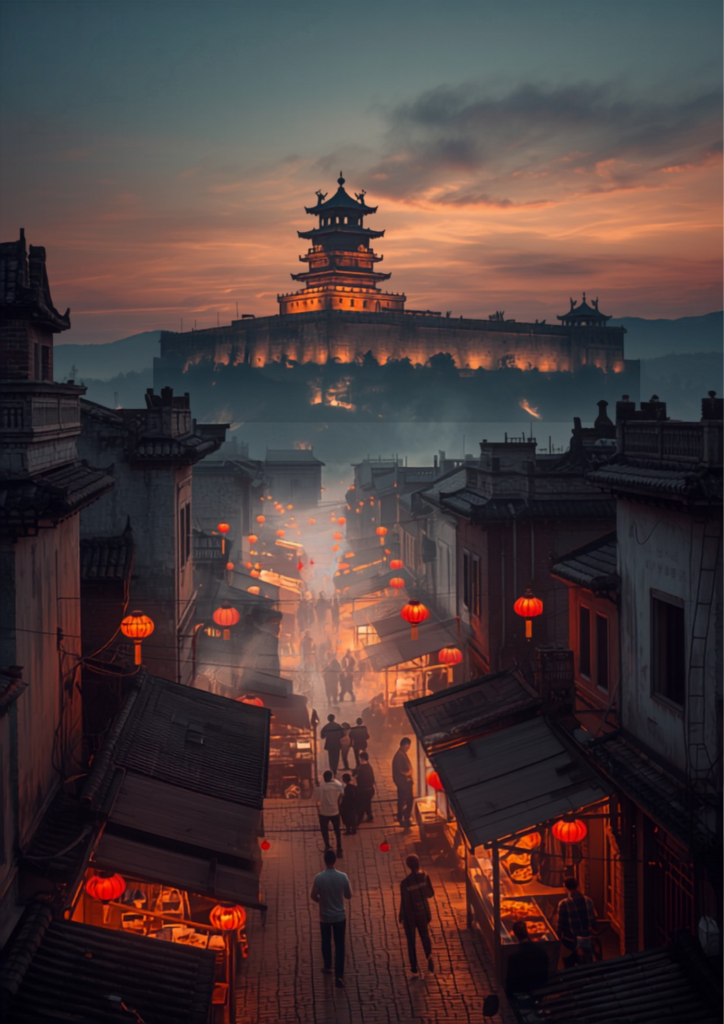
Location: Xi’an — Ten Dynasties of Noodles
Noodles and rice are the two ingredients keto asks you to give up first, and in Chinese cooking they’re everywhere — the base of nearly every meal, the thing a bowl is built around. This chapter doesn’t pretend that’s a small loss. It just proves the loss is smaller than you think.
Xi’an spent longer as China’s capital than any other city — the seat of power for thirteen dynasties, including the Qin dynasty that unified China under its first emperor and buried an army of eight thousand life-sized terracotta soldiers to guard him in the afterlife, discovered by farmers digging a well in 1974. The city sat at the eastern end of the Silk Road, the point where camel caravans arriving from Central Asia, Persia, and beyond finally unloaded, and that position shaped its food more than almost anywhere else in China.
That’s why Xi’an’s food doesn’t taste quite like anywhere else — cumin and lamb showing up in dishes the way they would further west, wheat noodles pulled and slapped and torn by hand instead of rice taking centre stage, a Muslim Hui community with its own distinct culinary tradition woven through the city for over a thousand years. Walk through the Muslim Quarter at night and the noodle stalls outnumber almost everything else — hand-pulled, knife-cut, biang biang, each shape demanding its own technique.
Ten recipes rebuild the icons — chow fun, dan dan noodles, claypot rice, chow mein — using shirataki, konjac, zucchini, and riced cauliflower, always with the same wok technique the originals demand. The genuinely secret ingredient in every one of them is heat: a screaming-hot wok fixes more problems than any specific noodle substitute ever could.
Recipes in This Chapter
- Cauliflower Fried Rice
- Shirataki Beef Chow Fun
- Cold Sesame Shirataki Noodles
- Konjac Dan Dan Noodles
- Zucchini Noodle Chow Mein
- Scallion Oil Shirataki Noodles
- Claypot Cauliflower Rice
- Beef Brisket Noodle Soup
- Singapore Keto Noodles
- Char Siu Fried Rice
From noodles and rice, we move into the heart of the meal — next up is Mains & Braises.