Location: Chengdu — Where Doubanjiang Comes From
This is the shortest chapter in the book and possibly the most useful one. Six foundational recipes — sauces and oils — appear again and again throughout every other chapter, and once you’ve made them, a huge percentage of Chinese cooking becomes effortless.
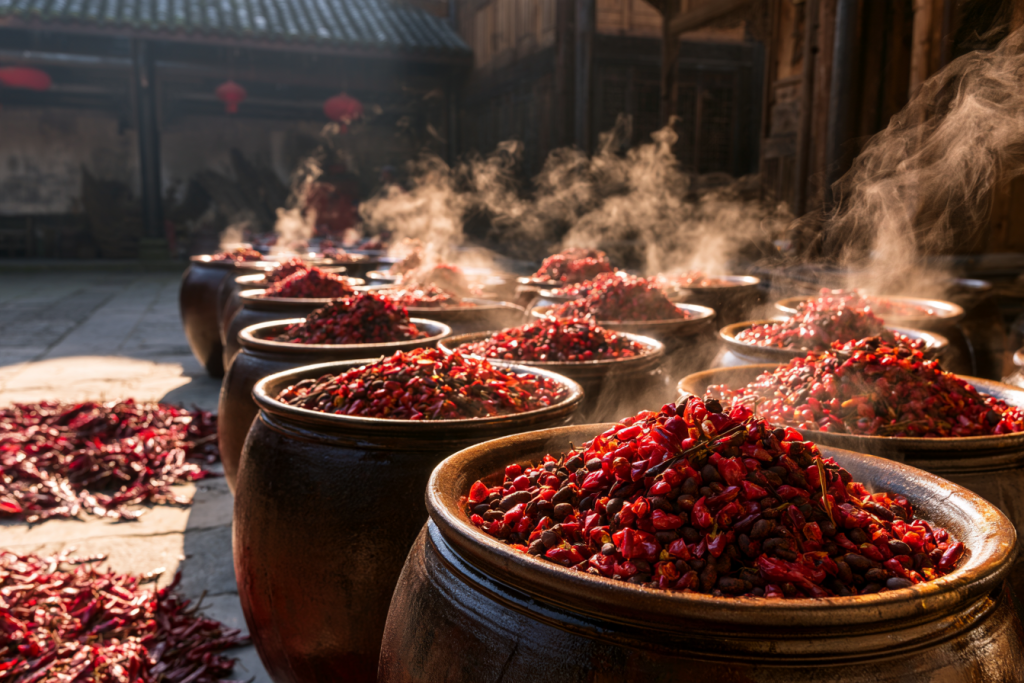
Twenty minutes outside Chengdu, in Pixian county, rows of open ceramic urns sit in courtyards fermenting broad beans and chilies into doubanjiang — Sichuan’s most essential condiment, and arguably the single ingredient most responsible for the region’s entire culinary identity. Some producers still make it the traditional way: turned by hand daily, aged for up to three years, the paste deepening from bright red to a rich, almost black mahogany as it matures.
Chengdu itself has a reputation as one of China’s most relaxed, food-obsessed cities — a place where teahouses fill entire afternoons and where locals like to joke that a person could eat at a different restaurant every day for a decade without repeating one. It’s the birthplace of Sichuan cuisine’s defining ma la (numbing-spicy) sensation, and nearly everything in this chapter — the chili oil, the hoisin, the XO sauce — traces its lineage back to kitchens like the ones still cooking in this city today.
Make a double batch of anything here. Most keep for weeks in the fridge or pantry, and having a jar of homemade chili oil or ginger-scallion oil on hand turns a plain bowl of cauliflower rice into something worth photographing.
Recipes in This Chapter
- Keto Hoisin Sauce
- Sichuan Chili Oil
- Black Vinegar Dipping Sauce
- Ginger Scallion Oil
- Keto Sweet & Sour Sauce
- XO Sauce
With the pantry stocked, we move to the biggest table of the year — next up is Festive & Celebration Dishes.