
Discover the history of this region →
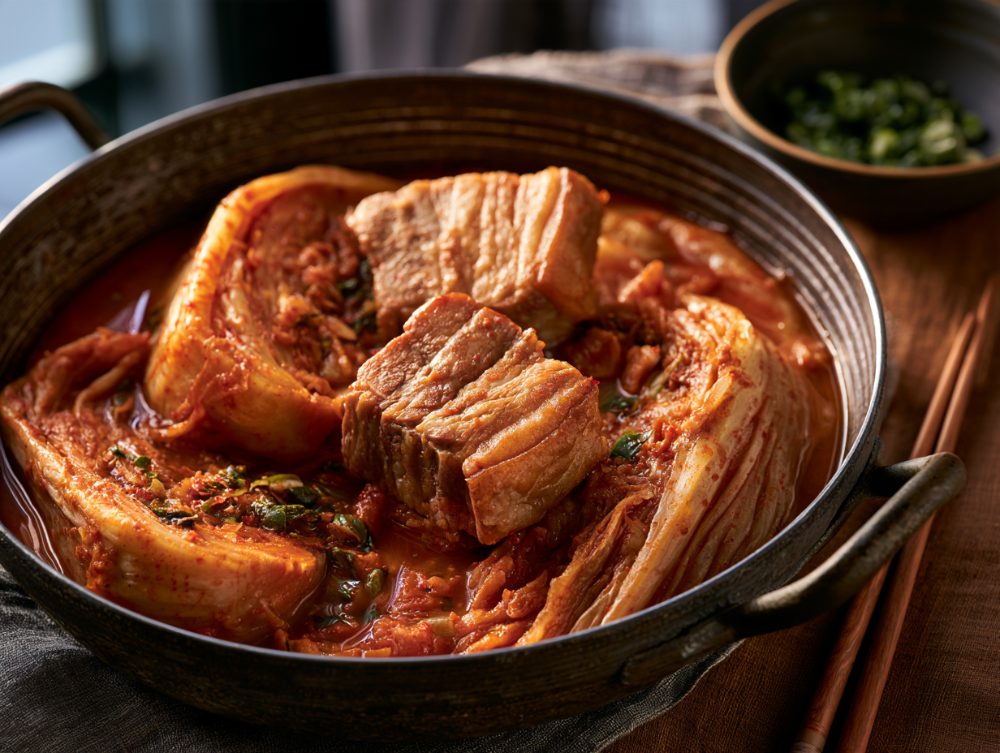
Kimchi-jjim is whole wedges of aged kimchi braised slowly with thick pork belly until the cabbage is silky and the pork is tender. Unlike kimchi stew, it has just a little liquid, so the flavors concentrate into something deep and luxurious. Wrap the pork in the soft kimchi leaves to eat.
Per serving: 623 calories · 3.1 g net carbs · 13 g protein · 61 g fat (calculated from the ingredients)
What You’ll Need
Ingredients
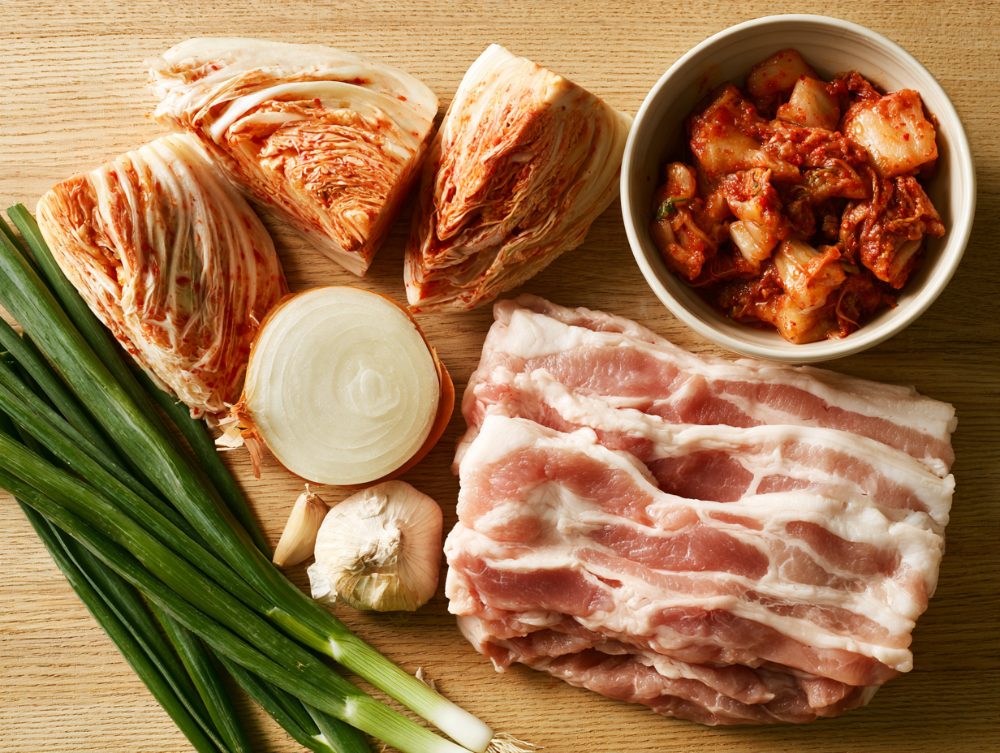
- 1/2 head well-fermented napa cabbage kimchi in large wedges (about 1 1/2 pounds)
- 1 1/2 pounds pork belly cut into 2-inch thick slabs
- 1/2 onion sliced
- 2 cups anchovy-kelp broth or water
- 1/2 cup kimchi juice
- 1 tablespoon gochugaru
- 4 cloves garlic minced
- 1 teaspoon allulose (optional)
- 2 scallions cut into 2-inch pieces

Instructions
- Lay the onion in the bottom of a wide, heavy pot. Arrange the kimchi wedges on top, then the pork belly slabs.
- Mix the broth, kimchi juice, gochugaru, garlic and allulose, and pour it over.
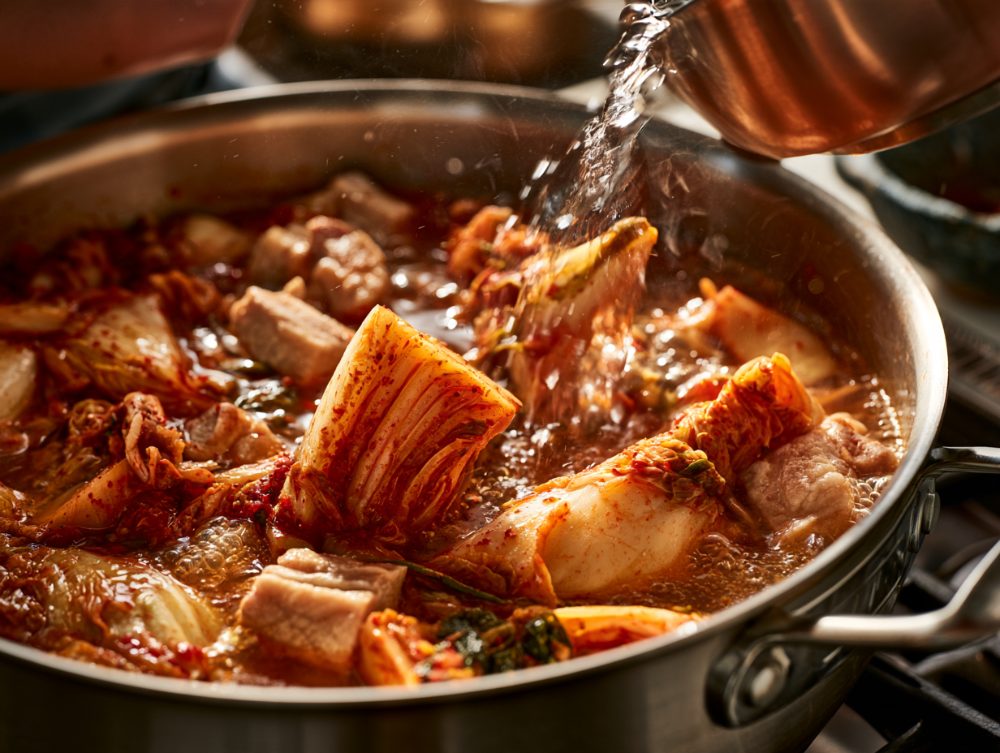
- Bring to a boil, then cover and simmer gently for 50 to 60 minutes, until the kimchi is soft and translucent and the pork is tender.
- Uncover for the last 10 minutes to reduce the sauce slightly. Add the scallions.
- Serve the kimchi wedges whole and cut them with scissors at the table, wrapping each piece of pork in a kimchi leaf.
Notes
Nutrition
About This Dish
Kimchi-jjim is a favorite way to use mugeunji, kimchi that has been aged for many months or even years. Aged kimchi is so prized for cooking that some restaurants specialize in dishes made only with it. Long braising softens the cabbage until it can be pulled apart with chopsticks. The pork belly is cut thick so it holds its shape during cooking. Many Koreans say kimchi-jjim tastes best in winter, when the previous year’s kimchi is at its most sour.
Pairs Well With
This recipe is from The Ultimate Korean Keto Cookbook by Gisele Costello, Chapter 7: Pork (Seongsan Ilchulbong). See all Korean recipes