
Discover the history of this region →
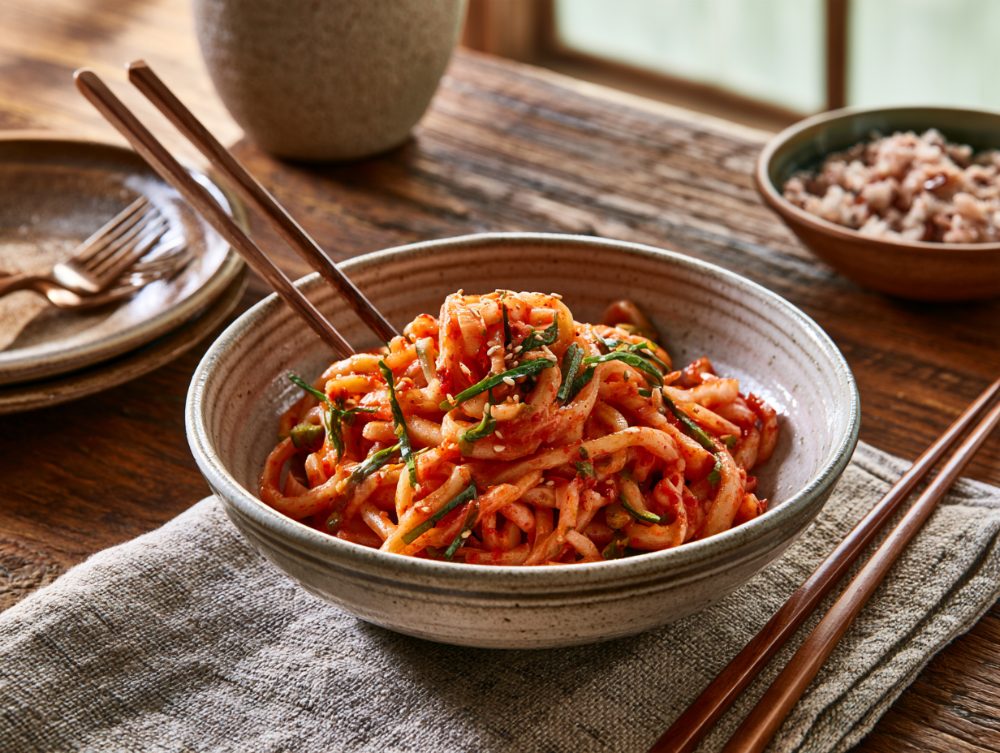
Musaengchae is a bright red salad of thinly shredded radish tossed in chili flakes, garlic and a little vinegar. It is crunchy, tangy and slightly sweet, a fresh, quick cousin of kimchi. It is delicious with bossam, grilled fish or bibimbap.
Per serving: 26 calories · 3 g net carbs · 1 g protein · 1 g fat (calculated from the ingredients)
What You’ll Need
Ingredients
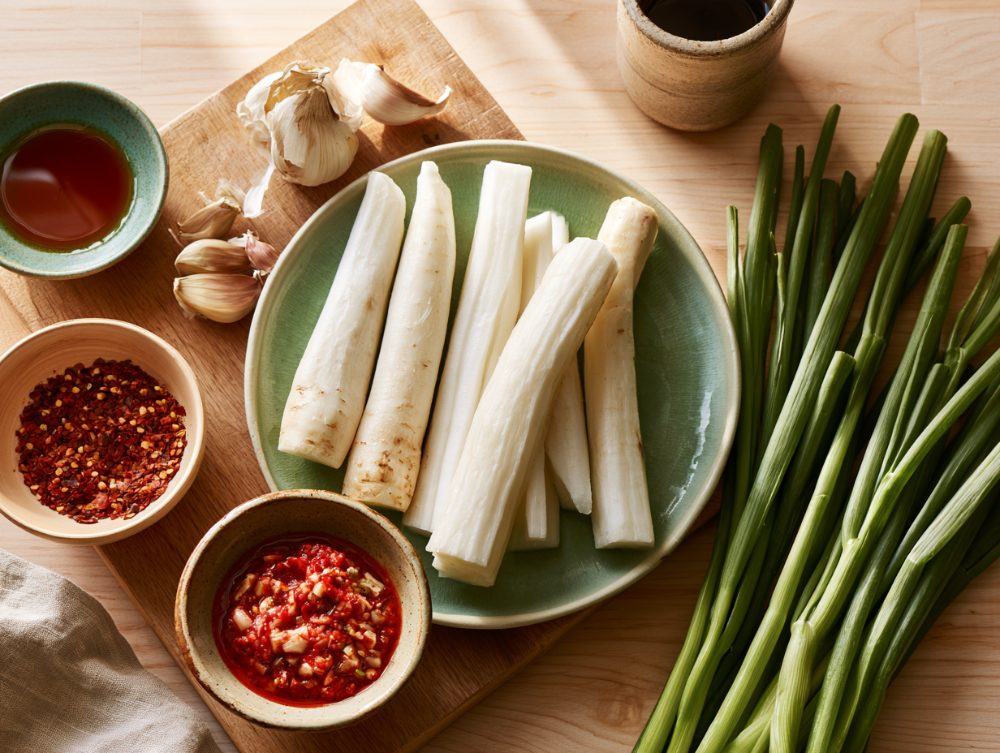
- 1 pound Korean radish or daikon cut into fine matchsticks
- 1 teaspoon salt
- 1 1/2 tablespoons gochugaru
- 1 tablespoon fish sauce
- 1 tablespoon allulose
- 1 tablespoon rice vinegar
- 2 cloves garlic minced
- 2 scallions chopped
- 1 teaspoon toasted sesame seeds

Instructions
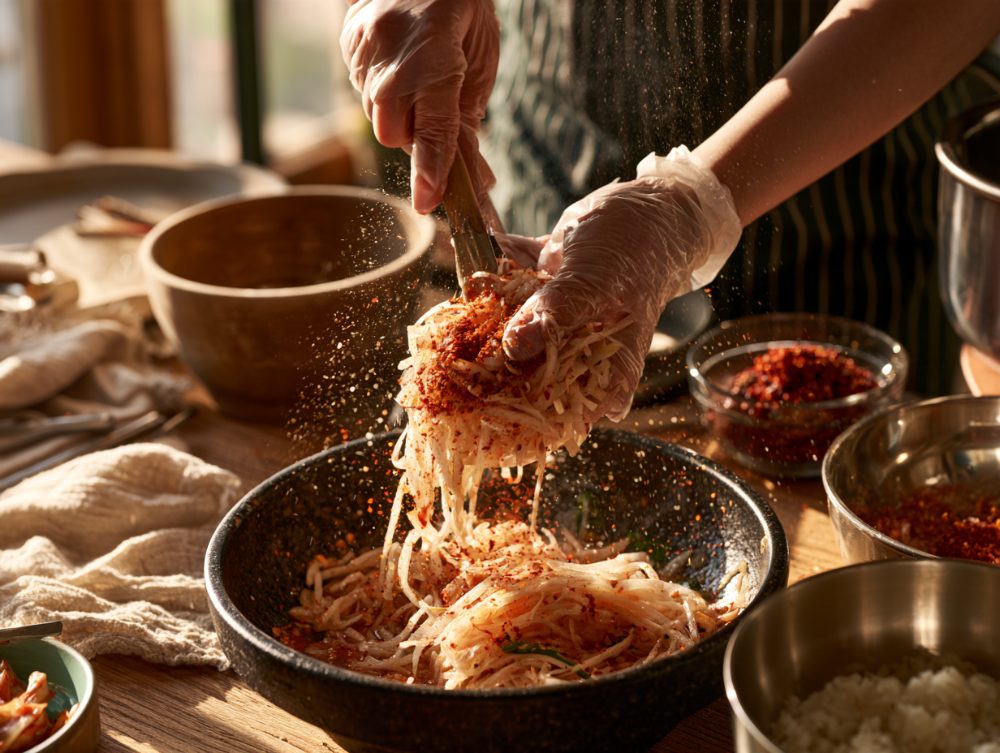
- Toss the radish with the gochugaru first and let it sit for 5 minutes, so the radish turns an even red.
- Add the salt, fish sauce, allulose, vinegar and garlic and mix well with gloved hands.
- Let stand for 10 minutes, then squeeze out some of the liquid if it seems watery.
- Toss with the scallions and sesame seeds just before serving.
Notes
Nutrition
About This Dish
Mu is radish, and saengchae means fresh, raw vegetables cut into strips. Musaengchae is a staple banchan in Korean homes, especially in autumn and winter when radishes are sweetest. It is traditionally served with bossam and is a favorite topping for bibimbap. The non-spicy white version is often made for ancestral rites, because red chili is traditionally avoided on the memorial table. An old Korean saying even claims that autumn radish is better for you than ginseng.
This recipe is from The Ultimate Korean Keto Cookbook by Gisele Costello, Chapter 9: Salads (Bulguksa Temple). See all Korean recipes