
Discover the history of this region →
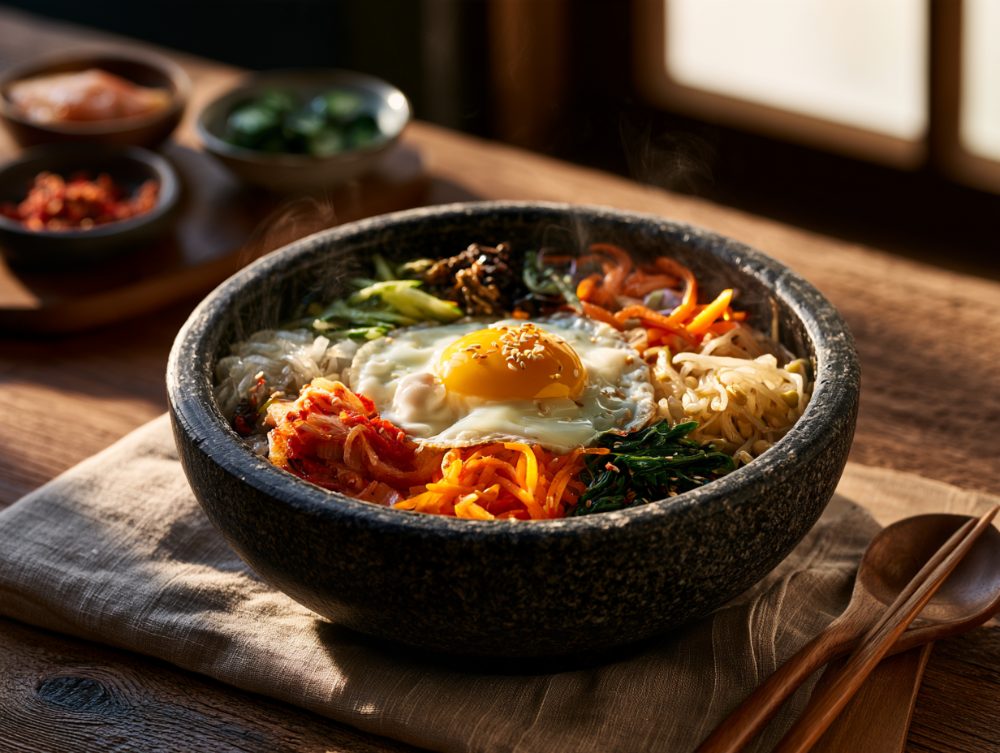
Dolsot bibimbap is bibimbap served in a scorching-hot stone bowl, so the rice at the bottom turns golden and crunchy while the toppings sizzle. It is a meal and a show at the same time. A cast-iron skillet gives the same crispy crust if you do not have stone bowls.
Per serving: 450 calories · 15 g net carbs · 31 g protein · 29 g fat (calculated from the ingredients)
What You’ll Need
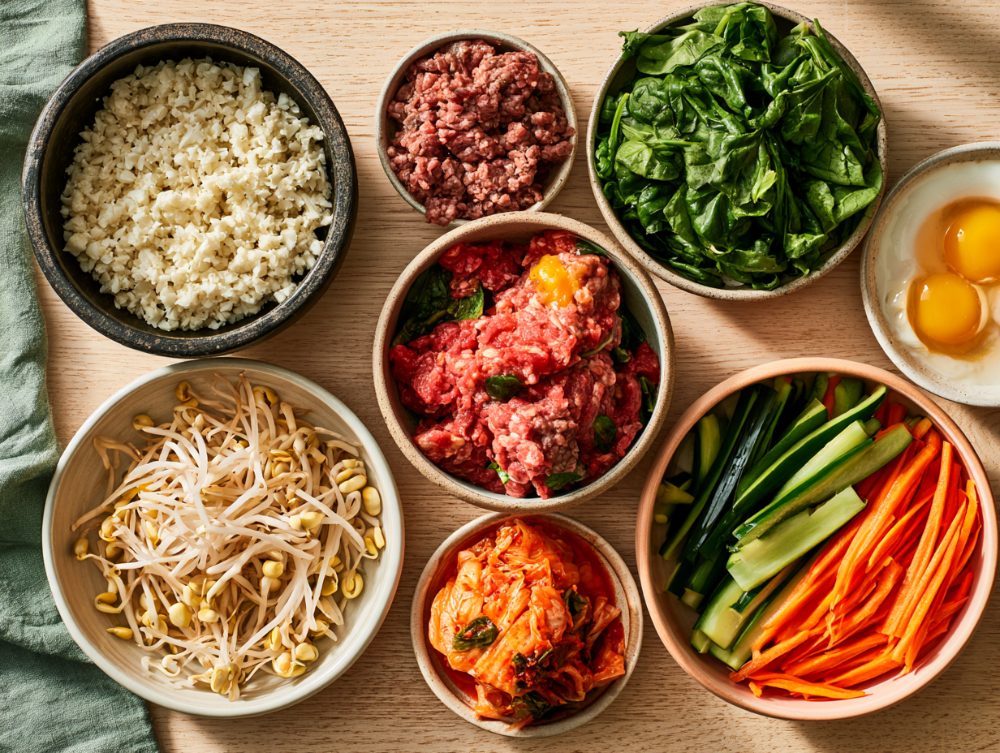
Ingredients
- 3 cups riced cauliflower cooked and squeezed dry
- 1 tablespoon toasted sesame oil for the bowls
- 4 ounces ground beef cooked with 1 teaspoon soy sauce and a pinch of garlic
- 1 cup seasoned spinach (this chapter)
- 1 cup seasoned soybean sprouts (this chapter)
- 1/2 small zucchini and 1/2 small carrot julienned and sautéed
- 2 shiitake mushrooms sliced and sautéed
- 1/4 cup kimchi chopped
- 2 large eggs
- 2 tablespoons Keto Gochujang-Style Paste (Chapter 10)
- 1 teaspoon toasted sesame seeds

Instructions
- Brush the inside of two stone bowls (dolsot) with sesame oil. If using a skillet, oil a 10-inch cast-iron pan.
- Pack the cauliflower rice into the bottom of the bowls in a firm, even layer.
- Arrange the beef, spinach, sprouts, zucchini, carrot, mushrooms and kimchi on top. Crack an egg into the center of each.
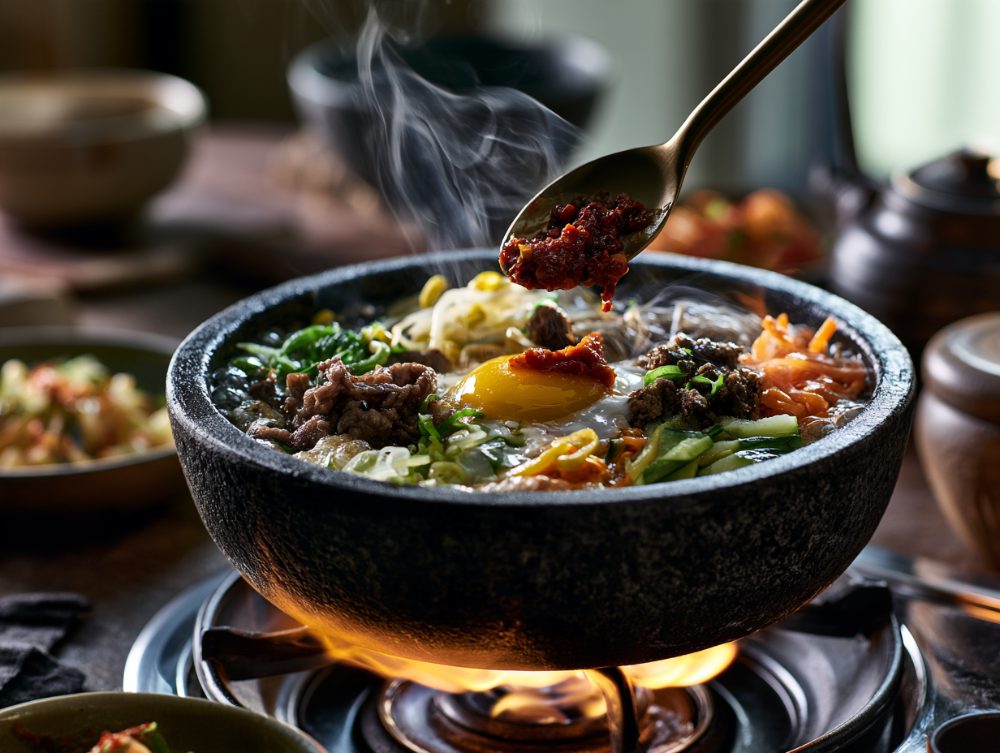
- Set the bowls over medium heat and cook for 8 to 10 minutes, until you hear steady sizzling and the bottom layer is golden and crisp. The egg will start to set from the heat.
- Carefully set the bowls on heatproof mats at the table. Add the gochujang paste and sesame seeds, then mix vigorously, pressing the rice against the hot sides to crisp it further.
Notes
Nutrition
About This Dish
Dolsot means stone pot, and the bowls are carved from heat-retaining stone such as agalmatolite. Serving bibimbap in a sizzling stone pot became popular in restaurants in the second half of the 20th century. The crispy, scorched rice at the bottom of a pot is called nurungji, and Koreans love it so much that it is sold as a snack and steeped in hot water to make a toasty drink. Restaurants often heat the empty stone bowls directly on the burner before filling them. The sizzling sound when the bowl arrives is part of the experience.
This recipe is from The Ultimate Korean Keto Cookbook by Gisele Costello, Chapter 8: Vegetables (Jeonju Hanok Village). See all Korean recipes