Discover the history of this region →
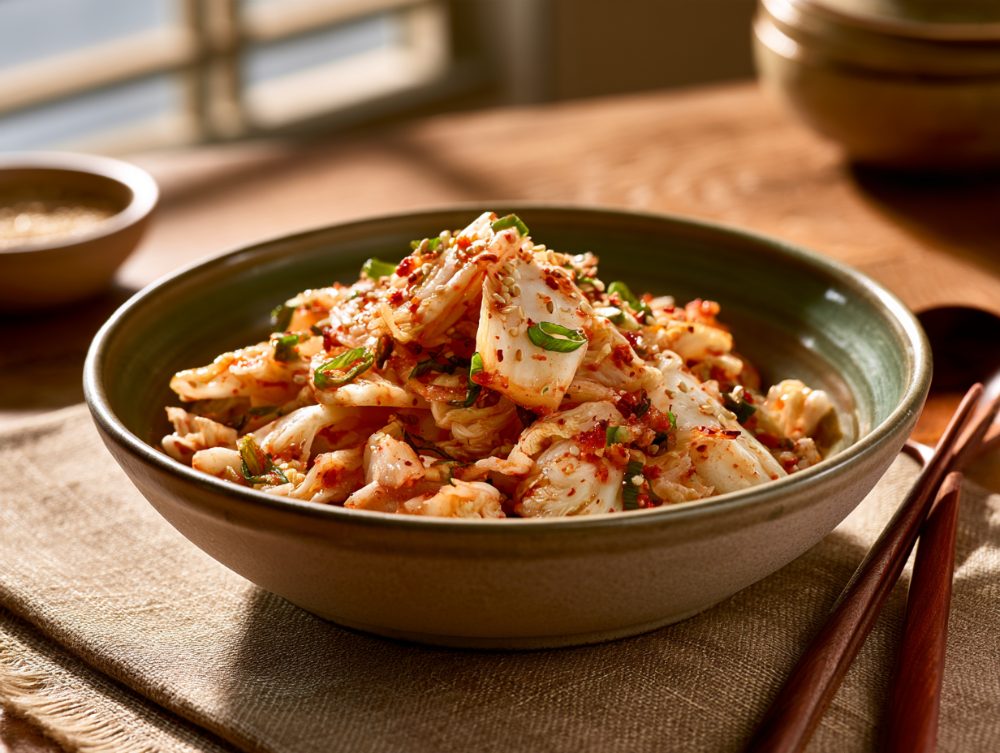
Geotjeori is fresh, unfermented kimchi: tender napa cabbage leaves tossed in a spicy, garlicky dressing and eaten right away. It has all the bold flavor of kimchi with a crisp, salad-like bite. It is often made on kimchi-making day to enjoy while the rest ferments.
Per serving: 72 calories · 5.7 g net carbs · 3 g protein · 3 g fat (calculated from the ingredients)
What You’ll Need
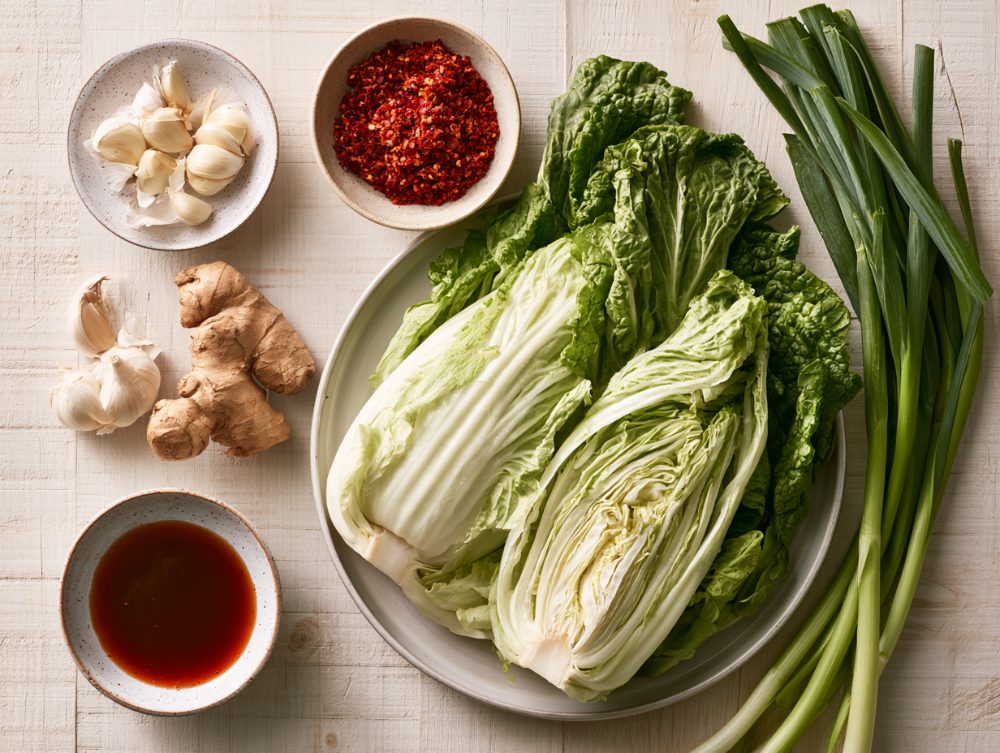
Ingredients
- 1 small head napa cabbage (about 1 1/2 pounds) leaves separated
- 2 tablespoons coarse sea salt for salting
- 2 tablespoons gochugaru
- 2 tablespoons fish sauce
- 1 tablespoon allulose
- 4 cloves garlic minced
- 1 teaspoon grated ginger
- 3 scallions cut into 1-inch pieces
- 1 tablespoon toasted sesame oil
- 1 tablespoon toasted sesame seeds

Instructions
- Cut the cabbage leaves into bite-size pieces. Toss with the coarse salt and let them sit for 30 minutes, tossing once halfway through.
- Rinse the cabbage well two or three times to remove the salt, then drain thoroughly.
- Mix the gochugaru, fish sauce, allulose, garlic and ginger into a paste.
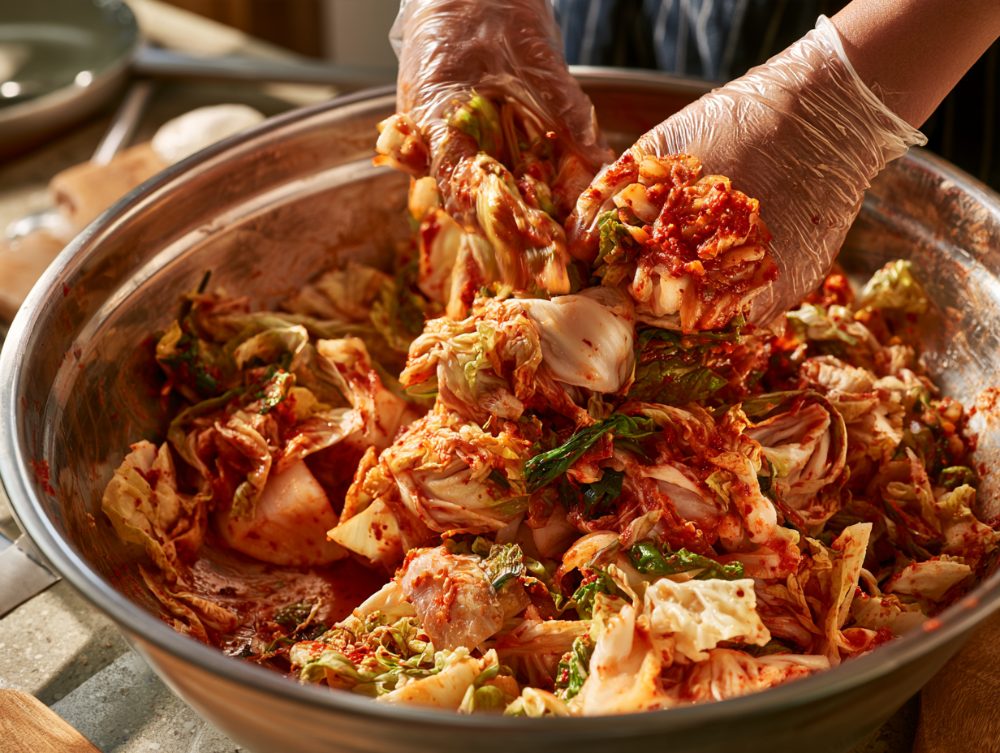
- Toss the cabbage and scallions with the paste until evenly coated.
- Drizzle with sesame oil, sprinkle with sesame seeds, and serve immediately.
Notes
Nutrition
About This Dish
Geotjeori comes from a word meaning something prepared quickly, or on the surface. Families traditionally eat it on gimjang day, the day the year’s kimchi is made, with boiled pork. It is also made in spring with fresh cabbage and lettuce, when the old winter kimchi has grown too sour. Kalguksu (knife-cut noodle) restaurants often serve geotjeori as their signature side dish. Its bright, fresh flavor shows how many different kinds of kimchi Korea has, by some counts more than 200.
This recipe is from The Ultimate Korean Keto Cookbook by Gisele Costello, Chapter 9: Salads (Bulguksa Temple). See all Korean recipes