
Discover the history of this region →
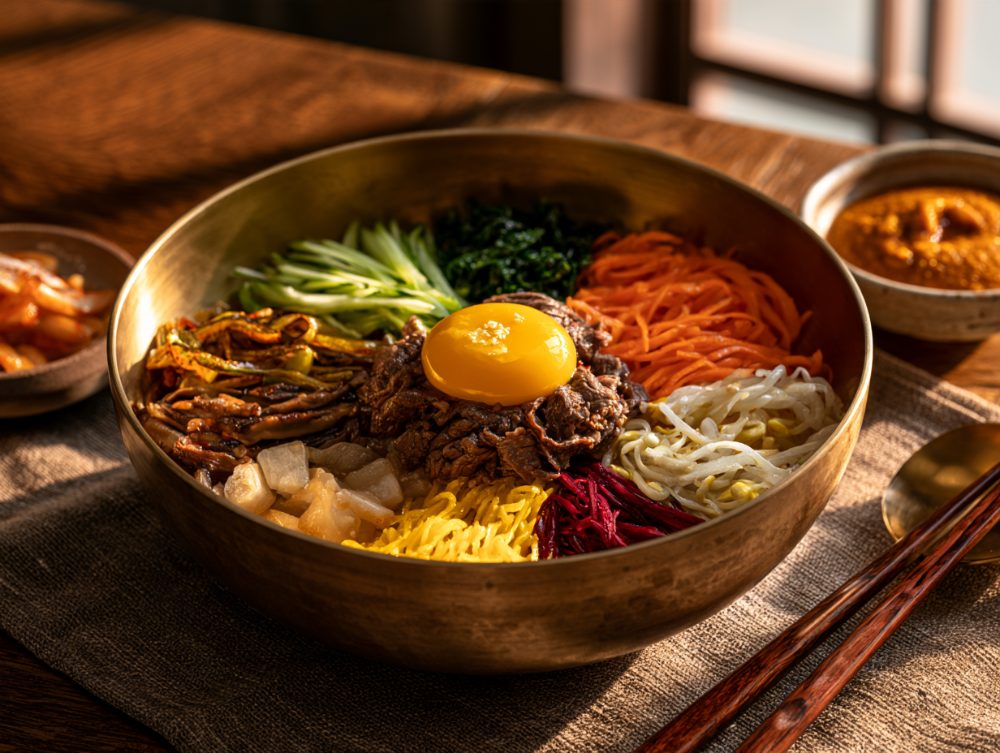
Jeonju bibimbap is the most elegant version of Korea’s iconic mixed rice bowl, topped with a rainbow of seasoned vegetables, sautéed beef and a raw egg yolk. Each topping is arranged in its own section before everything is mixed together with chili sauce at the table. Cauliflower rice makes it keto without changing the experience.
Per serving: 401 calories · 14 g net carbs · 28 g protein · 26 g fat (calculated from the ingredients)
What You’ll Need
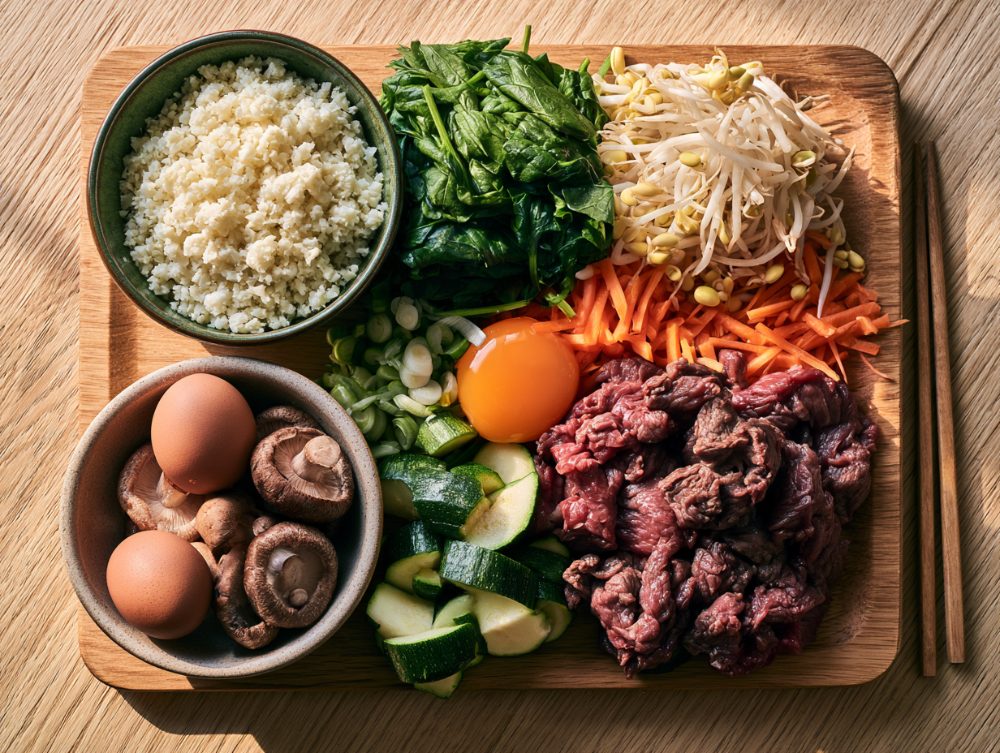
Ingredients
- 4 cups riced cauliflower cooked dry with 1 teaspoon sesame oil and a pinch of salt
- 8 ounces beef sirloin cut into thin strips
- Beef seasoning: 1 tablespoon soy sauce, 1 teaspoon allulose, 1 clove garlic minced, 1 teaspoon sesame oil
- 1 batch Sigeumchi-namul (seasoned spinach, this chapter)
- 1 batch Kongnamul-muchim (seasoned soybean sprouts, this chapter)
- 1 small zucchini julienned and sautéed
- 1 small carrot julienned and sautéed
- 4 shiitake mushrooms sliced and sautéed
- 1/2 cup daikon julienned
- 4 egg yolks (or 4 fried eggs)
- 2 sheets roasted seaweed cut into thin strips
- Bibimbap sauce: 3 tablespoons Keto Gochujang-Style Paste (Chapter 10), 1 tablespoon sesame oil, 1 tablespoon allulose, 1 teaspoon rice vinegar, 1 teaspoon sesame seeds
- 1 tablespoon avocado oil for sautéing

Instructions
- Toss the beef with its seasoning and let it sit for 10 minutes. Mix the bibimbap sauce in a small bowl.
- Heat a little avocado oil in a skillet and sauté each vegetable separately with a pinch of salt until just tender: carrot for 2 minutes, zucchini for 1 minute, mushrooms for 2 minutes. Set each aside.
- Cook the beef in the same skillet over high heat for 2 to 3 minutes until browned.
- Divide the warm cauliflower rice among four wide bowls. Arrange the spinach, soybean sprouts, zucchini, carrot, mushrooms, daikon and beef in neat sections on top, like the spokes of a wheel.
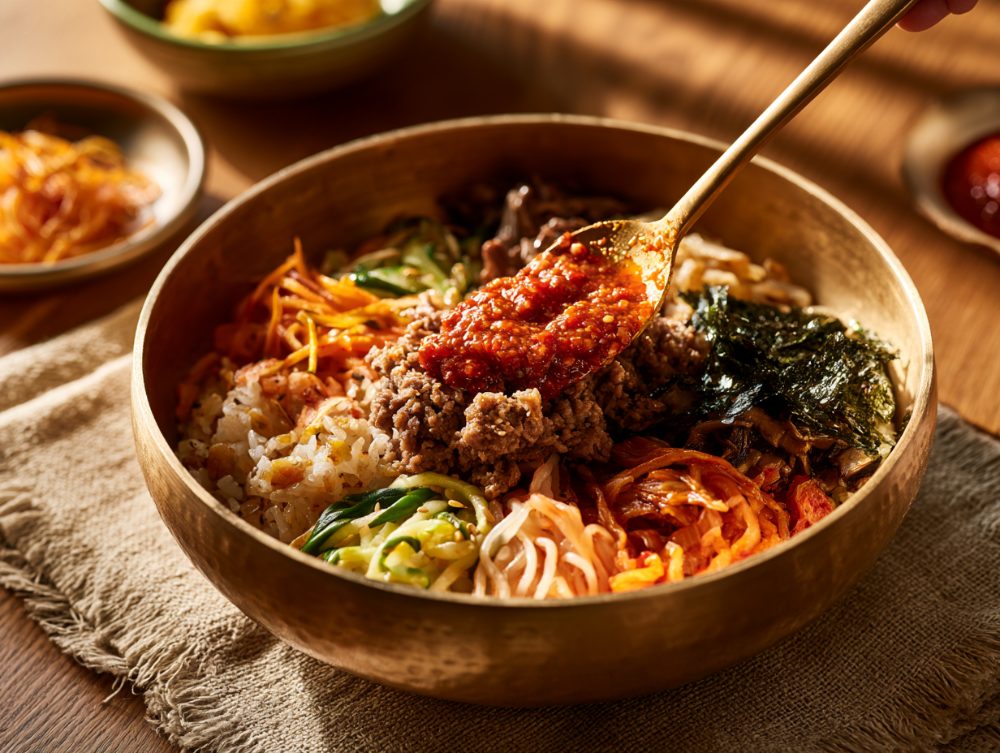
- Place an egg yolk in the center of each bowl and scatter the seaweed strips over the top. Serve with the sauce. At the table, add sauce to taste and mix everything together thoroughly before eating.
Notes
Nutrition
About This Dish
Bibim means mixing and bap means cooked rice. Jeonju bibimbap is traditionally made with rice cooked in beef bone broth and topped with around 30 ingredients, including raw beef yukhoe and Jeonju’s famous mung bean jelly. The city’s restaurants serve it in heavy brass bowls. Bibimbap became internationally famous partly because Korean Air began serving it as an in-flight meal in the late 1990s, and it went on to win an industry award for in-flight catering. One explanation for its origin is that it began as a way to mix up the leftover offerings after ancestral rites.
This recipe is from The Ultimate Korean Keto Cookbook by Gisele Costello, Chapter 8: Vegetables (Jeonju Hanok Village). See all Korean recipes