
Discover the history of this region →
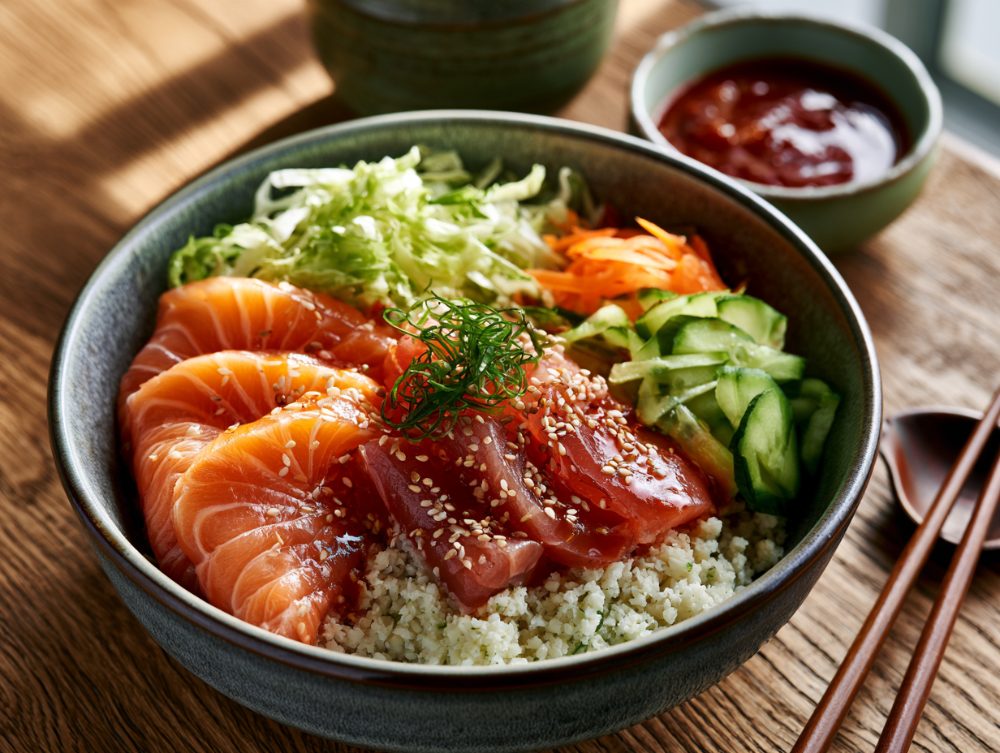
Hoedeopbap is a vibrant bowl of fresh raw fish over rice and crisp, shredded vegetables, mixed at the table with a tangy, spicy chojang sauce. It is a favorite lunch at seaside towns all along the Korean coast. Cauliflower rice makes the perfect cool, light base.
Per serving: 340 calories · 9.1 g net carbs · 28 g protein · 19 g fat (calculated from the ingredients)
What You’ll Need
Ingredients
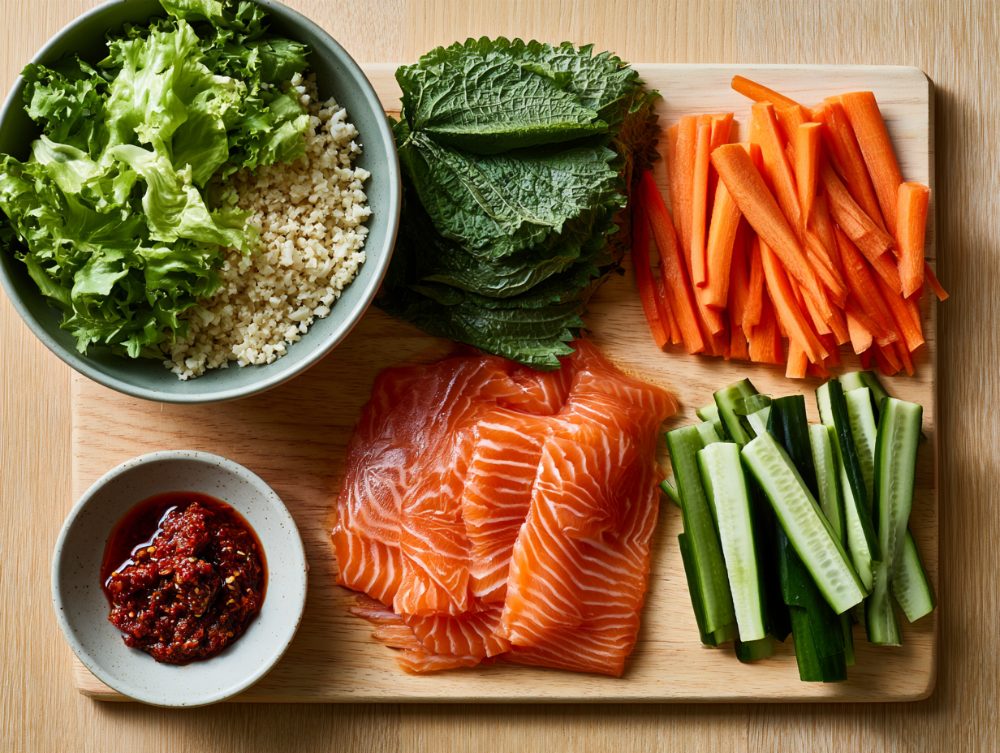
- 8 ounces sushi-grade fish (salmon, tuna or fluke) cut into bite-size pieces
- 2 cups riced cauliflower
- 1 teaspoon toasted sesame oil
- 2 cups shredded romaine or leaf lettuce
- 6 perilla leaves (kkaennip) thinly sliced
- 1/2 cucumber julienned
- 1 small carrot julienned
- 1/4 cup shredded daikon
- Chojang sauce: 1 tablespoon Keto Gochujang-Style Paste (Chapter 10) or store-bought gochujang, 1 tablespoon rice vinegar, 1 tablespoon allulose, 1 teaspoon lemon juice, 1 teaspoon minced garlic
- 1 teaspoon toasted sesame seeds
- Crumbled roasted seaweed (gim)

Instructions
- Cook the cauliflower rice in a dry skillet over medium heat for 5 minutes, until tender and dry. Toss with sesame oil and a pinch of salt and let it cool to room temperature.
- Whisk the chojang sauce ingredients until smooth.
- Divide the cauliflower rice between two wide bowls. Arrange the lettuce, perilla, cucumber, carrot and daikon in sections over the top.
- Pile the fish in the center. Sprinkle with sesame seeds and seaweed.
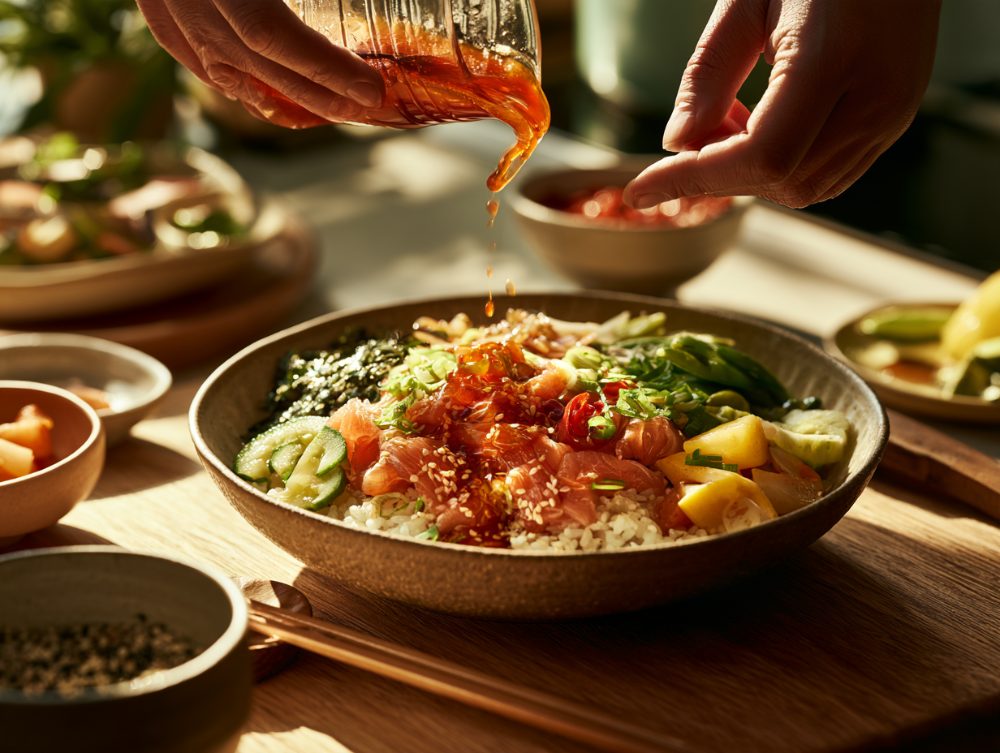
- Serve with the chojang on the side. Spoon in as much as you like and mix everything together before eating.
Notes
Nutrition
About This Dish
Hoe is the Korean word for raw fish, and deopbap means rice with toppings. Unlike Japanese sashimi, which is dipped in soy sauce, Korean raw fish is most often eaten with chojang, a sweet, sour and spicy gochujang sauce. Hoedeopbap is especially popular in Busan, Pohang and other coastal cities, where it is served at restaurants right beside the fish markets. Some versions are finished with cold broth, turning it into a refreshing summer soup called mulhoe. Perilla leaves, kkaennip, give the bowl a distinctive minty, herbal flavor.
Pairs Well With
This recipe is from The Ultimate Korean Keto Cookbook by Gisele Costello, Chapter 4: Seafood (Jagalchi Fish Market). See all Korean recipes