
Discover the history of this region →
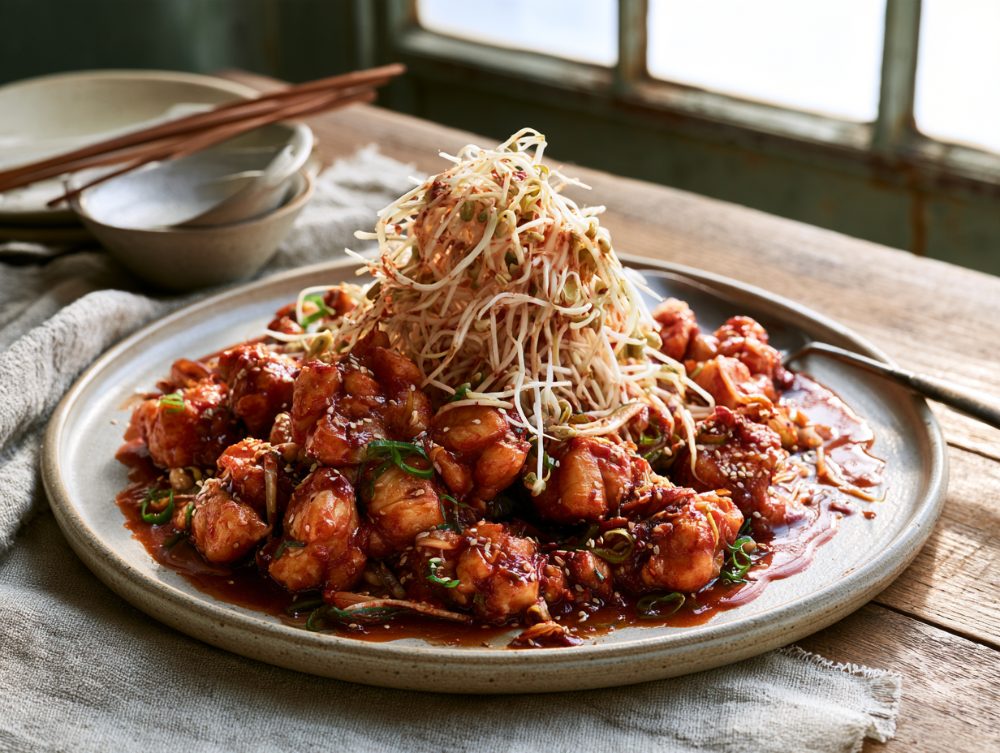
Agujjim is a fiery, saucy braise of tender monkfish and a mountain of crunchy soybean sprouts. It is a specialty of the port city of Masan, where it has been made for decades. Instead of the usual starch slurry, a little xanthan gum gives the sauce its thick, glossy coating.
Per serving: 357 calories · 12 g net carbs · 46 g protein · 15 g fat (calculated from the ingredients)
What You’ll Need
Ingredients
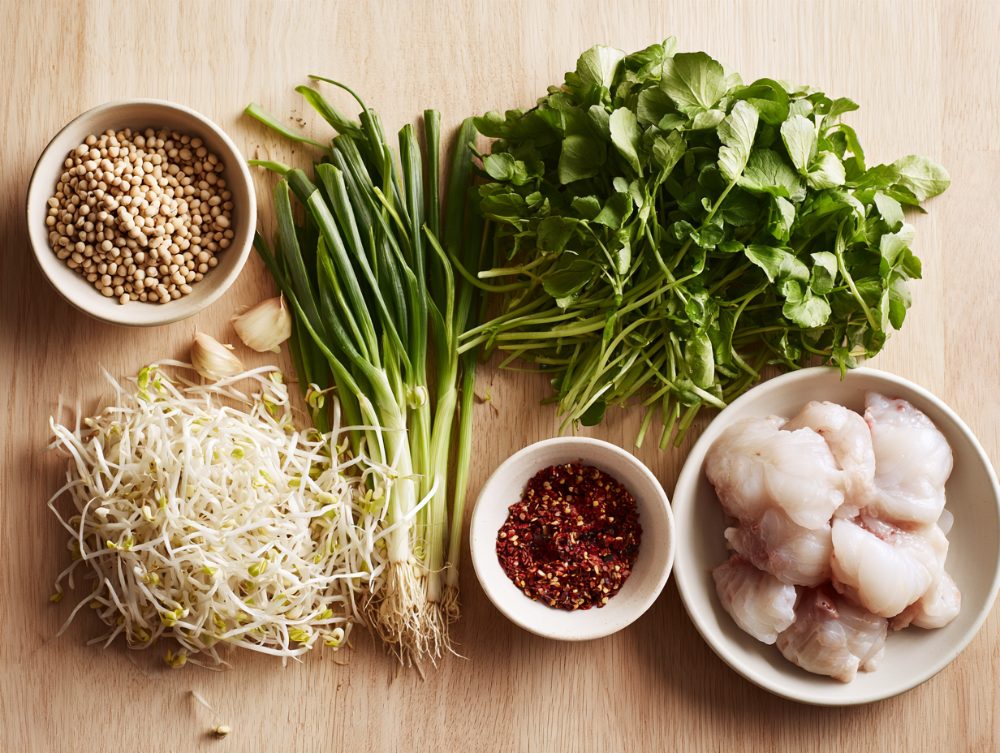
- 1 1/2 pounds monkfish cut into large chunks
- 8 ounces soybean sprouts rinsed
- 1 cup water or anchovy broth
- 4 scallions cut into 2-inch pieces
- 1 small bunch minari or watercress (optional)
- Sauce: 3 tablespoons gochugaru, 2 tablespoons soy sauce, 1 tablespoon allulose, 5 cloves garlic minced, 1 teaspoon grated ginger, 1 tablespoon fish sauce
- 1/2 teaspoon xanthan gum whisked into 2 tablespoons cold water
- 1 tablespoon toasted sesame oil
- 1 teaspoon toasted sesame seeds

Instructions
- Rinse the monkfish and pat dry. Mix the sauce ingredients in a small bowl.
- Put the water in a wide pot and bring to a boil. Add the monkfish, cover, and cook for 6 to 7 minutes, until nearly cooked through.
- Spread the soybean sprouts over the fish, cover, and steam for 4 minutes.
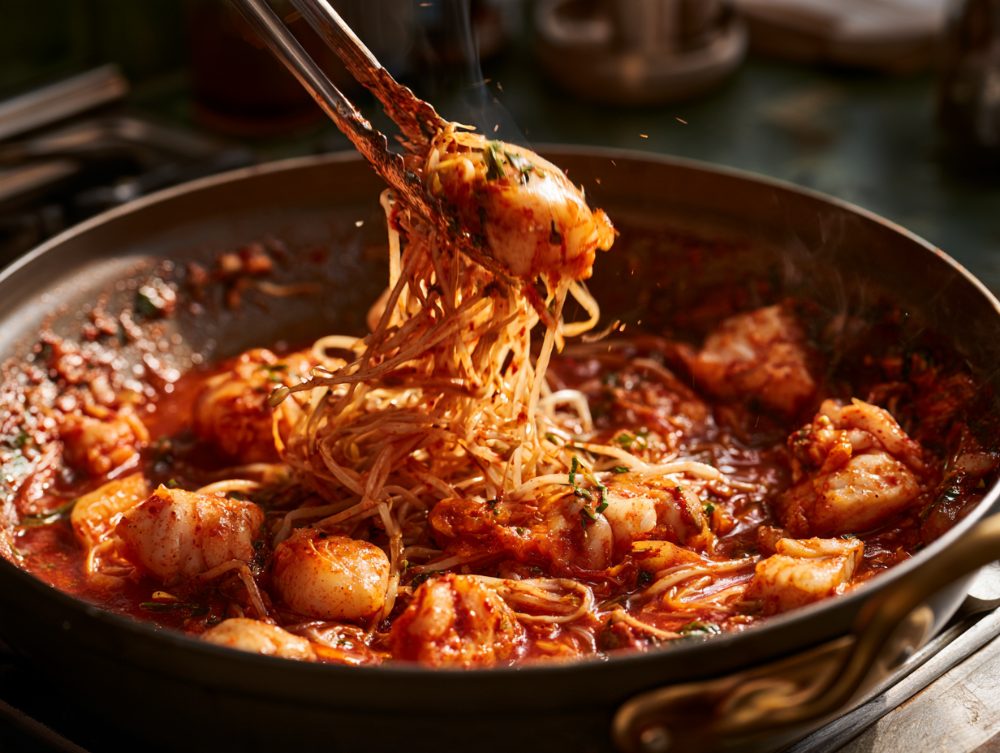
- Add the sauce and scallions and toss everything together with tongs over medium-high heat for 2 to 3 minutes, until the sprouts are coated and bright.
- Pour in the xanthan mixture and stir until the sauce thickens and turns glossy, about 1 minute. Add the minari if using, drizzle with sesame oil, and sprinkle with sesame seeds.
Notes
Nutrition
About This Dish
Agujjim was born in the port of Masan, now part of Changwon, where, as the local story goes, monkfish were once considered so ugly that fishermen threw them back. Local cooks began braising the fish with soybean paste and chili, and the dish became so popular that Masan now has a street lined with agujjim restaurants. The traditional Masan style uses dried, half-frozen monkfish, giving it a chewy texture. The Seoul style uses fresh fish and lots of soybean sprouts. Monkfish liver is considered a delicacy and is sometimes added for richness.
Pairs Well With
This recipe is from The Ultimate Korean Keto Cookbook by Gisele Costello, Chapter 4: Seafood (Jagalchi Fish Market). See all Korean recipes