
Discover the history of this region →
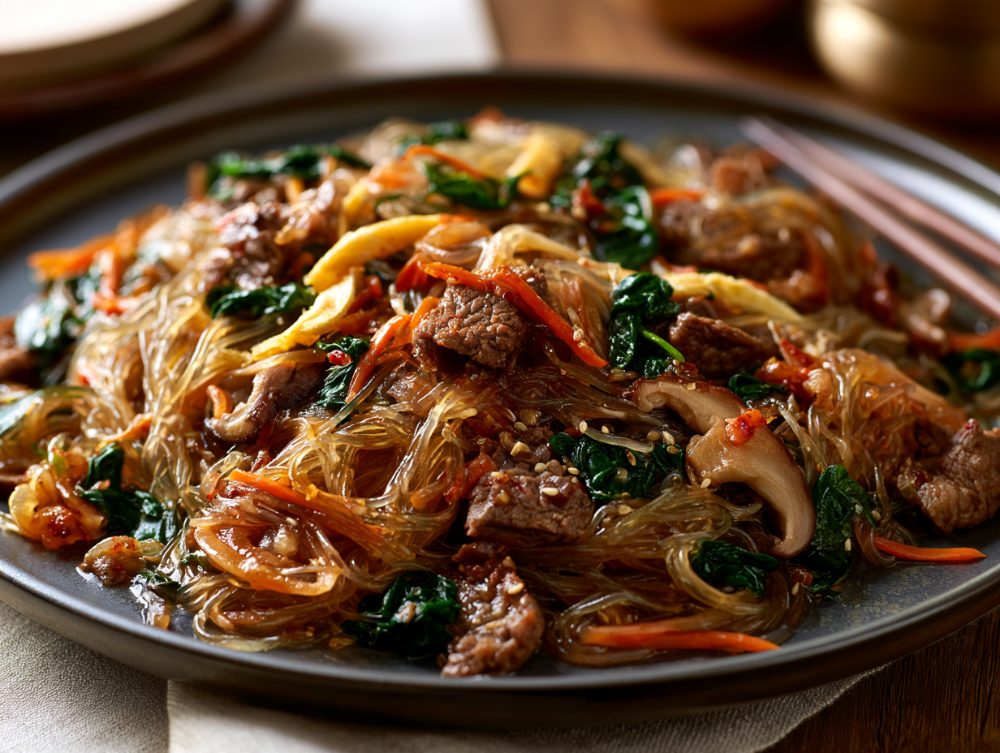
Japchae is a festive, colorful dish of glossy noodles tossed with beef, spinach, carrots, mushrooms and egg, all seasoned with soy sauce and sesame oil. It is a must at every Korean celebration. Shirataki noodles and zucchini ribbons replace the usual sweet potato noodles.
Per serving: 334 calories · 6.5 g net carbs · 18 g protein · 24 g fat (calculated from the ingredients)
What You’ll Need
Ingredients
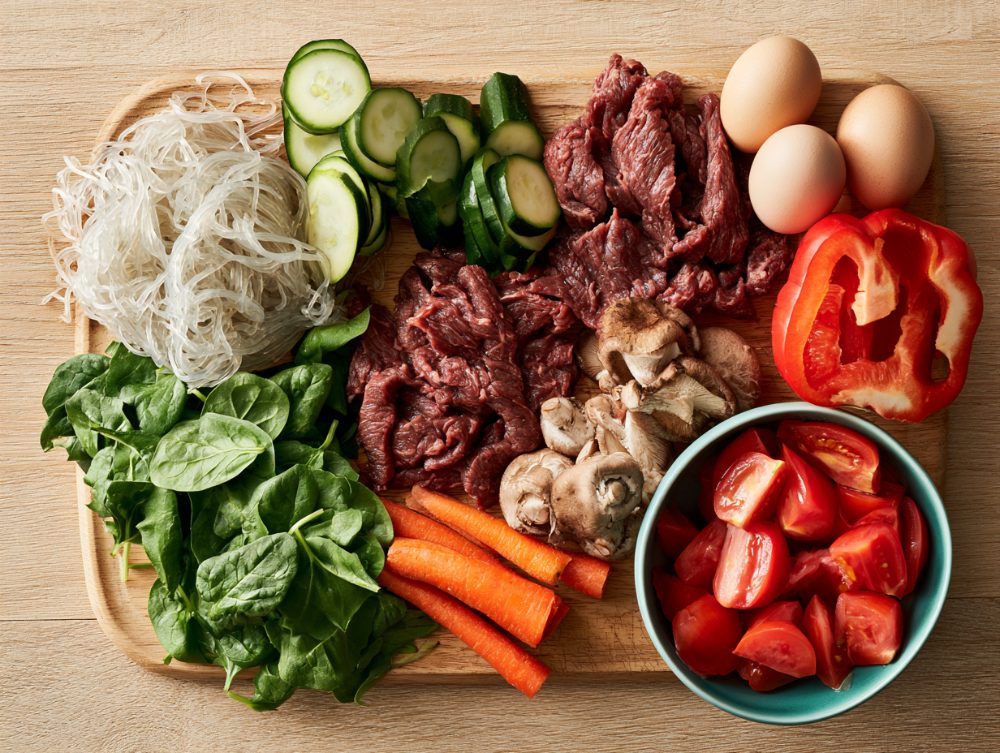
- 2 packages (7 ounces each) shirataki noodles rinsed and drained
- 1 medium zucchini spiralized or cut into long ribbons
- 8 ounces beef sirloin cut into thin strips
- 5 ounces spinach
- 1 small carrot cut into matchsticks
- 1/2 onion thinly sliced
- 4 shiitake mushrooms sliced
- 1/2 red bell pepper thinly sliced
- 2 large eggs separated and cooked into thin yellow and white omelets, sliced
- Sauce: 3 tablespoons soy sauce, 2 tablespoons allulose, 2 tablespoons sesame oil, 3 cloves garlic minced, 1/4 teaspoon black pepper
- 2 tablespoons avocado oil divided
- 1 tablespoon toasted sesame seeds

Instructions
- Dry-fry the drained shirataki noodles in a hot skillet for 3 minutes, until they squeak. Cut them into shorter lengths with scissors.
- Mix the sauce. Toss the beef with 1 tablespoon of it and set aside.
- Blanch the spinach for 30 seconds, rinse in cold water, squeeze dry, and season with a pinch of salt and a drop of sesame oil.
- Heat a little avocado oil in a large skillet. Stir-fry each vegetable separately until just tender, seasoning each with a pinch of salt: onion and carrot for 2 minutes, mushrooms and bell pepper for 2 minutes, zucchini for 1 minute. Transfer each to a large bowl.
- Stir-fry the beef for 2 to 3 minutes until cooked. Add the noodles and the remaining sauce and cook 2 minutes, until the noodles are glossy.
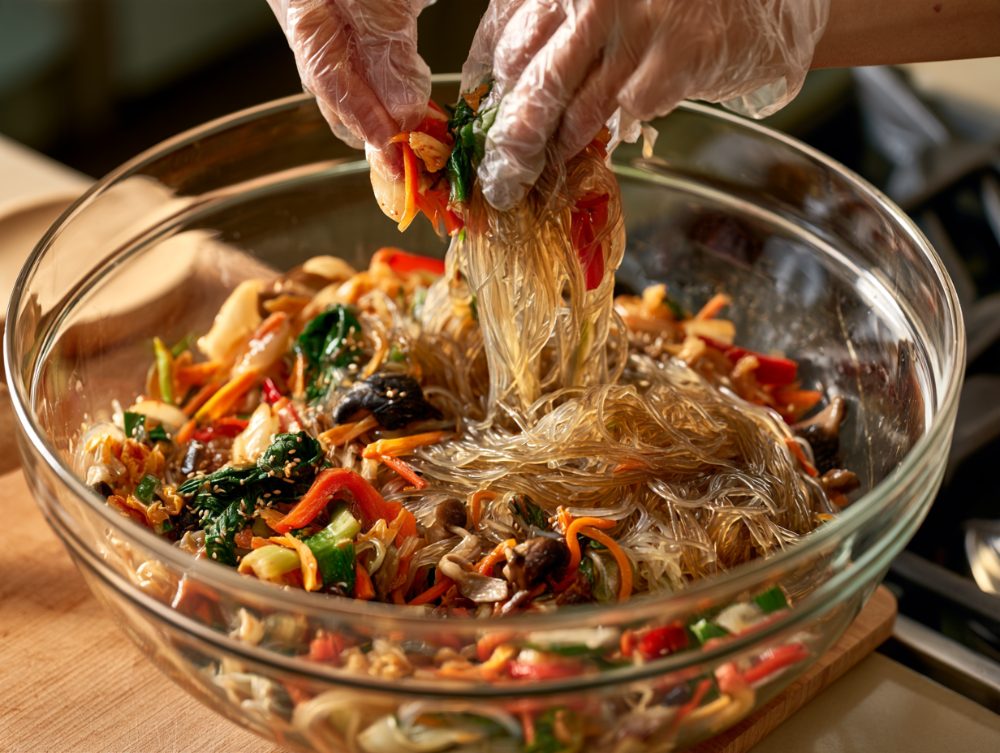
- Add the noodles and beef to the bowl of vegetables and toss everything together. Top with egg strips and sesame seeds.
Notes
Nutrition
About This Dish
Japchae was first created in the 17th century for a banquet held by King Gwanghaegun, according to historical records. The original dish was made only of vegetables and had no noodles at all; jap means mixed and chae means vegetables. Glass noodles were added in the early 20th century and became the dish’s defining ingredient. Today japchae is served at birthdays, weddings and holidays. Its colors are often linked to obangsaek, the traditional Korean five-color scheme associated with the four directions and the center.
Pairs Well With
This recipe is from The Ultimate Korean Keto Cookbook by Gisele Costello, Chapter 6: Beef & Korean BBQ (Suwon Hwaseong Fortress). See all Korean recipes