
📍 Where this dish comes from: Rhine Valley · Rhine Gorge (UNESCO)
Discover the history of this region →
Discover the history of this region →
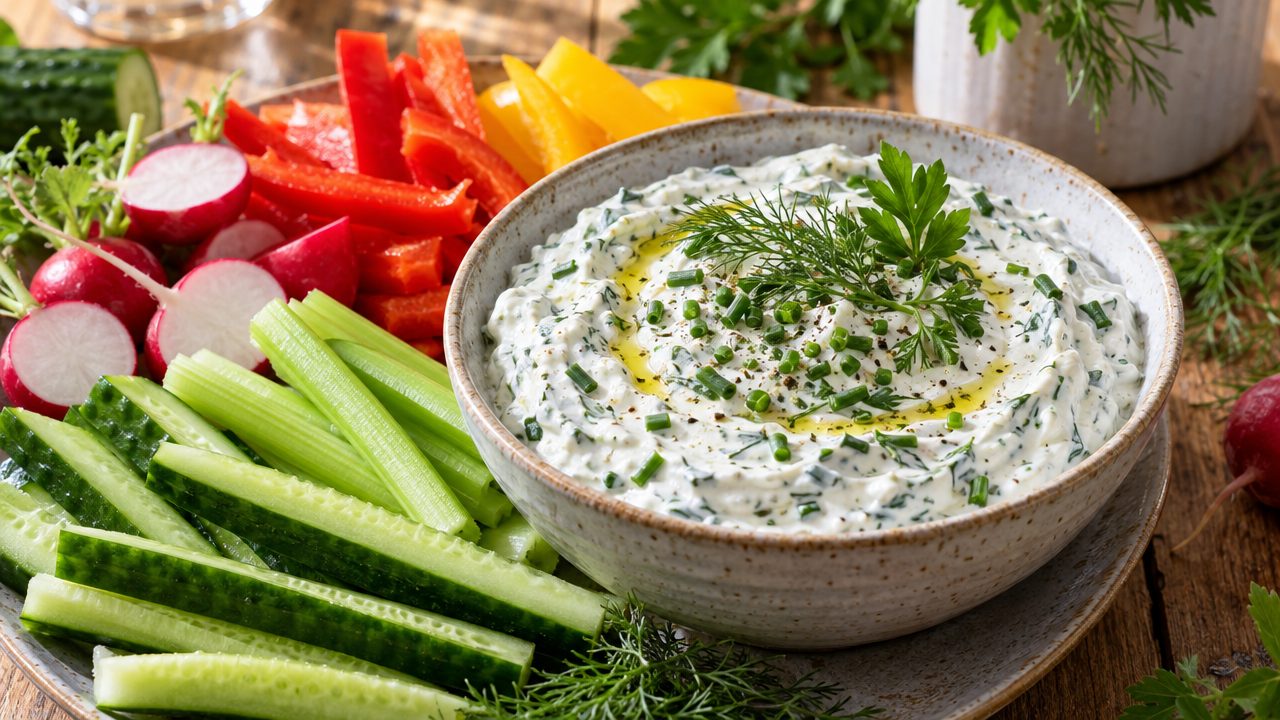
Kräuterquark is the dip that appears at every German Brotzeit board, beer garden, and summer barbecue. Made with full-fat Quark — a uniquely German cultured dairy product — and a handful of whatever herbs are freshest, it is the Swiss Army knife of German condiments: equally at home with radishes, cold cuts, grilled fish, or keto bread. Once made, it improves for up to three days in the fridge.
What You’ll Need
Servings: 6 servings
Calories: 85kcal
Ingredients
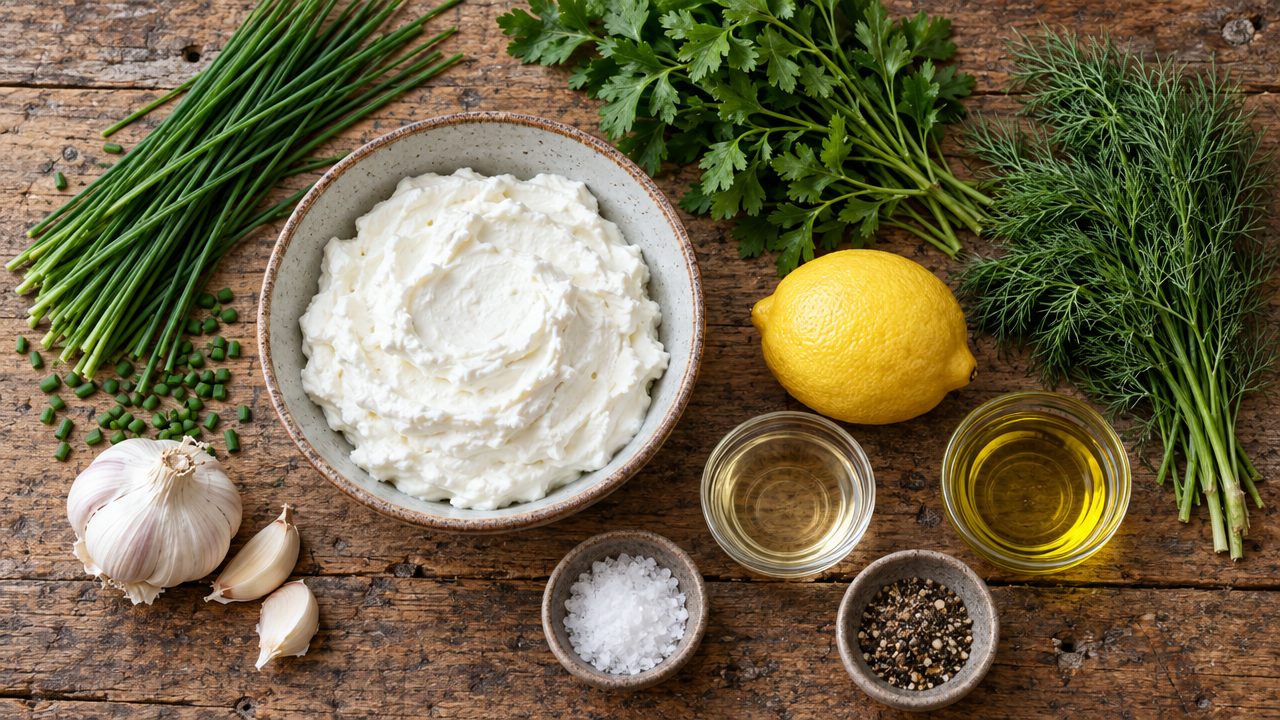
- 400 g full-fat Quark
- 1 clove garlic minced to a paste with salt
- 4 tbsp chives finely snipped
- 3 tbsp flat-leaf parsley finely chopped
- 2 tbsp dill finely chopped
- Zest and juice of 1/2 lemon
- 1 tsp white wine vinegar
- Salt and white pepper to taste
- 1 tbsp olive oil

Instructions
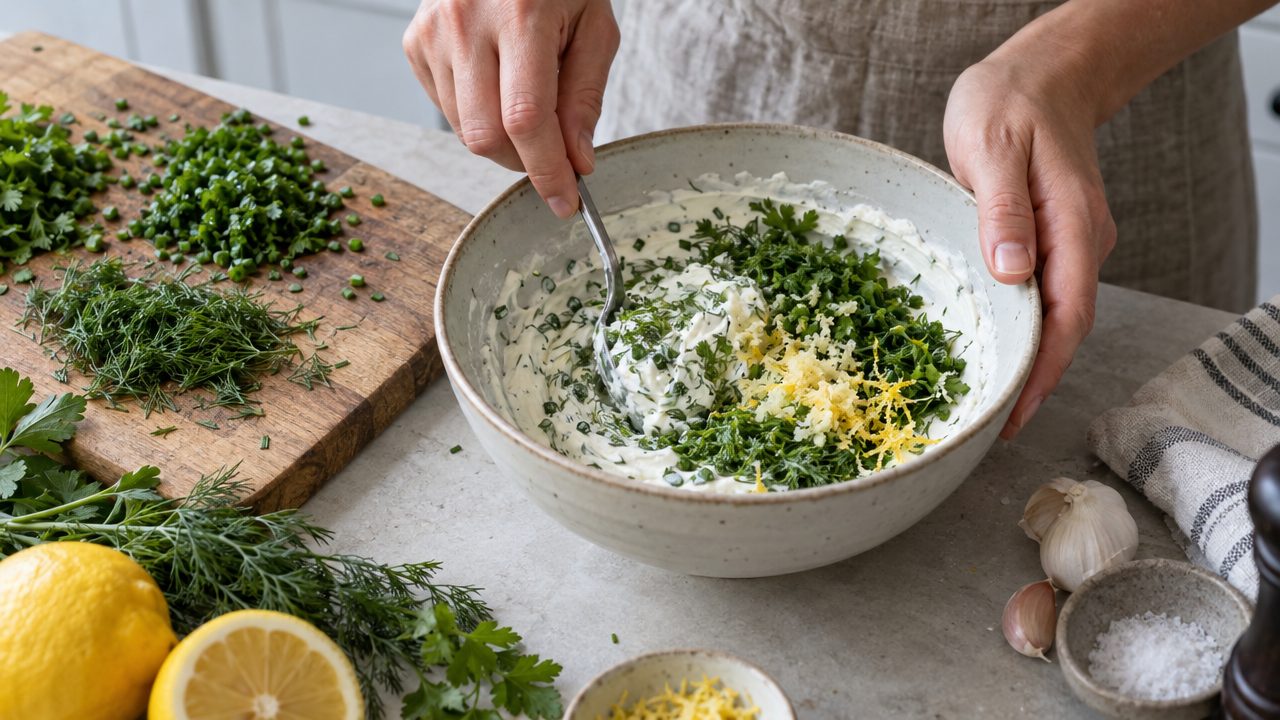
- Mix garlic paste into Quark thoroughly.
- Add all herbs, lemon zest, lemon juice, and vinegar.
- Stir in olive oil. Season generously with salt and white pepper.
- Taste — it should be bright, herby, and slightly tangy. Adjust as needed.
- Refrigerate at least 30 min before serving to allow flavours to develop.
Nutrition
Serving: 1serving | Calories: 85kcal | Protein: 10g | Fat: 3g
Tried this recipe?Let us know how it was!
Health Benefits
- Quark provides exceptionally high protein per calorie, supporting muscle repair and satiety.
- Fresh chives provide allicin and sulphur compounds studied for their properties.
- Dill and parsley provide volatile oils studied for their antimicrobial properties.