
📍 Where this dish comes from: Rhine Valley · Rhine Gorge (UNESCO)
Discover the history of this region →
Discover the history of this region →
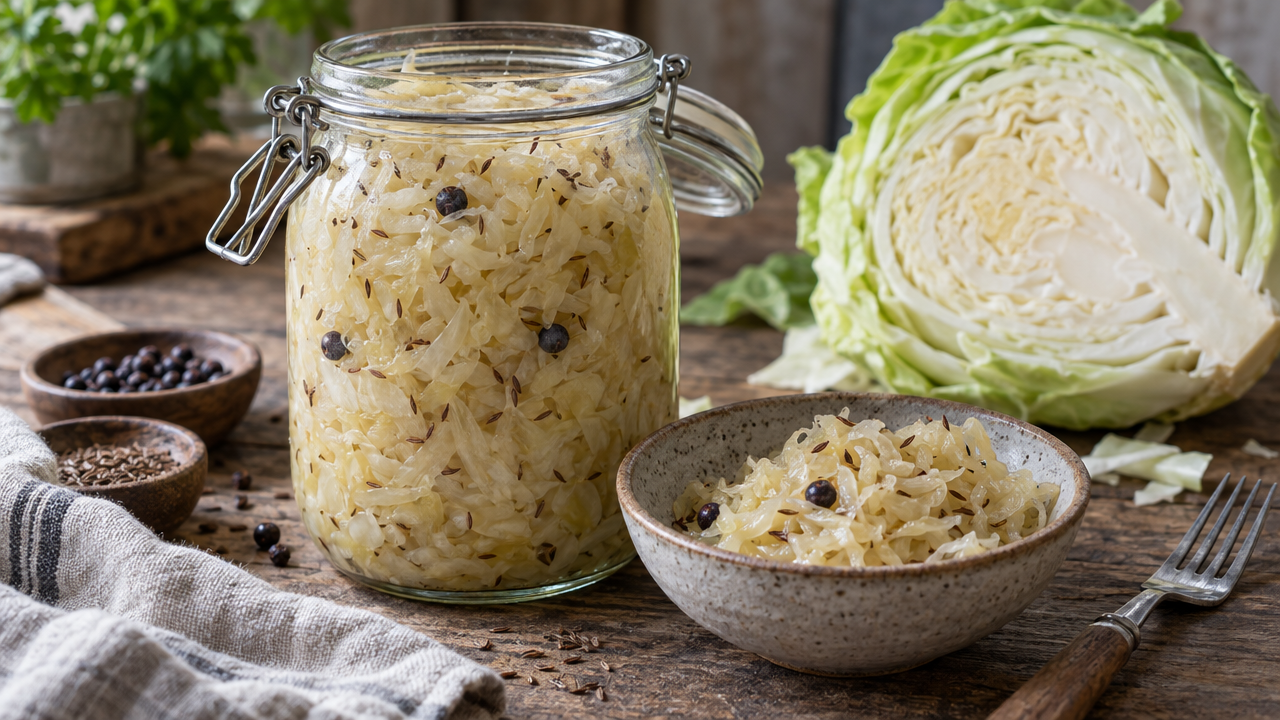
Homemade sauerkraut requires only two ingredients — cabbage and salt — and produces one of the most nutritionally dense foods in existence, in a different galaxy from any jar. The lacto-fermentation process — driven entirely by bacteria already present on the cabbage — transforms a simple vegetable into a probiotic-rich, vitamin-C-enhanced food. Caraway and juniper add the distinctively German flavour notes that make this version outstanding.
What You’ll Need
Servings: 16 servings
Calories: 20kcal
Ingredients
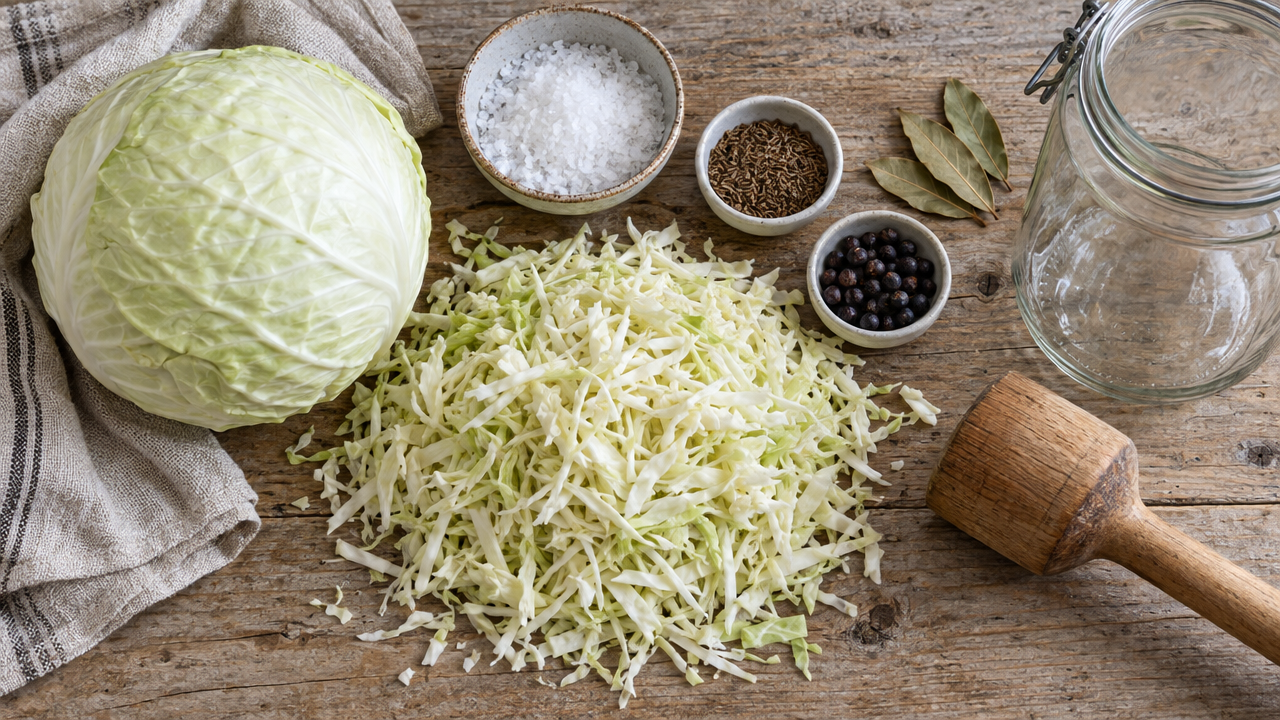
- 1 medium white cabbage (1kg)
- 20 g non-iodised sea salt (2% by weight)
- 1 tsp caraway seeds
- 4 juniper berries lightly crushed
- 2 bay leaves

Instructions
- Remove outer cabbage leaves. Shred cabbage very finely. Weigh.
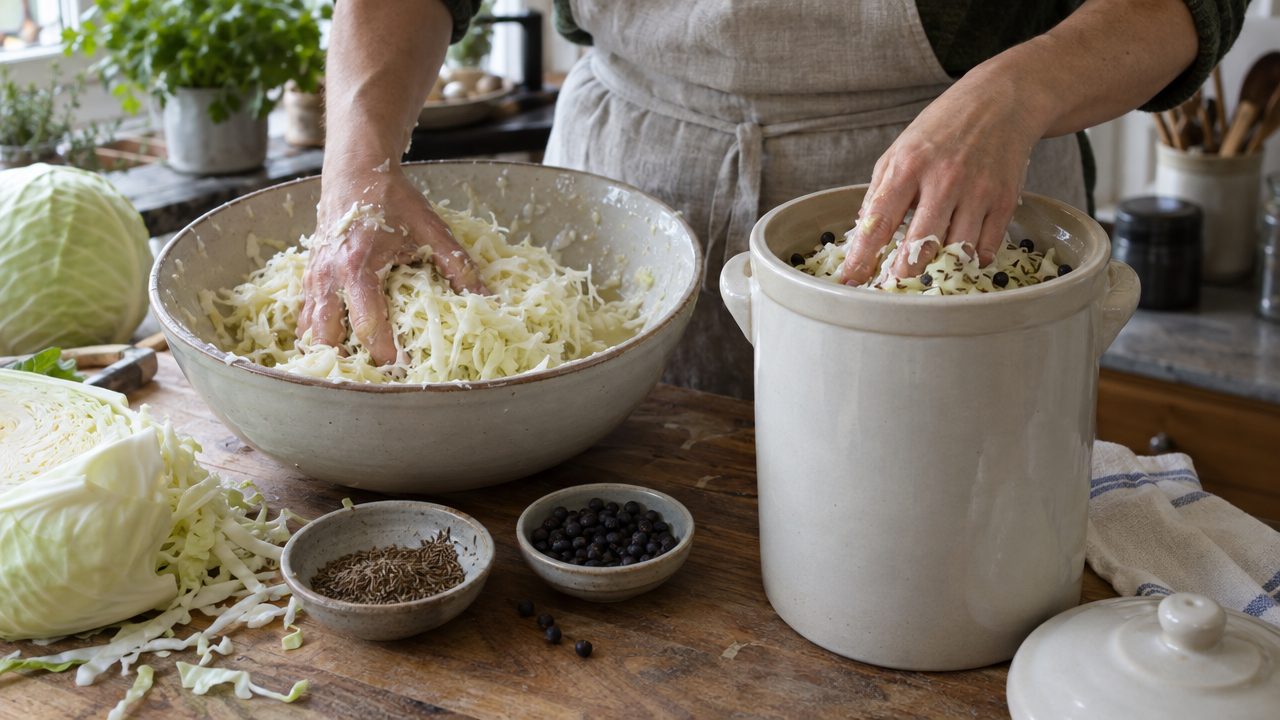
- Add 2% of the cabbage weight in salt. Massage 10 min until liquid releases.
- Add caraway, juniper, and bay. Continue massaging until brine is abundant.
- Pack very tightly into sterilised jar. Press until brine completely covers cabbage.
- Ferment at room temperature 7–14 days, tasting daily. Refrigerate when pleasingly sour.
Nutrition
Serving: 1serving | Calories: 20kcal | Protein: 1g | Fiber: 2g
Tried this recipe?Let us know how it was!
Health Benefits
- Genuine lacto-fermented sauerkraut like this is a real source of live probiotic bacteria, since the process involves no cooking or pasteurization.
- Fermentation is studied for its potential to convert some vitamin K1 in cabbage into vitamin K2.
- The organic acids produced during fermentation are an active area of research regarding blood sugar response.