
📍 Where this dish comes from: Rhine Valley · Rhine Gorge (UNESCO)
Discover the history of this region →
Discover the history of this region →
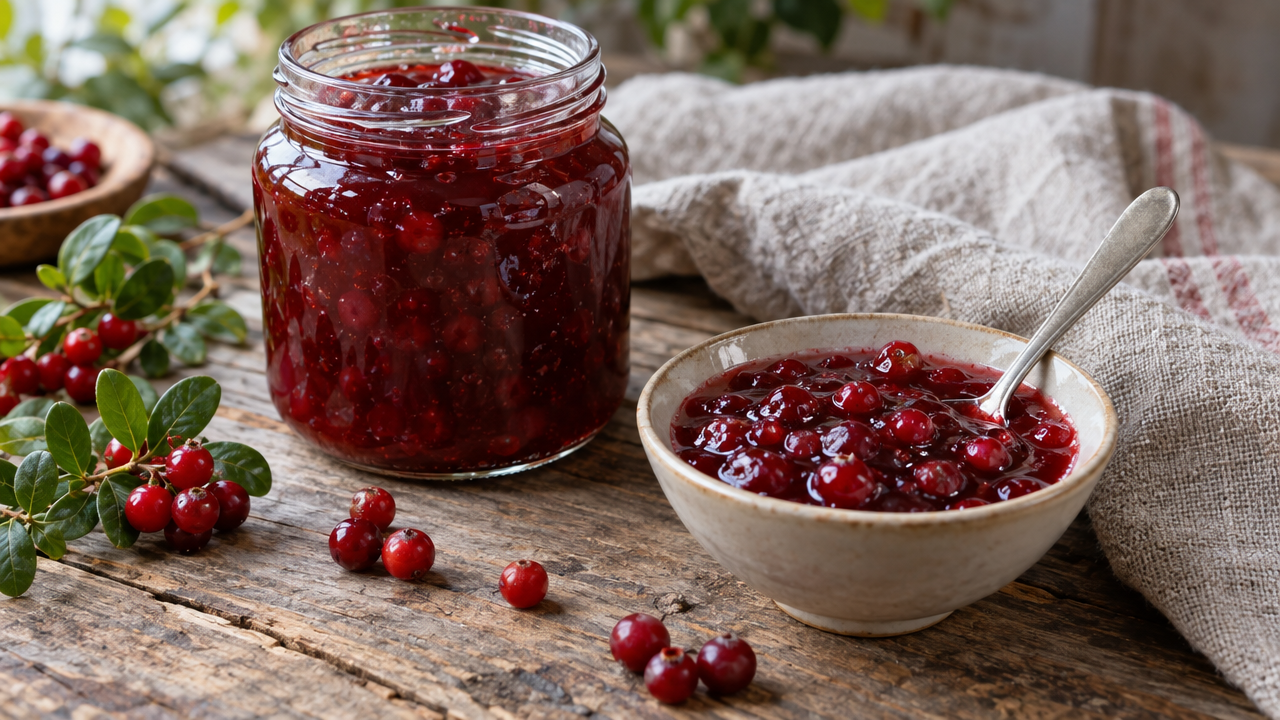
Preiselbeeren — wild lingonberries — grow across northern European forests and are harvested each autumn to make this vivid, tart-sweet sauce. It is the classic accompaniment to game, duck, and wild boar, where its acidity cuts through fat and its fruity bitterness adds a dimension that transforms every bite. This keto version uses erythritol to balance the berries’ natural sharpness without compromising authenticity.
What You’ll Need
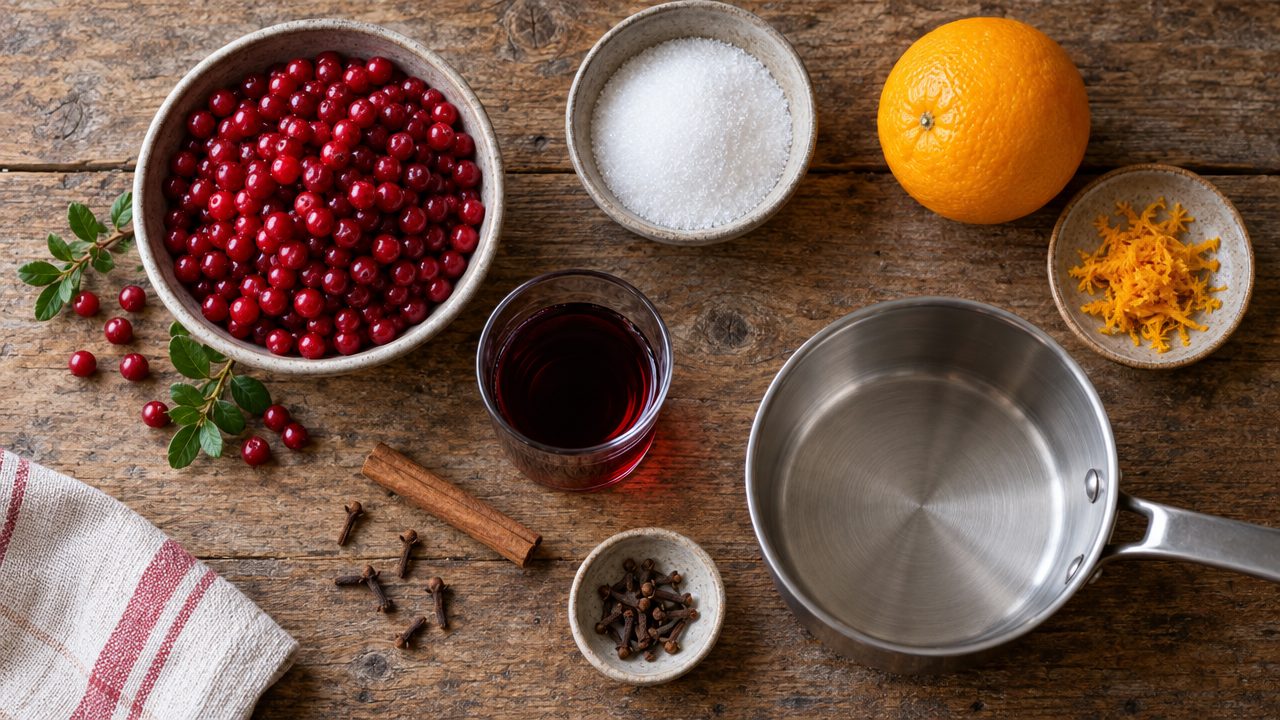
Servings: 12 servings
Calories: 35kcal
Ingredients
- 300 g lingonberries (fresh or frozen) or cranberries
- 3 tbsp erythritol
- Zest and juice of 1 orange
- 60 ml dry red wine
- 1/2 tsp cinnamon
- 2 cloves
- 1 bay leaf
- Pinch of salt

Instructions
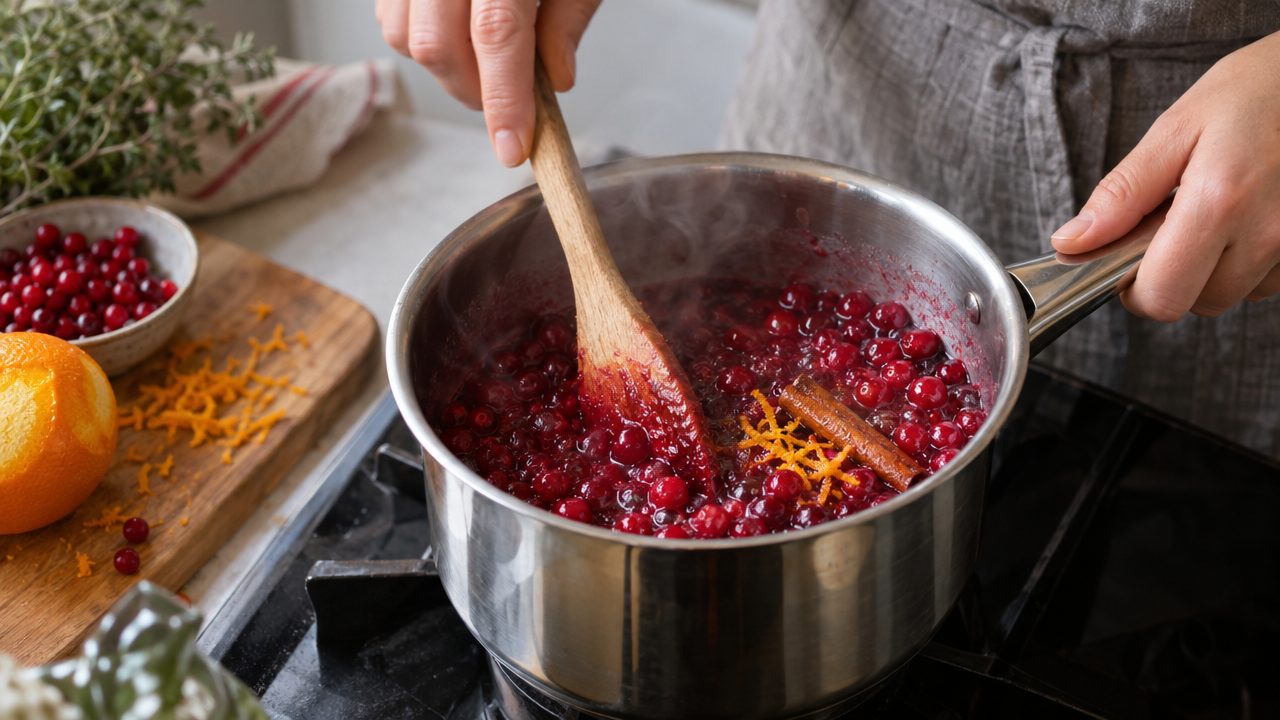
- Combine lingonberries, erythritol, orange zest, orange juice, wine, cinnamon, cloves, and bay in a saucepan.
- Bring to a boil, stirring. Reduce heat and simmer 15–20 min until berries burst and sauce thickens.
- Remove cloves and bay leaf.
- Taste — adjust with more erythritol, orange juice, or a pinch of salt.
- Cool and store in sterilised jar. Refrigerate up to 2 weeks.
Nutrition
Serving: 1serving | Calories: 35kcal | Fiber: 2g
Tried this recipe?Let us know how it was!
Health Benefits
- Lingonberries contain quercetin and resveratrol, antioxidants studied for their potential cardiovascular benefits.
- Cinnamon’s cinnamaldehyde is studied for its potential role in post-meal blood sugar response.
- Orange zest provides d-limonene, a compound studied for its antioxidant properties.