
📍 Where this dish comes from: Srinagar, Kashmir · Dal Lake
Discover the history of this region →
Discover the history of this region →
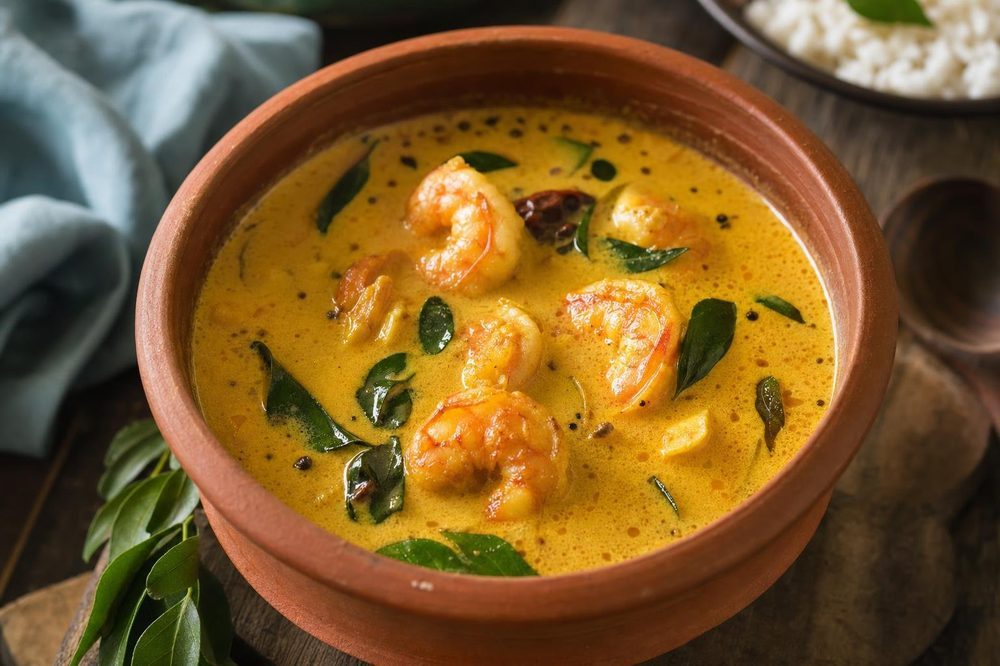
The Malabar coast of Kerala is India’s most fertile seafood region — fishing communities here have perfected coconut-based prawn preparations over centuries. Plump, ocean-sweet prawns float in a golden coconut broth charged with fierce tamarind brightness, the heat of green chili, and the unmistakable perfume of curry leaf; every spoonful tastes exactly like standing barefoot on a Kerala beach at the golden hour.
What You’ll Need
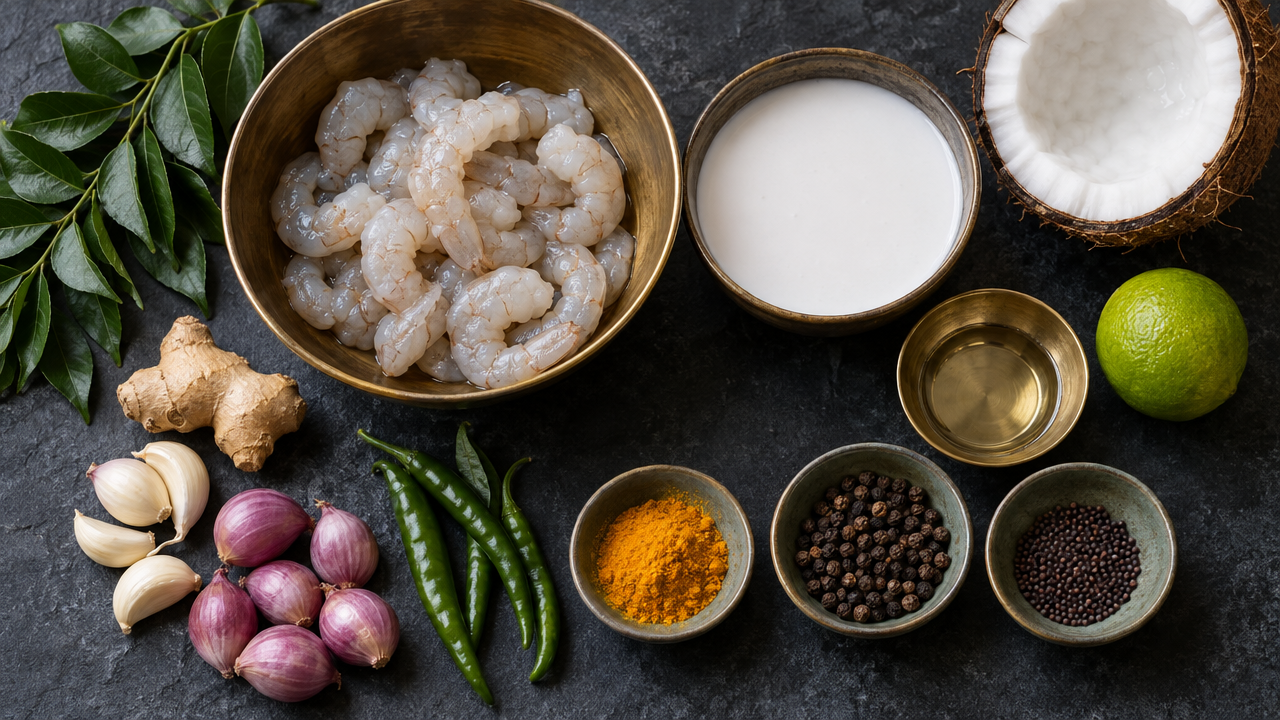
Servings: 4 servings
Calories: 310kcal
Ingredients
- 400 g large prawns cleaned
- 2 tbsp coconut oil
- 1 onion sliced
- 2 green chilies slit
- 1 tsp ginger grated
- 10 curry leaves
- 1/2 tsp turmeric
- 1 tsp red chili powder
- 1 tsp coriander powder
- 1 tbsp tamarind paste
- 400 ml coconut milk
- 1 cup water
- Salt

Instructions
- Heat coconut oil; add curry leaves and onion.
- Cook until onion is soft, 5 minutes.
- Add ginger, green chilies, and all spices.
- Cook 2 minutes until fragrant.
- Add tamarind paste and water; stir.
- Add coconut milk and bring to a gentle simmer.
- Add prawns; cook 4–5 minutes until pink and curled.
- Adjust seasoning; serve immediately.
Nutrition
Serving: 1serving | Calories: 310kcal | Protein: 24g | Fat: 22g | Fiber: 1g
Tried this recipe?Let us know how it was!
Health Benefits
- Prawns provide astaxanthin, a carotenoid antioxidant studied for its potential health benefits.
- Coconut oil in this recipe provides caprylic acid (C8), the fastest-converting MCT for ketone production.
- Tamarind provides tartaric acid, an organic acid studied for its antioxidant properties.