
Discover the history of this region →
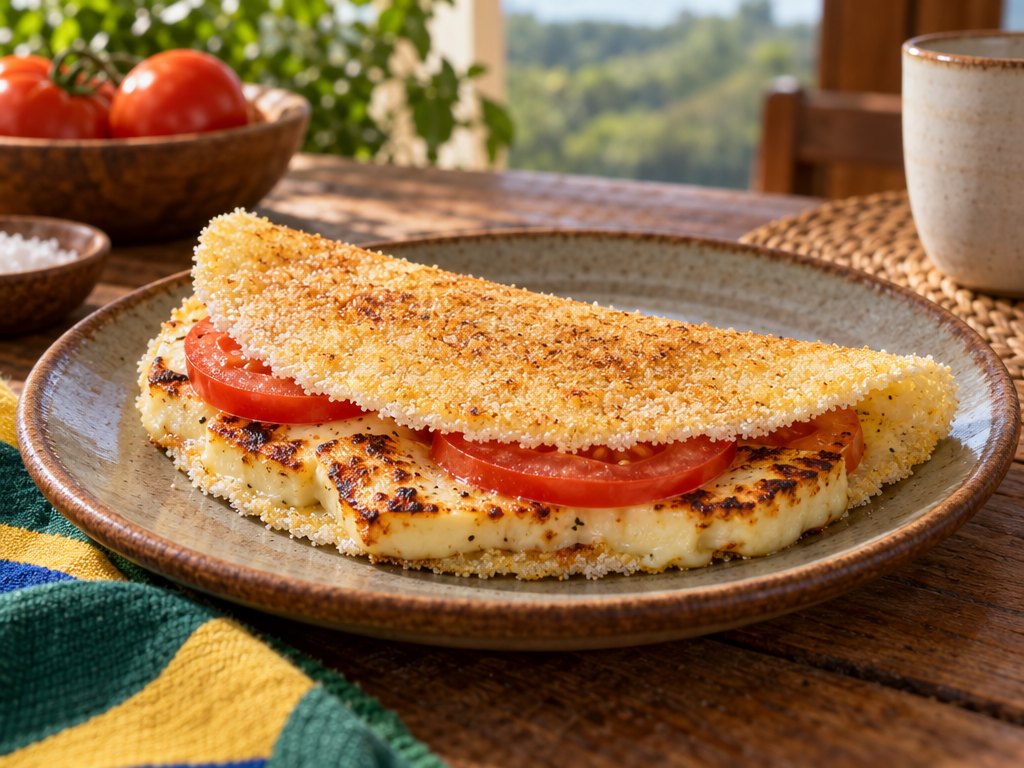
In Brazil's Northeast, tapioca is a chewy, folded crepe cooked on a hot pan and filled with anything from cheese to coconut. Street vendors called tapioqueiras make them to order, and they are now a breakfast favorite across the country. This keto version swaps the cassava starch for a thin egg and psyllium wrap with a pleasant chew, filled with salty, squeaky queijo coalho.
Per serving: 326 calories · 3.5 g net carbs · 18 g protein · 25 g fat (calculated from the ingredients)
What You’ll Need
Ingredients
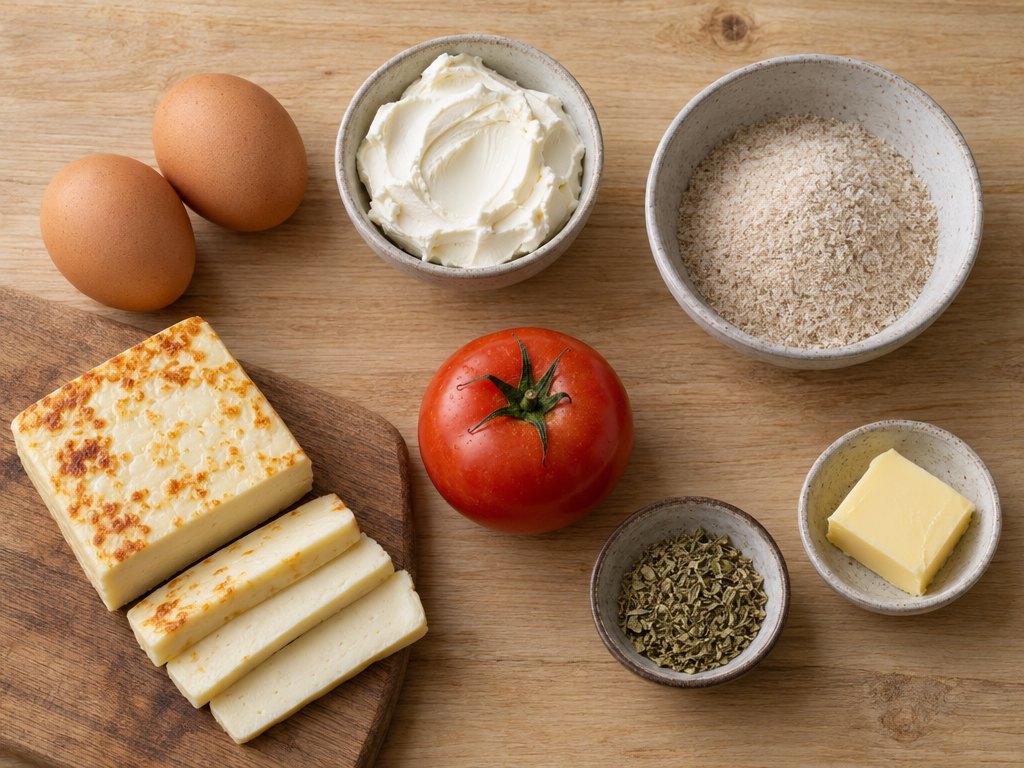
- 2 large eggs
- 3 tablespoons cream cheese softened
- 2 teaspoons psyllium husk powder
- Pinch of salt
- 1 teaspoon butter for the pan
- 3 ounces queijo coalho or halloumi coarsely grated
- 1 small tomato thinly sliced
- Pinch of dried oregano

Instructions
- In a blender or with a whisk, beat the eggs, cream cheese, psyllium and salt until completely smooth. Let the batter rest for 3 minutes so the psyllium can thicken it.
- Heat an 8-inch nonstick skillet over medium-low heat and rub it with a little butter.
- Pour in half the batter and swirl the pan to make a thin, even round. Cook for 1 1/2 to 2 minutes, until the edges lift and the top is set, then flip and cook 30 seconds more.
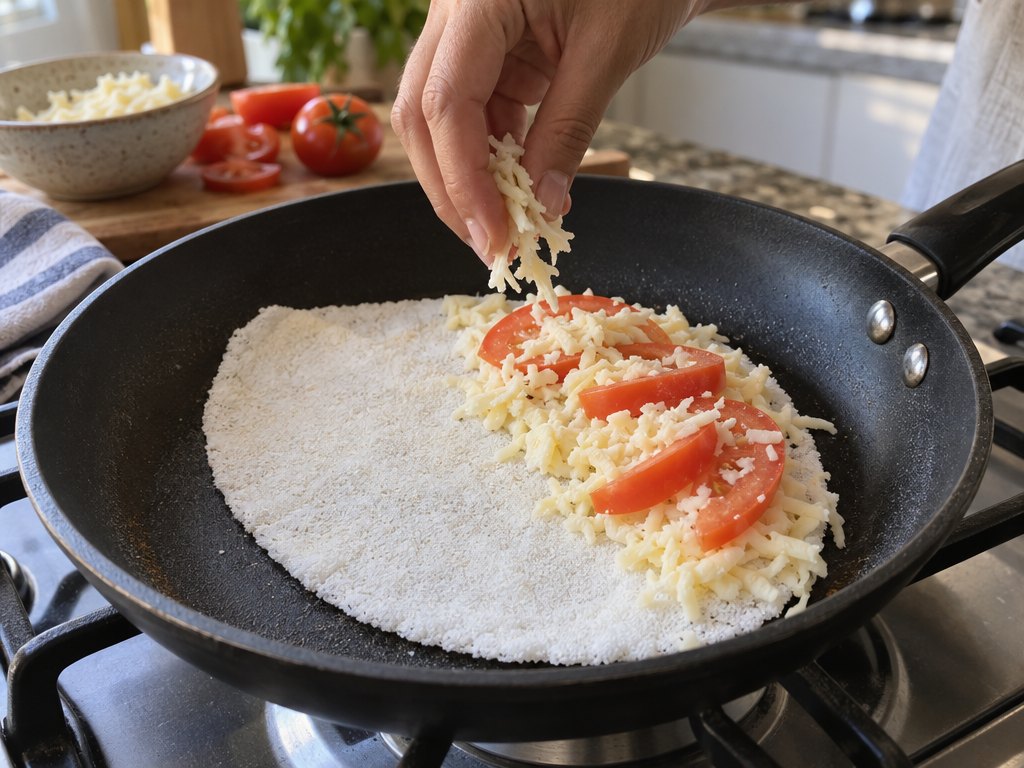
- Scatter half the grated cheese over one half of the crepe, top with half the tomato slices and a pinch of oregano, and fold it closed. Cook 1 minute per side, until the cheese softens.
- Repeat with the remaining batter and filling. Serve hot.
Notes
Nutrition
About This Dish
Tapioca crepes come from Indigenous Brazilian cooking, where cassava starch was cooked on hot surfaces into flatbreads called beiju. The starch, called goma, is sifted onto a dry pan and the heat alone fuses it into a chewy disc, no oil or binder needed. In Recife, Olinda and Fortaleza, tapioca stands are a fixture of beach promenades and street corners. The most traditional fillings are coconut, butter and queijo coalho, a firm cheese from the Northeast that browns without melting. Over the last couple of decades tapioca has spread to cafés all over Brazil.
This recipe is from The Ultimate Brazilian Keto Cookbook by Gisele Costello, Chapter 1: Breakfast (Mercado Municipal). See all Brazilian recipes