
Discover the history of this region →
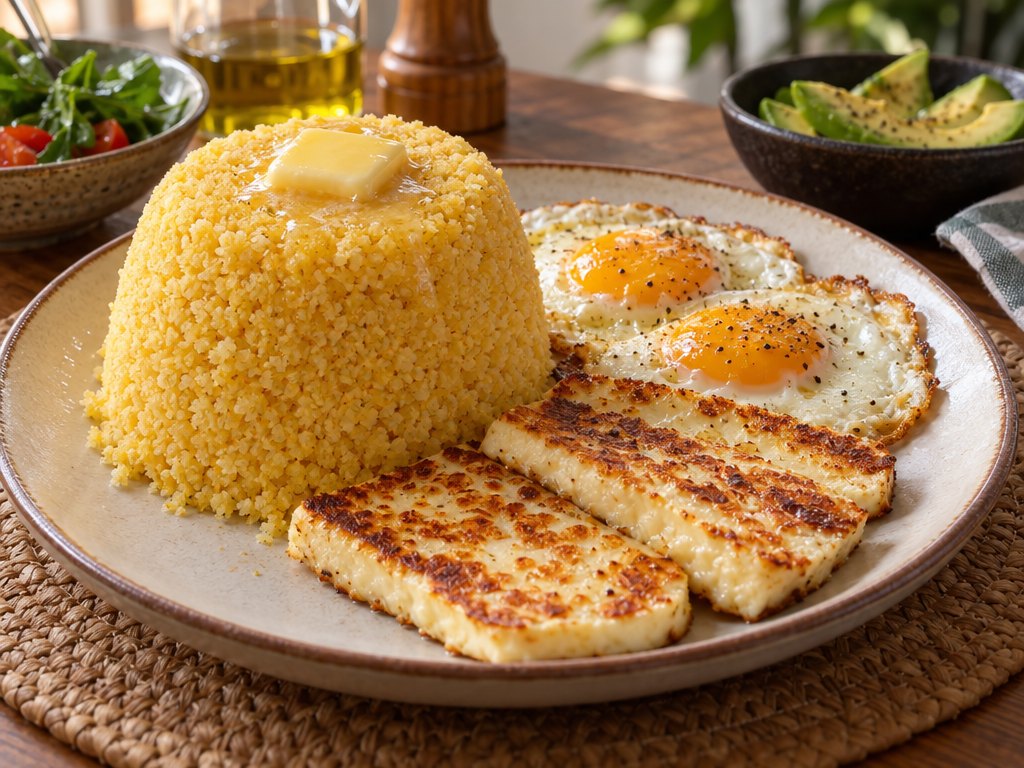
Cuscuz nordestino is the golden steamed cake that starts the day in homes across Brazil's Northeast. It is loosened with a fork, crowned with butter and served with fried eggs and grilled queijo coalho. Here riced cauliflower and a little almond flour are steamed and pressed into the same tender, crumbly cake.
Per serving: 330 calories · 5.5 g net carbs · 16 g protein · 27 g fat (calculated from the ingredients)
What You’ll Need
Ingredients
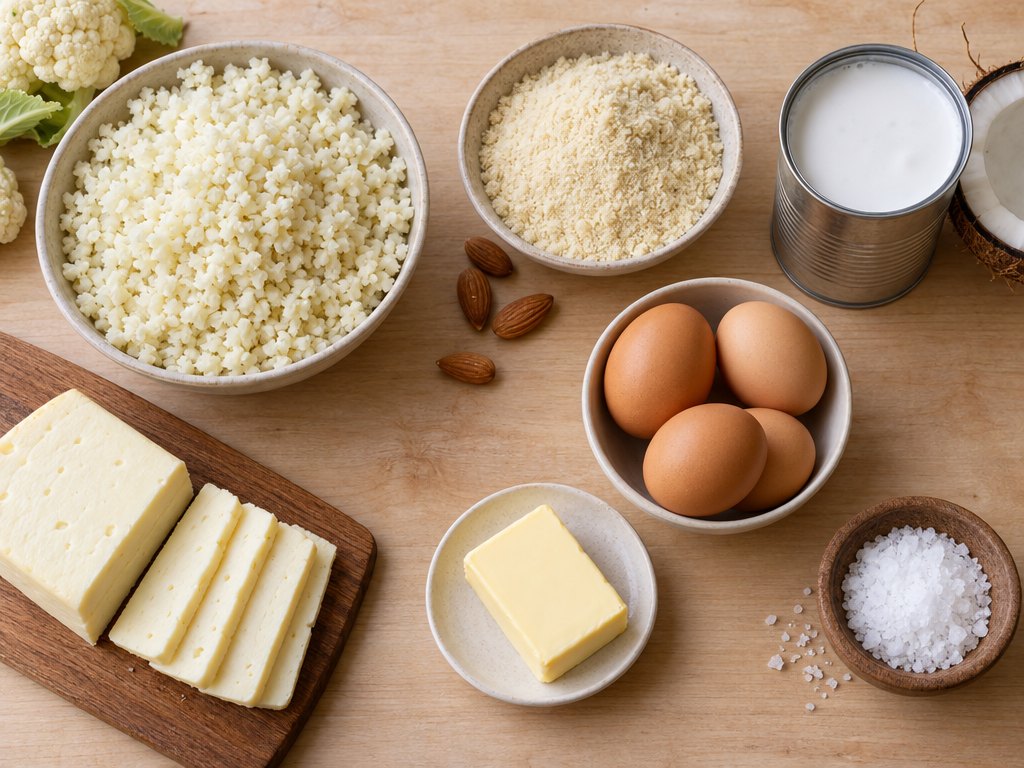
- 4 cups riced cauliflower squeezed very dry
- 1/4 cup blanched almond flour
- 1/4 cup canned coconut milk
- 3/4 teaspoon fine sea salt
- 3 tablespoons butter divided
- 4 large eggs
- 3 1/2 ounces queijo coalho or halloumi sliced

Instructions
- In a bowl, mix the cauliflower, almond flour, coconut milk and salt with your fingers until evenly moistened.
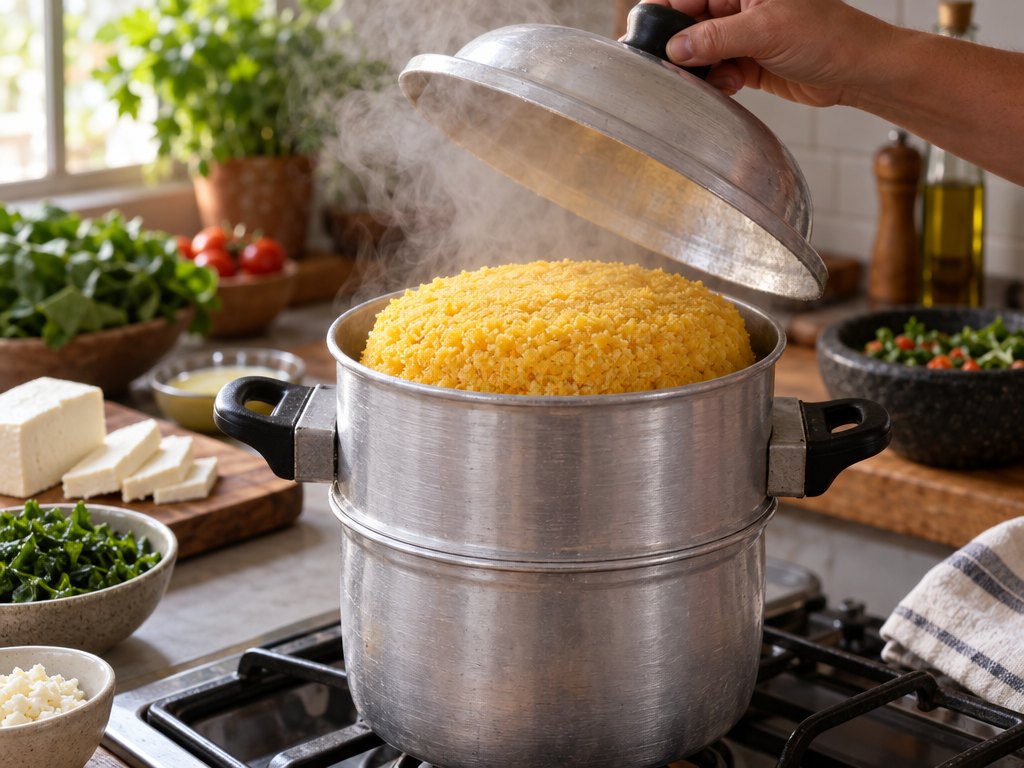
- Pack the mixture into a cuscuzeira (a Brazilian couscous steamer) or a small heatproof bowl set in a steamer basket. Cover and steam over simmering water for 12 to 15 minutes, until tender and fragrant.
- Meanwhile, melt 1 tablespoon of the butter in a skillet over medium heat and fry the eggs to your liking. Move them to a plate.
- Add the cheese slices to the hot skillet and cook for 1 to 2 minutes per side, until golden brown.
- Turn the cuscuz out onto a platter, or spoon it into bowls. Top with the remaining butter, letting it melt in, and serve with the fried eggs and grilled cheese.
Notes
Nutrition
About This Dish
Couscous reached Brazil through the Portuguese, who knew it from North Africa, and Brazilian cooks adapted it to corn. In the Northeast, cuscuz is steamed in a tall two-part pot called a cuscuzeira and is often eaten at breakfast and again at dinner. It is served with butter, eggs, cheese, coconut milk, or dried and salted meats. São Paulo has a completely different dish called cuscuz paulista, a molded savory cake with sardines, hearts of palm and tomato. Ask for cuscuz in Recife and in São Paulo and you will be handed two very different plates.
This recipe is from The Ultimate Brazilian Keto Cookbook by Gisele Costello, Chapter 1: Breakfast (Mercado Municipal). See all Brazilian recipes