Discover the history of this region →
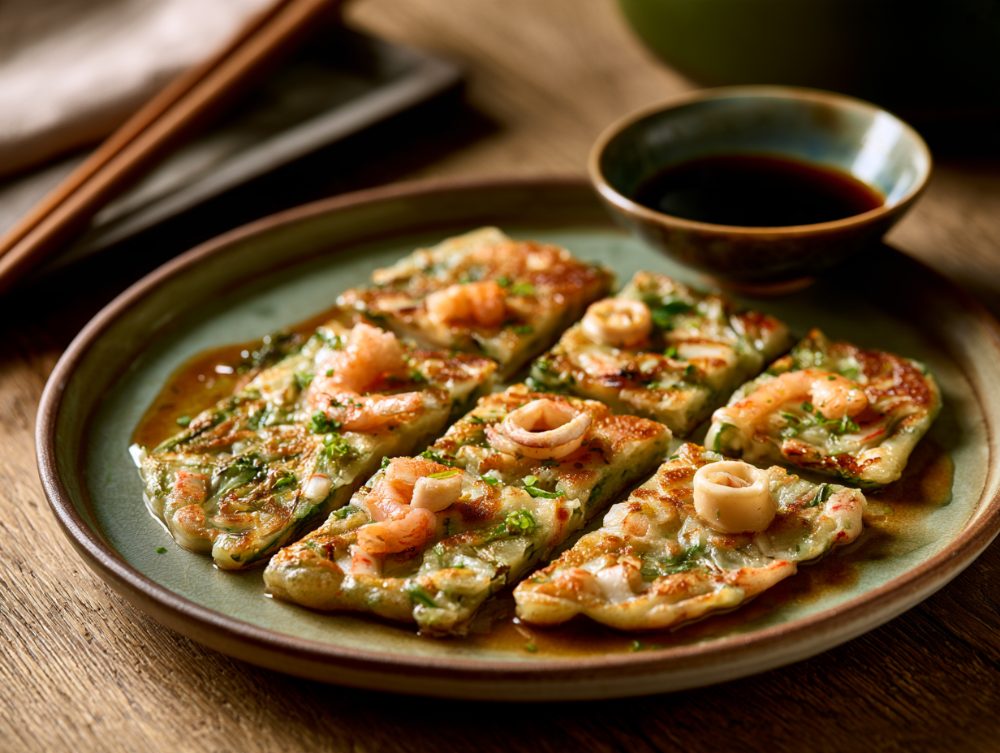
Haemul pajeon is a big, golden pancake packed with whole scallions, shrimp and squid. It is a classic shared dish, cut into squares at the table and dunked in a tangy soy dipping sauce. With an almond-flour and egg batter, it stays crisp at the edges and tender in the middle.
Per serving: 292 calories · 4.5 g net carbs · 19 g protein · 22 g fat (calculated from the ingredients)
What You’ll Need
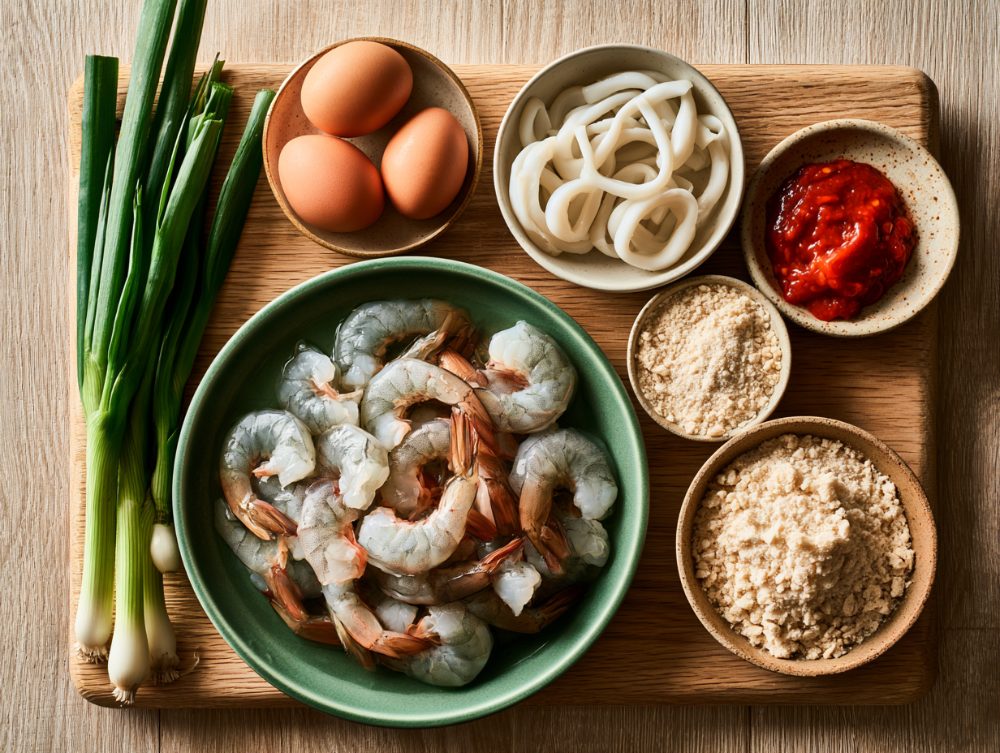
Ingredients
- 1 bunch scallions (about 8) trimmed and halved crosswise
- 4 ounces raw shrimp peeled and chopped
- 4 ounces cleaned squid cut into thin rings
- 3 large eggs
- 1/2 cup blanched almond flour
- 1/4 teaspoon xanthan gum
- 1/4 cup ice water
- 1/2 teaspoon salt
- 1 red chili thinly sliced
- 3 tablespoons avocado oil
- Dipping sauce: 2 tablespoons soy sauce, 1 tablespoon rice vinegar, 1/2 teaspoon gochugaru

Instructions
- Whisk 2 of the eggs with the almond flour, xanthan gum, ice water and salt until smooth.
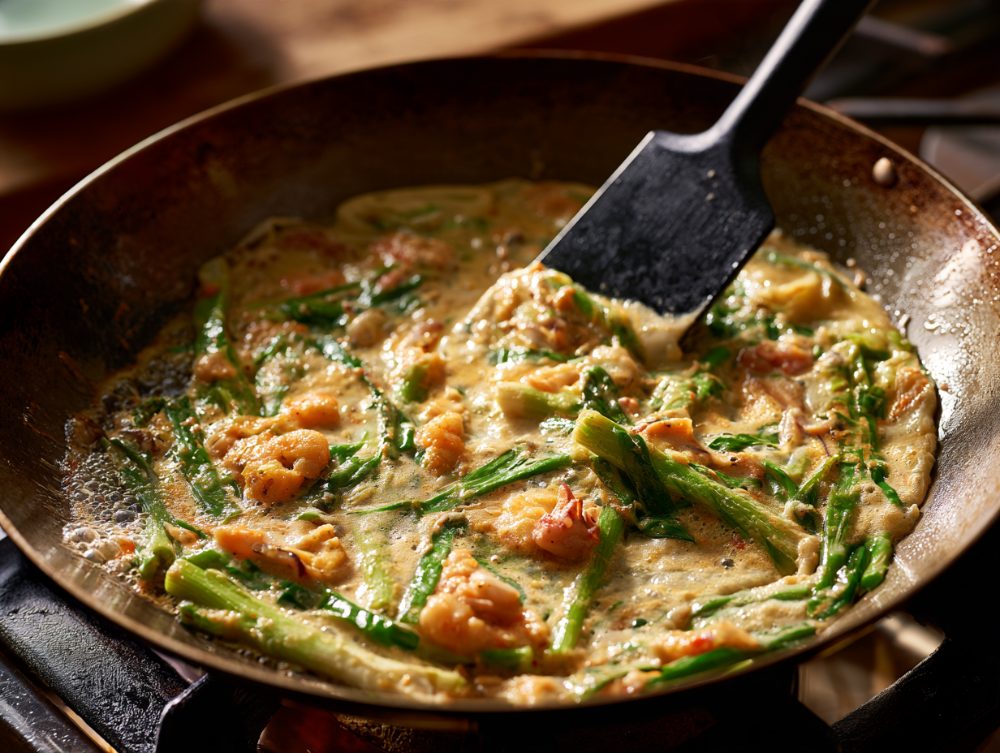
- Heat 2 tablespoons of oil in a large nonstick skillet over medium heat. Lay the scallions in the pan in a single, even layer, all pointing the same way.
- Pour the batter evenly over the scallions. Scatter the shrimp, squid and chili on top and press them gently into the batter.
- Beat the remaining egg and drizzle it over the seafood to hold everything together. Cook for 4 to 5 minutes, until the bottom is golden.
- Slide the pancake onto a plate, invert it back into the pan, and add the remaining oil around the edges. Cook another 4 minutes, pressing with a spatula.
- Cut into squares and serve with the dipping sauce.
Notes
Nutrition
About This Dish
Pa means scallion and jeon means pancake, so pajeon is simply "scallion pancake." The seafood version, haemul pajeon, is especially loved in coastal cities. The Dongnae area of Busan is famous for its own thick version, Dongnae pajeon, which is said to have been presented to the royal court during the Joseon era. Pajeon is traditionally eaten with makgeolli, especially on rainy days. Restaurants serve it on big round plates to be torn apart with chopsticks and shared.
This recipe is from The Ultimate Korean Keto Cookbook by Gisele Costello, Chapter 2: Snacks & Banchan (Gwangjang Market). See all Korean recipes