
Discover the history of this region →
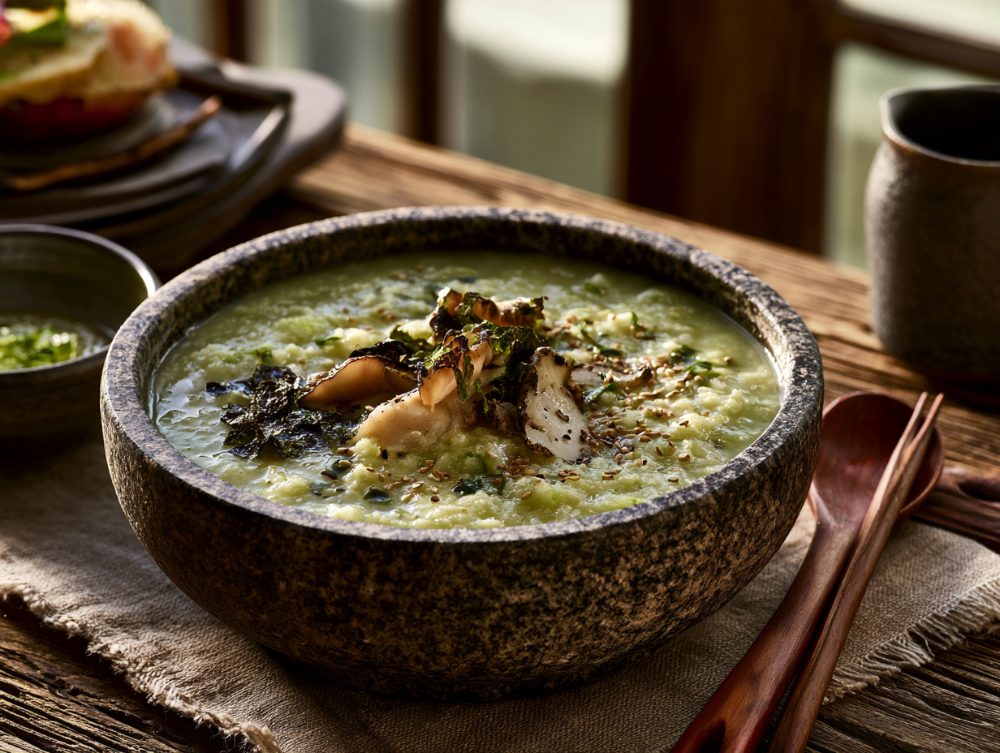
Jeonbokjuk is the luxurious porridge of Jeju Island, made from tender abalone sautéed in sesame oil. Its pale green color comes from the abalone’s own innards, which give it a rich, ocean-sweet flavor. Koreans serve it as a nourishing breakfast or to anyone who needs comfort, and blended cauliflower gives this keto version the same creamy body as rice.
Per serving: 198 calories · 11 g net carbs · 17 g protein · 9 g fat (calculated from the ingredients)
What You’ll Need
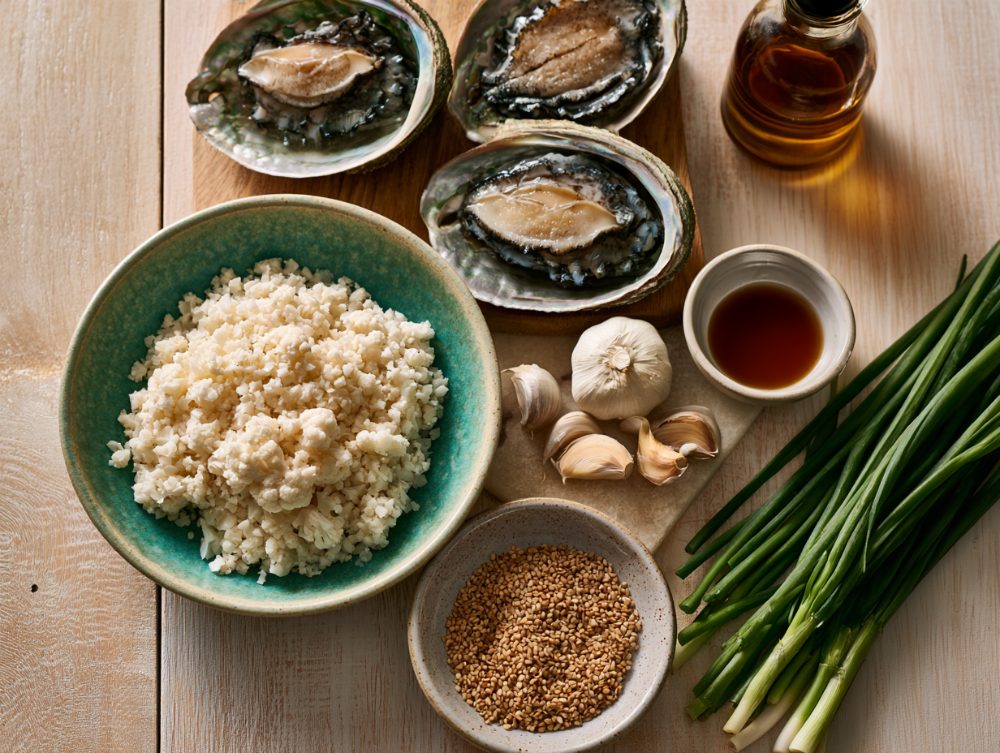
Ingredients
- 3 medium fresh abalone about 5 ounces shelled
- 1 tablespoon toasted sesame oil
- 2 cloves garlic minced
- 3 cups riced cauliflower
- 2 cups water or anchovy-kelp broth
- 1 teaspoon fish sauce or soup soy sauce
- Salt to taste
- 1 scallion thinly sliced
- 1 teaspoon toasted sesame seeds
- Crumbled roasted seaweed (gim) for garnish

Instructions
- Scrub the abalone with a clean brush. Slide a spoon between the shell and the meat to release it. Separate the green-gray innards and set them aside; remove and discard the hard mouth piece. Thinly slice the meat.
- Mash the reserved innards with a fork. Heat the sesame oil in a medium pot over medium heat, add the innards and garlic and cook for 1 minute, until fragrant.
- Add the sliced abalone and cauliflower rice and stir-fry for 3 minutes, until the abalone turns opaque.
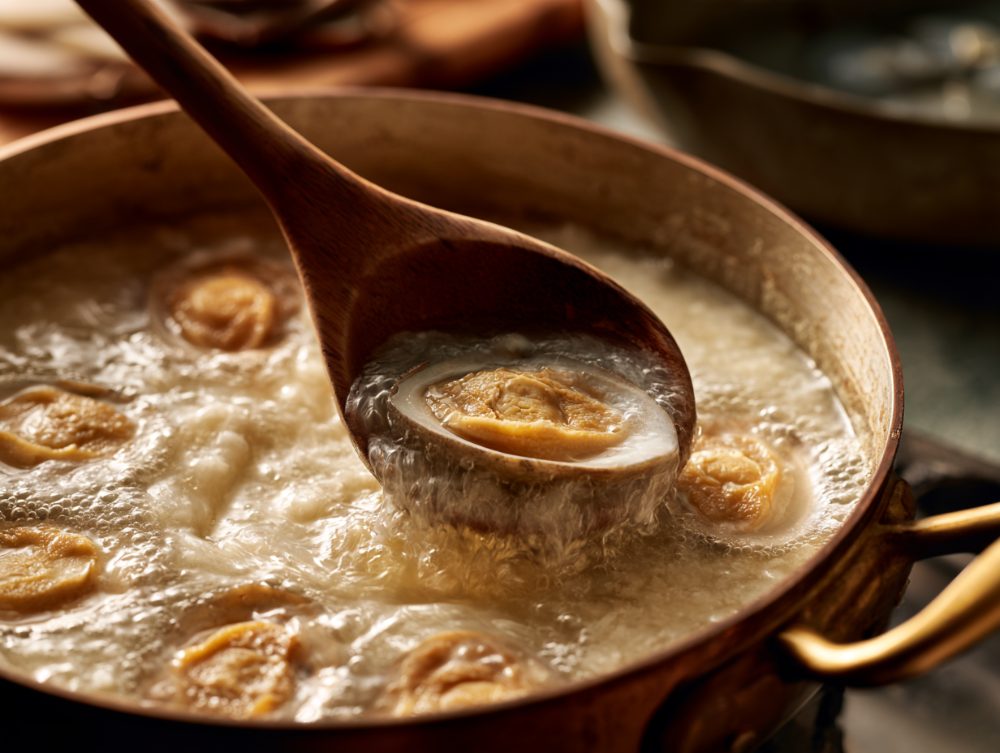
- Pour in the water or broth, bring to a boil, then lower to a simmer for 10 minutes, until the cauliflower is very soft.
- Scoop out about 1 cup of the cauliflower and liquid (avoid the abalone slices), blend until smooth, and stir it back in. Simmer 2 minutes more until creamy. Season with fish sauce and salt.
- Ladle into bowls and top with scallion, sesame seeds and seaweed.
Notes
Nutrition
About This Dish
Jeonbokjuk is one of the signature dishes of Jeju Island, where abalone have been gathered for centuries by the haenyeo, Jeju’s women free divers. The haenyeo dive without oxygen tanks, often well into their seventies and eighties, and their culture was added to UNESCO’s list of Intangible Cultural Heritage in 2016. Abalone was once so prized that it was sent to the royal court as tribute. In Korea, juk (porridge) is traditional food for people recovering from illness, because it is gentle and easy to digest. Many cooks consider the green tint from the abalone’s innards the sign of a rich, well-made bowl.
This recipe is from The Ultimate Korean Keto Cookbook by Gisele Costello, Chapter 1: Breakfast (Bukchon Hanok Village). See all Korean recipes