
Discover the history of this region →
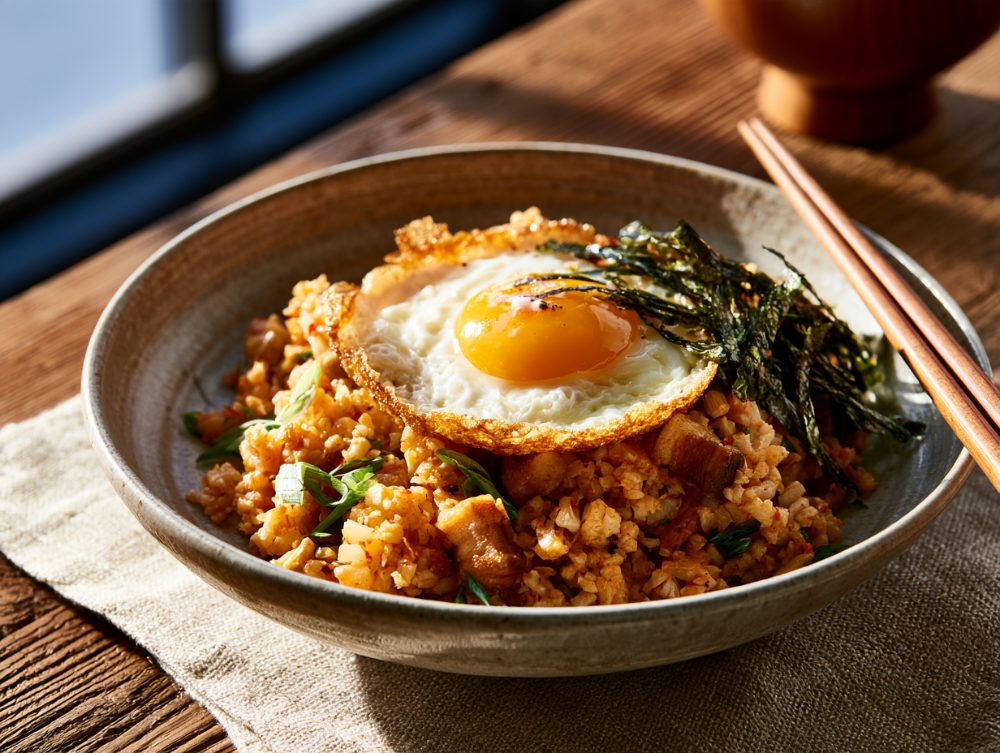
Kimchi bokkeumbap is the dish Korean home cooks make when the kimchi in the fridge has turned perfectly sour and there is leftover rice to use up. Pork belly renders into the pan, kimchi caramelizes in its fat, and a runny fried egg crowns the bowl. Cauliflower rice soaks up all that flavor and keeps the dish firmly keto.
Per serving: 627 calories · 7.2 g net carbs · 20 g protein · 56 g fat (calculated from the ingredients)
What You’ll Need
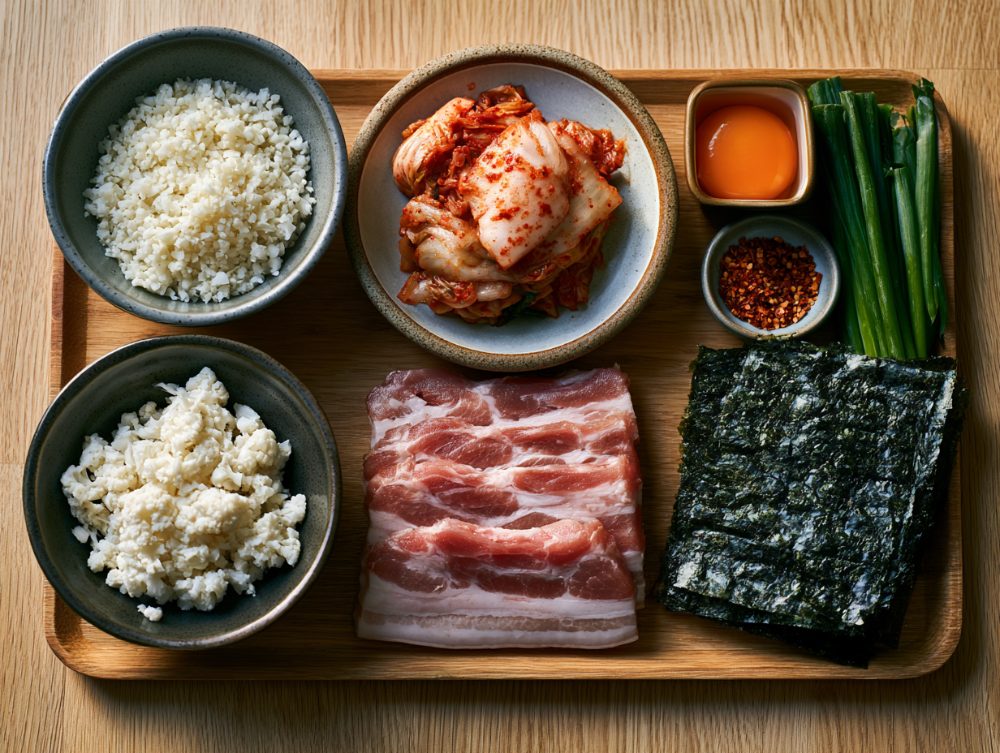
Ingredients
- 6 ounces pork belly cut into thin bite-size strips
- 1 cup well-fermented napa cabbage kimchi chopped
- 2 tablespoons kimchi juice
- 3 cups riced cauliflower squeezed dry
- 1 teaspoon gochugaru (Korean red pepper flakes)
- 1 teaspoon soy sauce
- 2 scallions sliced, whites and greens separated
- 1 teaspoon toasted sesame oil
- 2 large eggs
- 1 teaspoon avocado oil
- 1 sheet roasted seaweed (gim) cut into strips
- 1 teaspoon toasted sesame seeds

Instructions
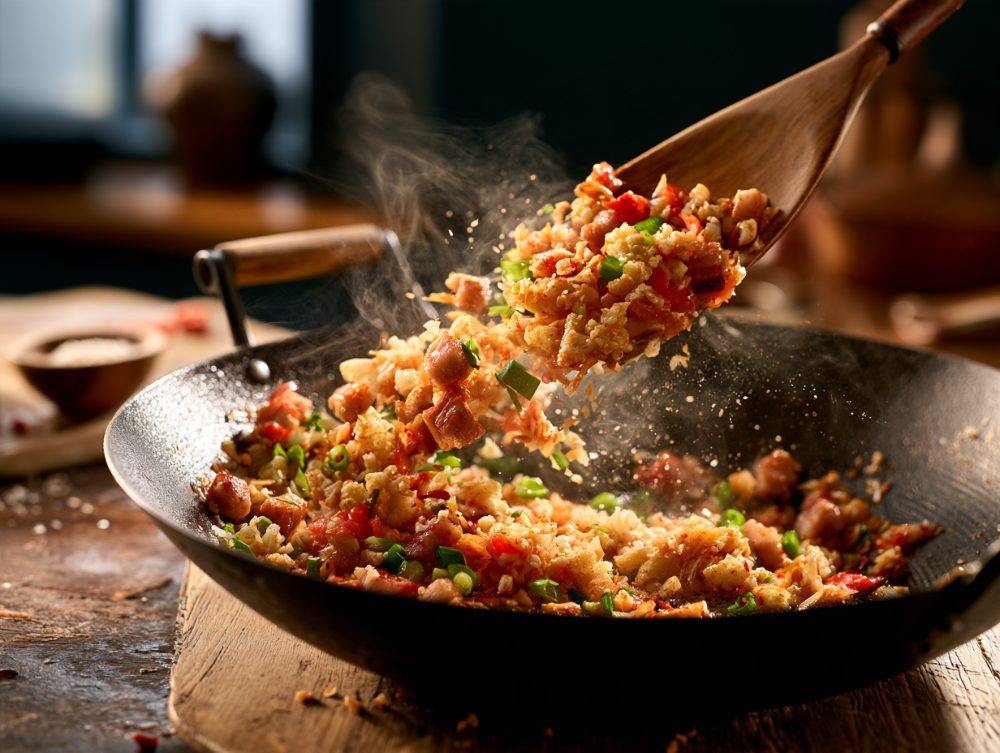
- Put the pork belly in a large cold skillet or wok and set it over medium heat. Cook, stirring now and then, until the fat renders and the edges crisp, 5 to 6 minutes.
- Add the chopped kimchi and scallion whites and stir-fry for 3 minutes, until the kimchi softens and starts to caramelize.
- Add the riced cauliflower, kimchi juice, gochugaru and soy sauce. Turn the heat to medium-high and stir-fry for 4 to 5 minutes, until the cauliflower is tender and any liquid has cooked off.
- Turn off the heat and stir in the sesame oil and scallion greens. Divide between two bowls.
- In a small skillet, heat the avocado oil over medium-high heat and fry the eggs sunny side up until the edges are crisp and lacy. Top each bowl with an egg, seaweed strips and sesame seeds.
Notes
Nutrition
About This Dish
Kimchi bokkeumbap is one of the most common home-cooked meals in Korea because it turns two leftovers, old kimchi and cooked rice, into something new. As kimchi ferments, it grows more sour, and Koreans prize well-aged kimchi for cooking even when it is too strong to eat plain. The fried egg on top is so traditional that many people consider the dish incomplete without it. Strips of roasted seaweed, called gim, add a toasty, salty finish. Restaurants sometimes serve it in a hot stone bowl so the bottom keeps crisping at the table.
This recipe is from The Ultimate Korean Keto Cookbook by Gisele Costello, Chapter 1: Breakfast (Bukchon Hanok Village). See all Korean recipes