
Discover the history of this region →
Gyeran-ppang is a winter street snack: a little oval loaf of sweet, buttery batter baked with a whole egg nestled on top. Vendors cook dozens at a time in special molds, and the smell on a cold day is hard to walk past. This almond-flour version bakes in a muffin tin and keeps the sweet-savory charm of the original.
Per serving: 278 calories · 3.3 g net carbs · 13 g protein · 23 g fat (calculated from the ingredients)
What You’ll Need
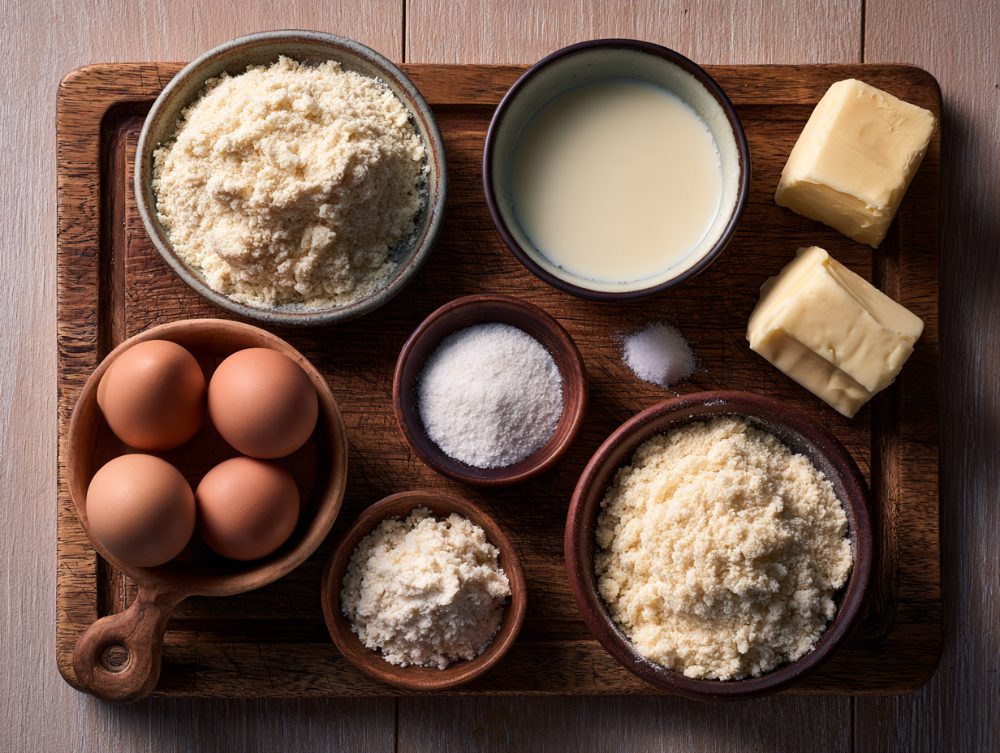

Ingredients
- 1 cup blanched almond flour
- 1 tablespoon coconut flour
- 2 tablespoons allulose
- 1 teaspoon baking powder
- 1/4 teaspoon salt
- 2 large eggs for the batter
- 1/4 cup heavy cream
- 2 tablespoons butter melted, plus extra for greasing
- 1/2 teaspoon vanilla extract
- 6 large eggs for topping
- 1 tablespoon chopped fresh parsley

Instructions
- Heat the oven to 375°F (190°C). Generously butter 6 cups of a standard muffin tin or 6 oval gyeran-ppang molds.
- In a bowl, whisk together the almond flour, coconut flour, allulose, baking powder and salt.
- In another bowl, whisk the 2 batter eggs, cream, melted butter and vanilla. Stir into the dry ingredients until smooth and thick.
- Divide the batter among the cups, filling each about halfway. Use the back of a spoon to make a small well in the center of each.
- Crack one egg into each well. Season the eggs with a tiny pinch of salt and sprinkle with parsley.
- Bake for 18 to 22 minutes, until the bread is golden and springs back and the egg whites are set. Cool for 5 minutes, then run a knife around the edges to release.
Notes
Nutrition

About This Dish
Gyeran-ppang means "egg bread," and it is said to have first been sold near the back gate of Inha University in Incheon in 1984. Street vendors bake it in a machine with a few dozen oblong slots, cracking a whole egg onto the batter in each one. It is especially popular in winter, when students and office workers buy it warm to hold on the walk home. Modern versions are topped with cheese, ham or parsley. Its sweet batter and salty egg make it a perfect example of the sweet-and-savory balance Koreans love.
This recipe is from The Ultimate Korean Keto Cookbook by Gisele Costello, Chapter 1: Breakfast (Bukchon Hanok Village). See all Korean recipes