📍 Where this dish comes from: Naxos · The Portara (Temple of Apollo gate)
Discover the history of this region →
Discover the history of this region →
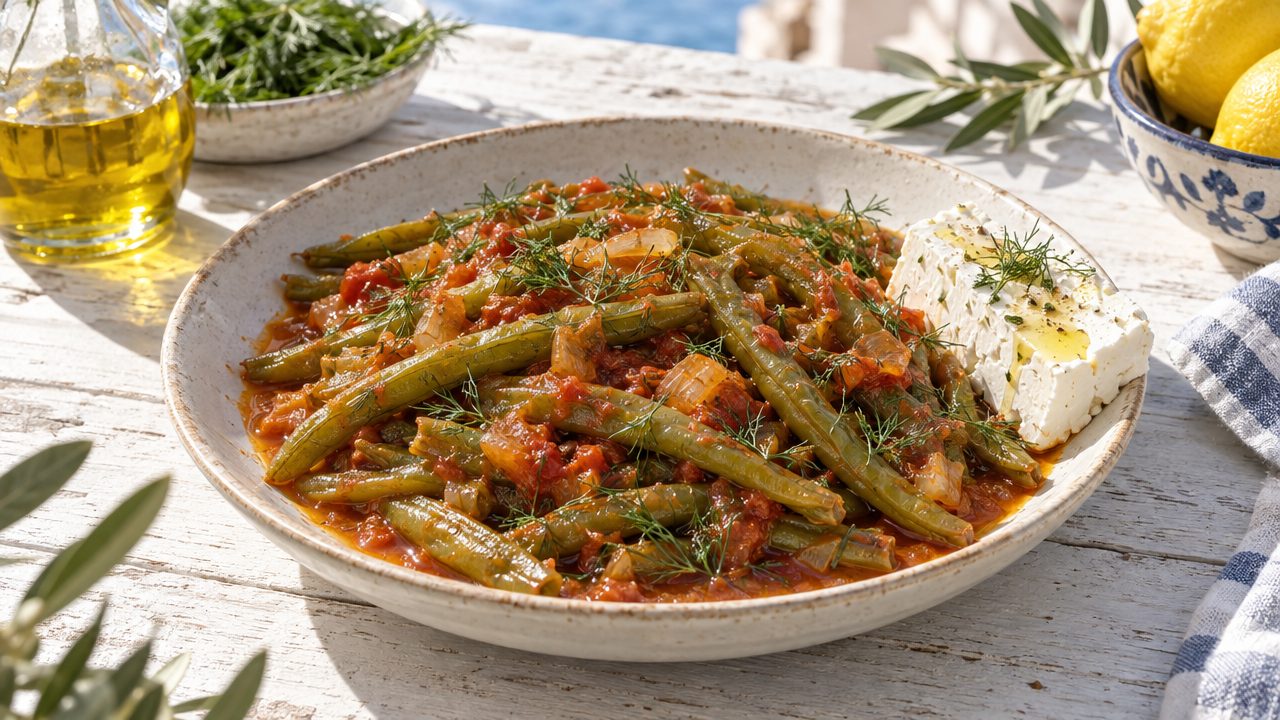
Fasolakia is one of the most iconic ladera dishes — green beans braised slowly in olive oil and tomato until meltingly tender and the sauce is rich and clingy. It sounds too simple to be remarkable. It is remarkably not simple at all.
What You’ll Need
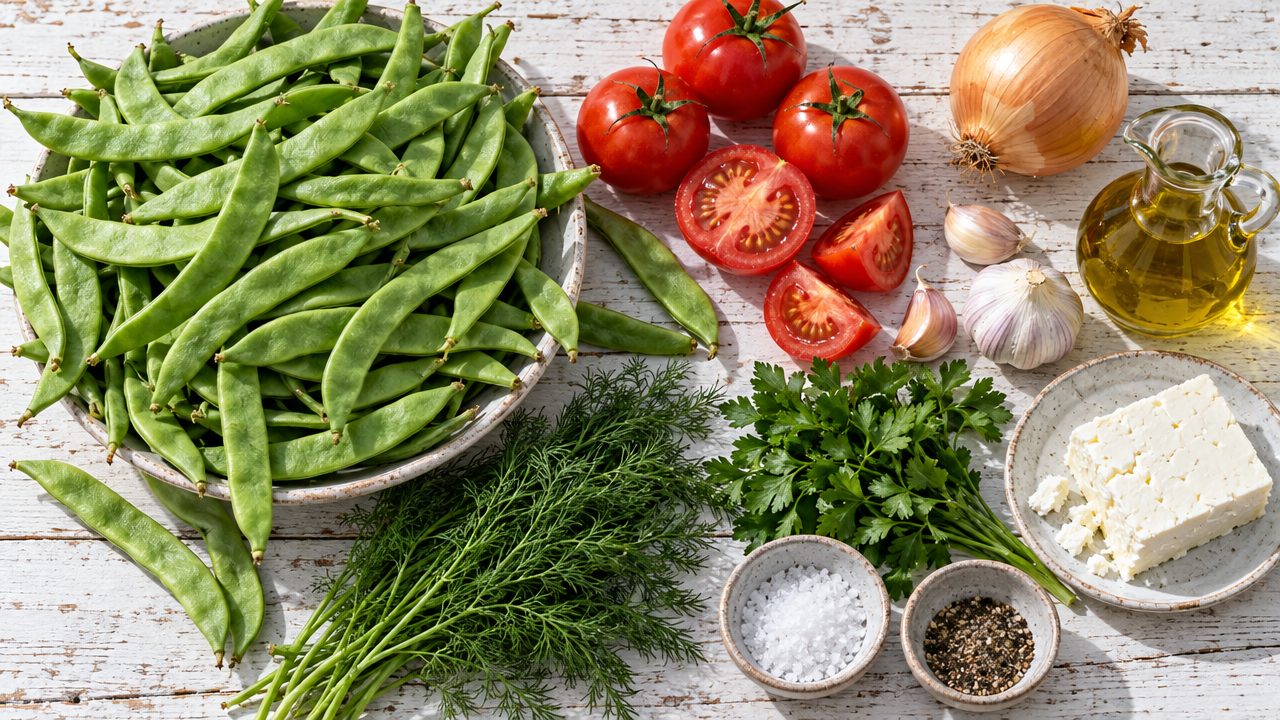
Servings: 4 servings
Calories: 280kcal
Ingredients
- 1.5 lbs fresh green beans trimmed
- 1 can (14 oz) crushed tomatoes or 4 large fresh tomatoes grated
- 1 medium onion diced
- 3 garlic cloves minced
- 1/2 cup extra-virgin olive oil
- 1 cup water or vegetable broth
- 1 tsp dried oregano
- 2 tbsp fresh dill or parsley
- Salt and pepper

Instructions
- Saute onion in olive oil over medium heat until softened, about 6 minutes. Add garlic and cook 1 minute.
- Add crushed tomatoes, water, and oregano. Season generously.
- Add green beans and stir to coat.
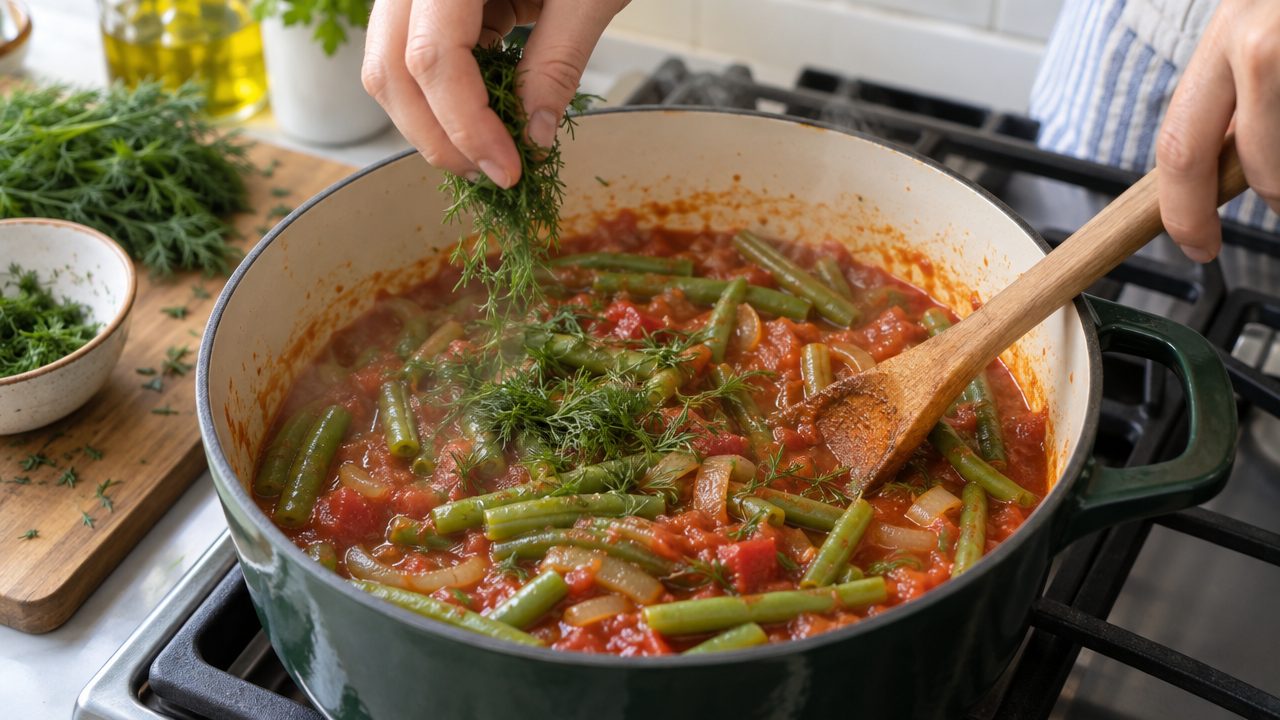
- Bring to a simmer, reduce heat to low, cover, and cook 40-45 minutes until beans are very tender and sauce has thickened.
- Stir in fresh herbs. Taste and adjust. Serve warm or at room temperature.
Nutrition
Serving: 1serving | Calories: 280kcal | Protein: 3g | Fat: 26g | Fiber: 4g
Tried this recipe?Let us know how it was!
Health Benefits
- Green beans provide silicon for bone health and vitamin K for blood clotting regulation.
- Tomatoes cooked with olive oil release maximum lycopene, shown to reduce the risk of cardiovascular disease and macular degeneration.
- The long, slow cooking process develops umami compounds that make these dishes profoundly satisfying without any meat.