
📍 Where this dish comes from: Baden (Rhine plain)
Discover the history of this region →
Discover the history of this region →
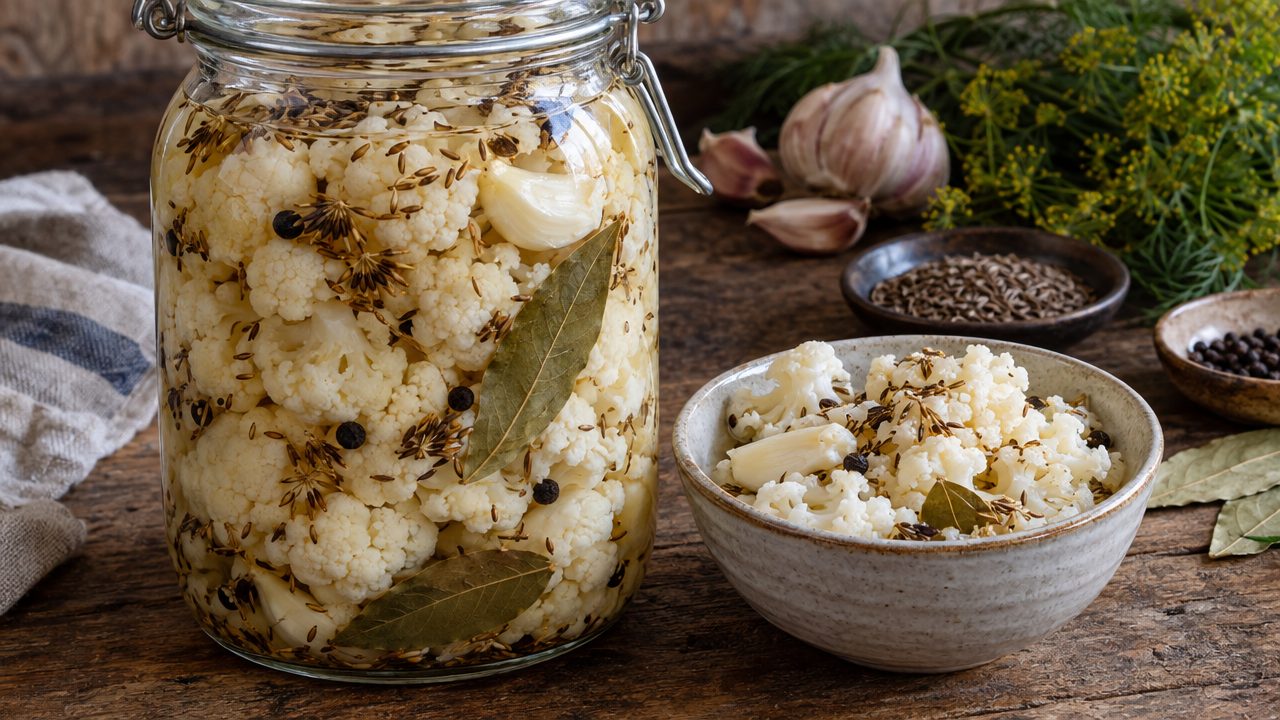
Traditional sauerkraut requires weeks of fermentation, but this cauliflower version achieves excellent results in 3–5 days — a tangy, crunchy ferment that surpasses cabbage and makes every German meal taste more complete. The cauliflower’s firm texture holds up beautifully to lacto-fermentation, developing a satisfying crunch and a complex, layered sourness. The caraway and dill seeds add authentic German flavour notes that make this feel like an old-world tradition.
What You’ll Need
Servings: 8 servings
Calories: 35kcal
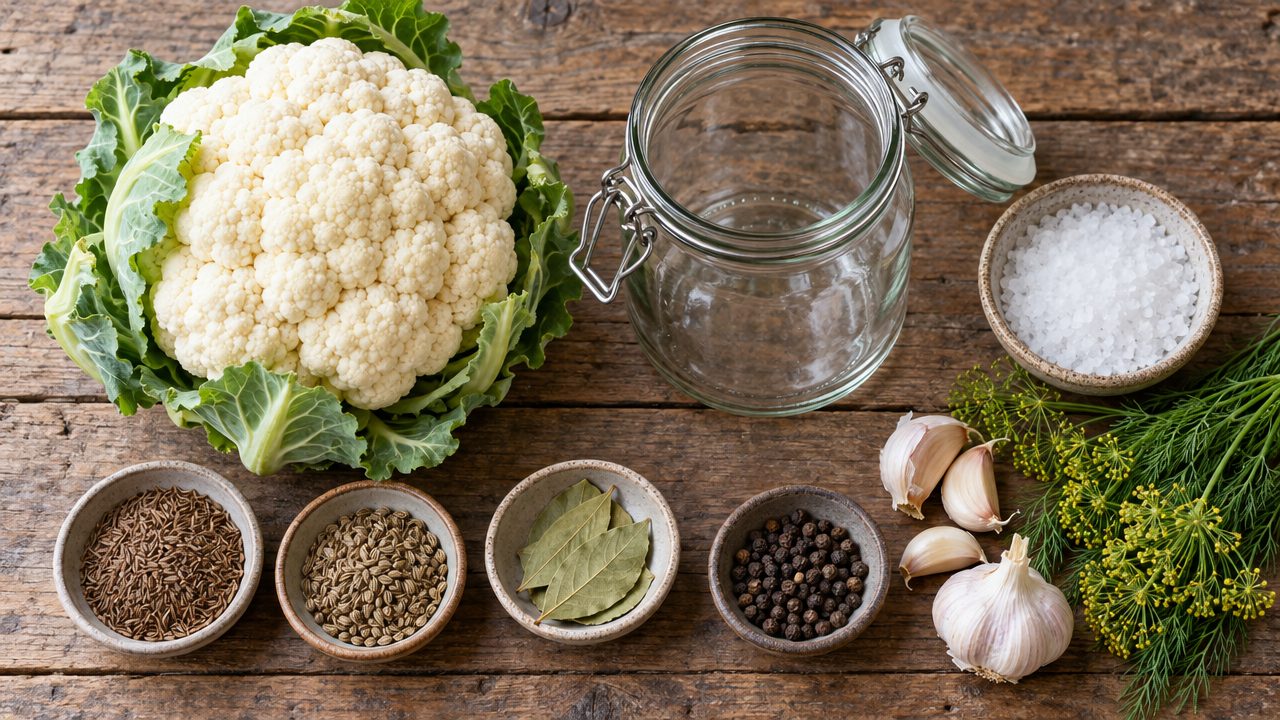
Ingredients
- 1 medium head cauliflower broken into small florets
- 2% salt by weight (weigh cauliflower use 2% of that weight in salt)
- 1 tsp caraway seeds
- 1 tsp dill seeds
- 2 bay leaves
- 1 tsp black peppercorns
- 4 garlic cloves sliced
- Filtered water (if needed to top up brine)

Instructions
- Weigh cauliflower. Use 2% of that weight in salt. Toss cauliflower with salt.
- Add caraway, dill seeds, bay leaves, peppercorns, and garlic.
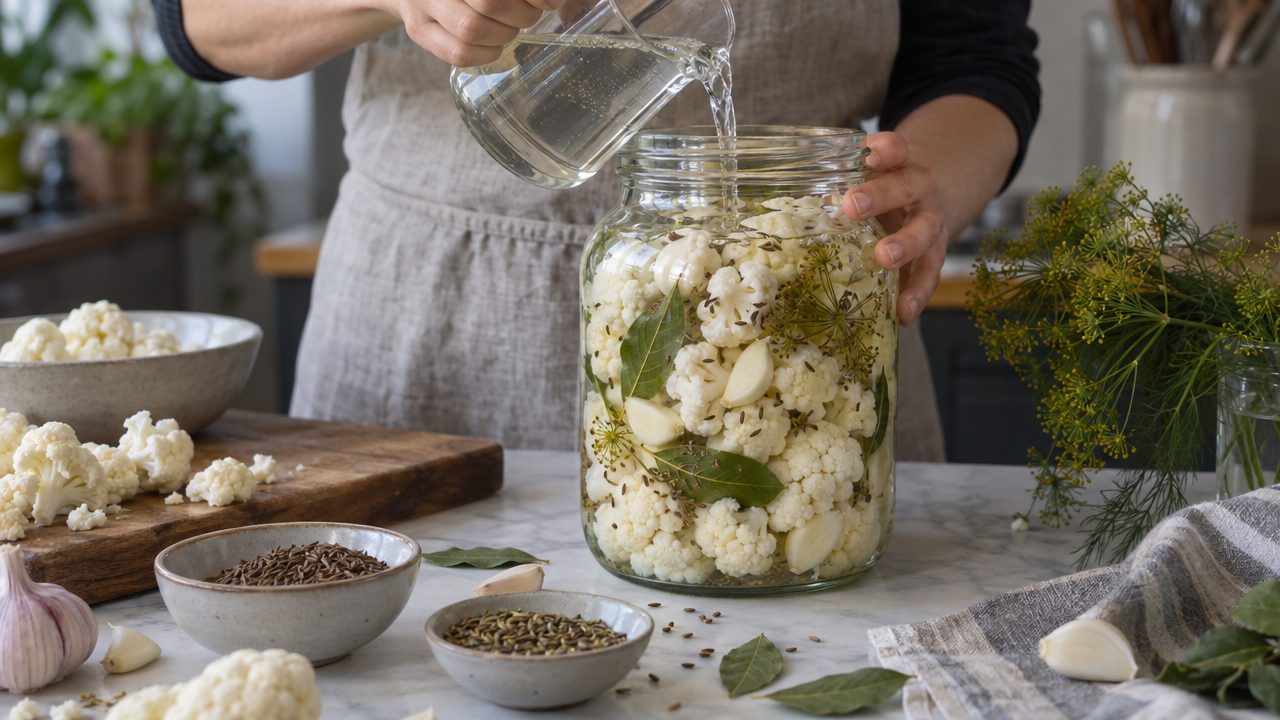
- Pack very tightly into a sterilised jar. Press hard until liquid rises above vegetables.
- Add brine (1 tsp salt per 240ml water) if liquid doesn't cover. Weight vegetables down.
- Ferment at room temperature 3–5 days. Burp jar daily. Refrigerate when pleasingly sour.
Nutrition
Serving: 1serving | Calories: 35kcal | Protein: 3g | Fiber: 3g
Tried this recipe?Let us know how it was!
Health Benefits
- Lacto-fermented vegetables like this one are a genuine source of live Lactobacillus bacteria, since the process involves no cooking or pasteurization.
- Fermentation is studied for its potential to increase the bioavailability of certain vitamins and minerals in vegetables.
- Probiotic foods are an active area of research regarding their role in gut and immune health.