
📍 Where this dish comes from: Srinagar, Kashmir · Dal Lake
Discover the history of this region →
Discover the history of this region →
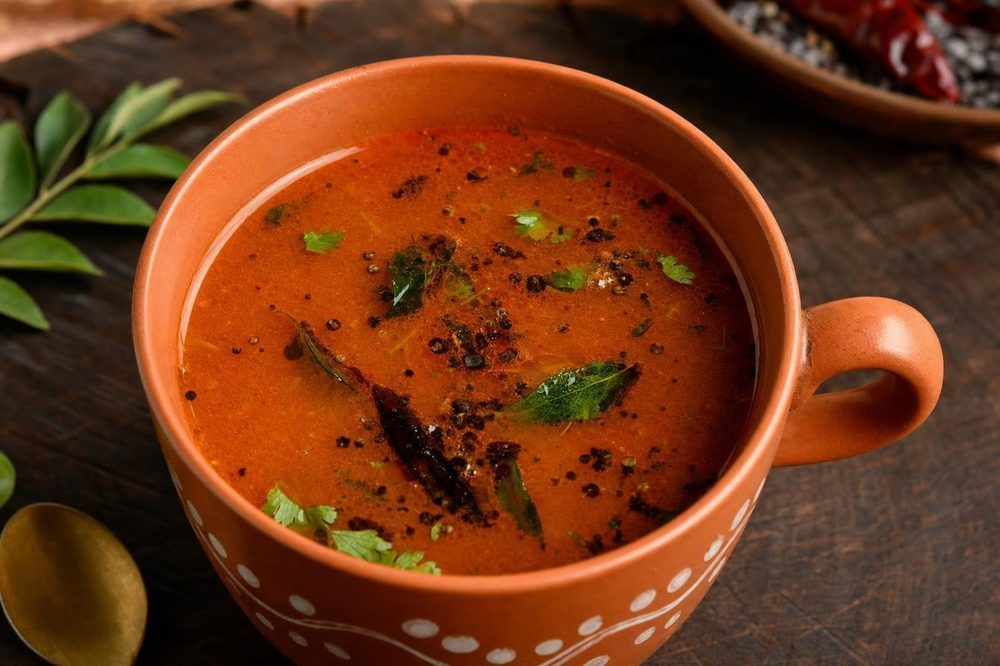
Rasam is South India’s most beloved home remedy in soup form — reached for during colds, digestive complaints, and recovery from illness for generations. Liquid fire and old family wisdom in a single bowl, this thin South Indian pepper-tomato broth crackles with mustard seeds, is brightened by tamarind, and leaves a gentle, glowing heat in the chest that feels as restorative as anything you could imagine. The combination of black pepper, tamarind, cumin, and tomato creates a thin, fiery liquid that clears sinuses, stimulates digestion, and warms the soul.
What You’ll Need
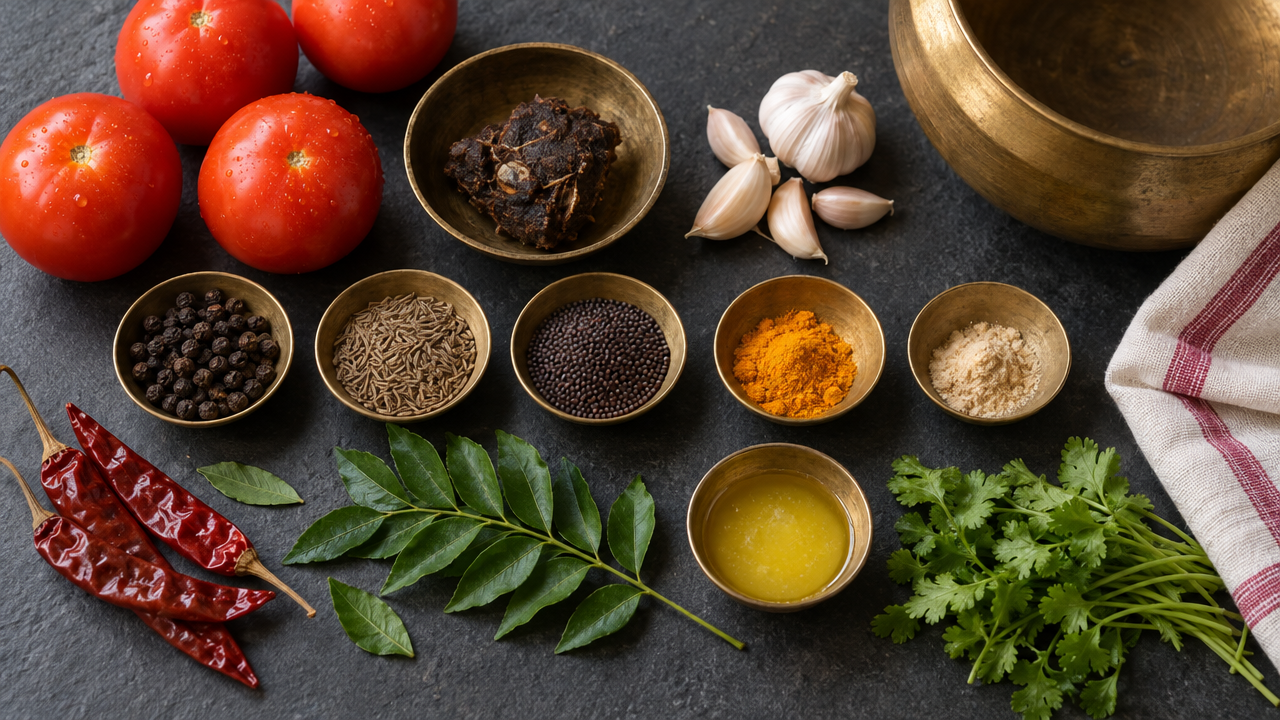
Servings: 4 servings
Calories: 95kcal
Ingredients
- 3 medium tomatoes roughly chopped
- 2 tbsp ghee
- 1 tsp black pepper freshly cracked
- 1 tsp cumin seeds
- 1/2 tsp mustard seeds
- 8 curry leaves
- 1 dried red chili
- 1/2 tsp turmeric
- 1/4 tsp asafoetida (hing)
- 2 cups water
- 1 tbsp tamarind paste
- Salt to taste
- Fresh coriander

Instructions
- Blend tomatoes with 1 cup water until smooth.
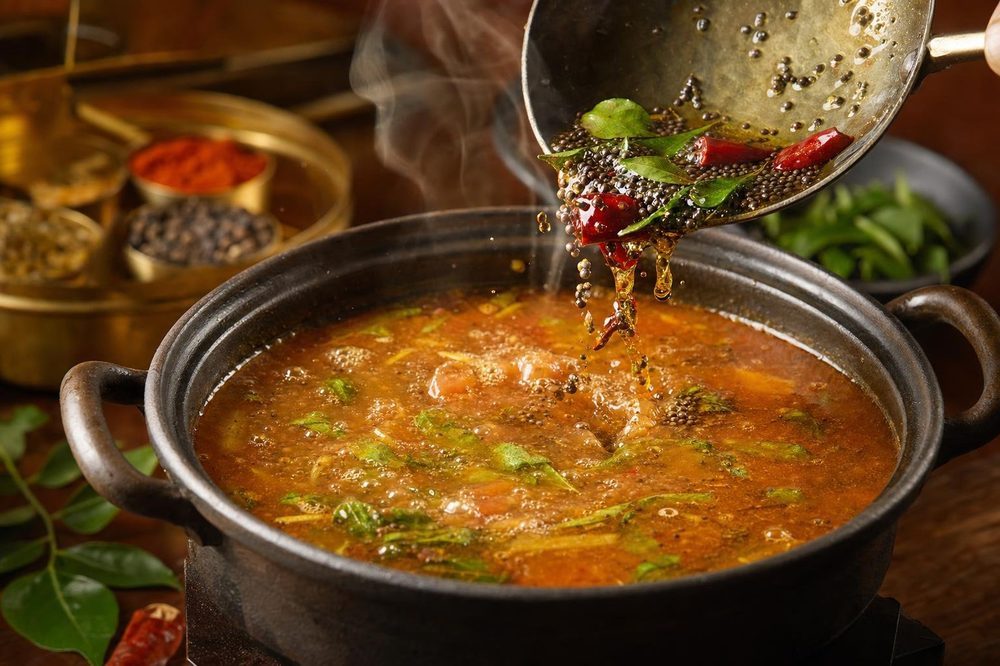
- Heat ghee; add mustard seeds until they pop.
- Add cumin, curry leaves, red chili, and hing; fry 30 seconds.
- Add tomato puree, turmeric, and pepper.
- Add tamarind paste and remaining water.
- Bring to a boil; simmer 10 minutes.
- Season with salt.
- Serve hot, garnished with coriander.
Nutrition
Serving: 1serving | Calories: 95kcal | Protein: 1g | Fat: 7g | Fiber: 2g
Tried this recipe?Let us know how it was!
Health Benefits
- Black pepper contains piperine, studied for its ability to significantly enhance the body’s absorption of curcumin and other compounds.
- Tamarind provides tartaric acid, an organic acid studied for its antioxidant properties.
- Asafoetida (hing) is traditionally used to help reduce intestinal gas, which may be particularly welcome during keto adaptation.