
Discover the history of this region →
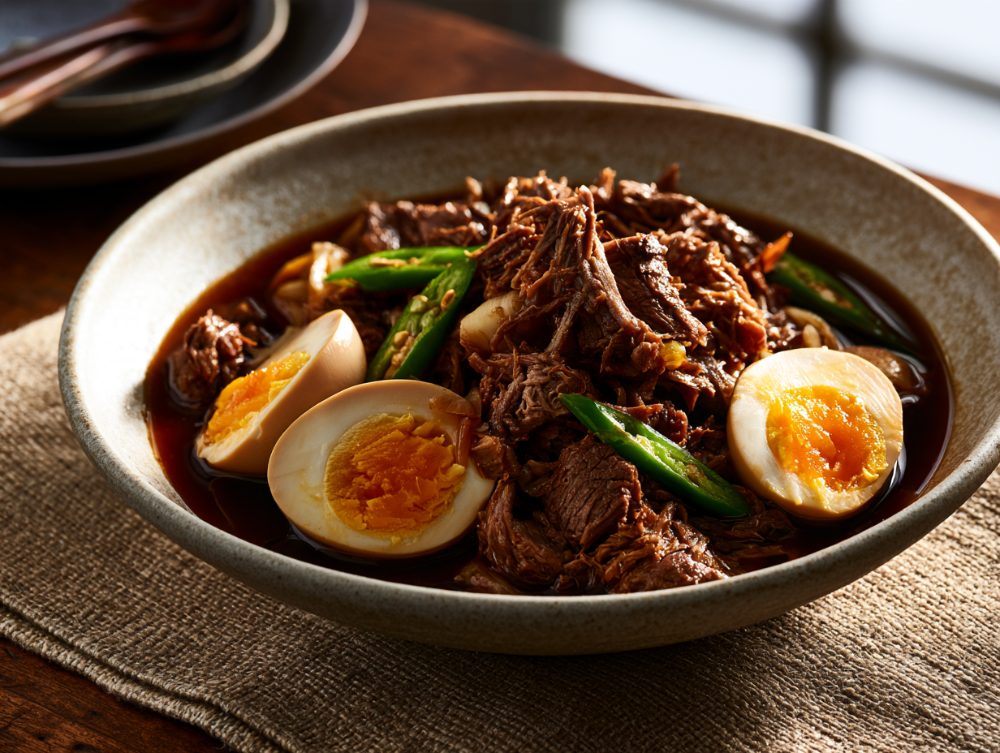
Jangjorim is a classic make-ahead banchan of lean beef and eggs simmered in soy sauce until salty, savory and tender, then shredded into strips. It keeps for days in the fridge and turns any meal into something special. It is naturally high in protein and low in carbs.
Per serving: 205 calories · 3.1 g net carbs · 27 g protein · 9 g fat (calculated from the ingredients)
What You’ll Need
Ingredients
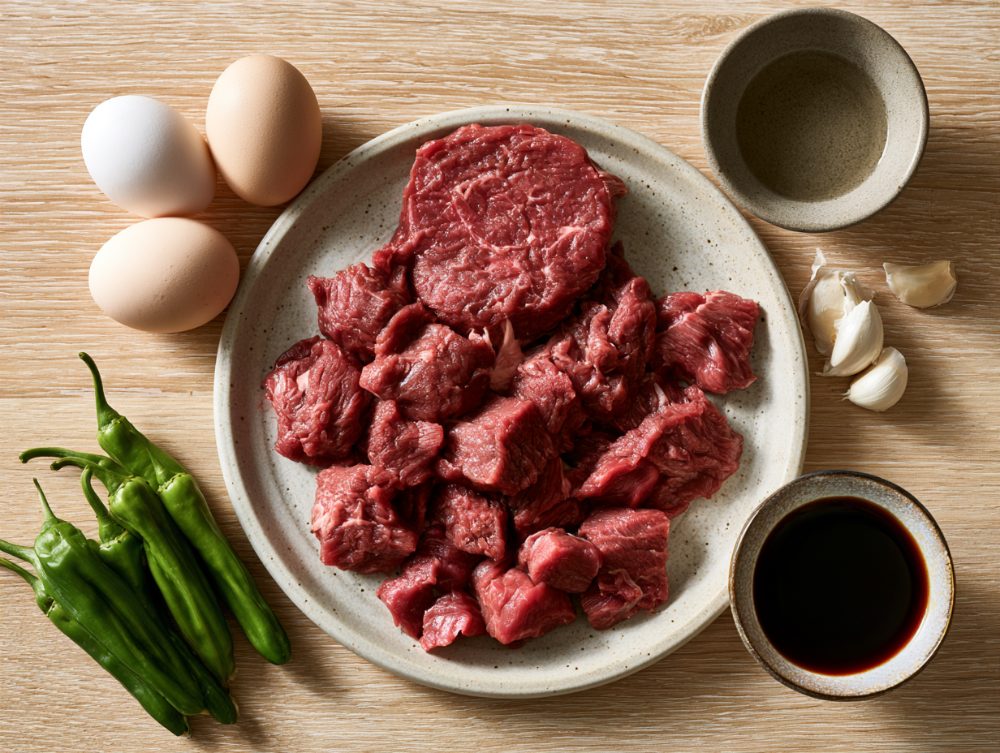
- 1 1/2 pounds beef eye of round or flank steak cut into 3 chunks
- 6 cups water
- 1/2 onion and 4 scallion roots for the broth
- 1/2 cup soy sauce
- 3 tablespoons allulose
- 12 cloves garlic peeled
- 2 to 4 shishito or green chilies
- 8 hard-boiled eggs peeled (or 20 quail eggs)

Instructions
- Soak the beef in cold water for 30 minutes. Put it in a pot with 6 cups of water, the onion and scallion roots. Boil, skim the foam, then simmer for 40 minutes.
- Remove the onion and scallion roots. Add the soy sauce, allulose and garlic and simmer for 20 minutes.
- Add the eggs and chilies and simmer for 10 to 15 minutes, turning the eggs so they color evenly.
- Remove the beef and let it cool slightly, then shred it into thin strips along the grain with your fingers or two forks.
- Return the beef to the pot with the eggs. Store everything together in the braising liquid in the fridge for up to a week.
Notes
Nutrition
About This Dish
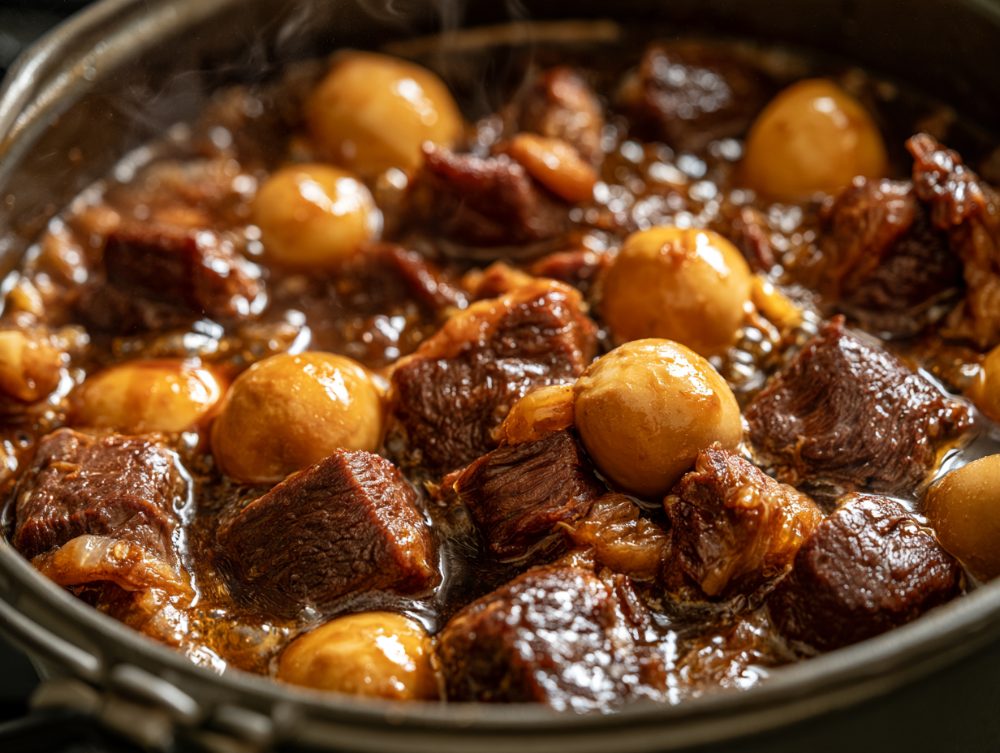
Jang refers to soy sauce, and jorim means a dish simmered until the liquid reduces. Before refrigerators, jangjorim was valued because its salty braise kept the beef safe to eat for days. It is one of the most common side dishes in Korean homes, and many people associate it with their mothers’ cooking. Quail eggs are a popular addition because they are bite-size. Jangjorim with butter and rice became a viral comfort food trend in recent years.
Pairs Well With
This recipe is from The Ultimate Korean Keto Cookbook by Gisele Costello, Chapter 6: Beef & Korean BBQ (Suwon Hwaseong Fortress). See all Korean recipes