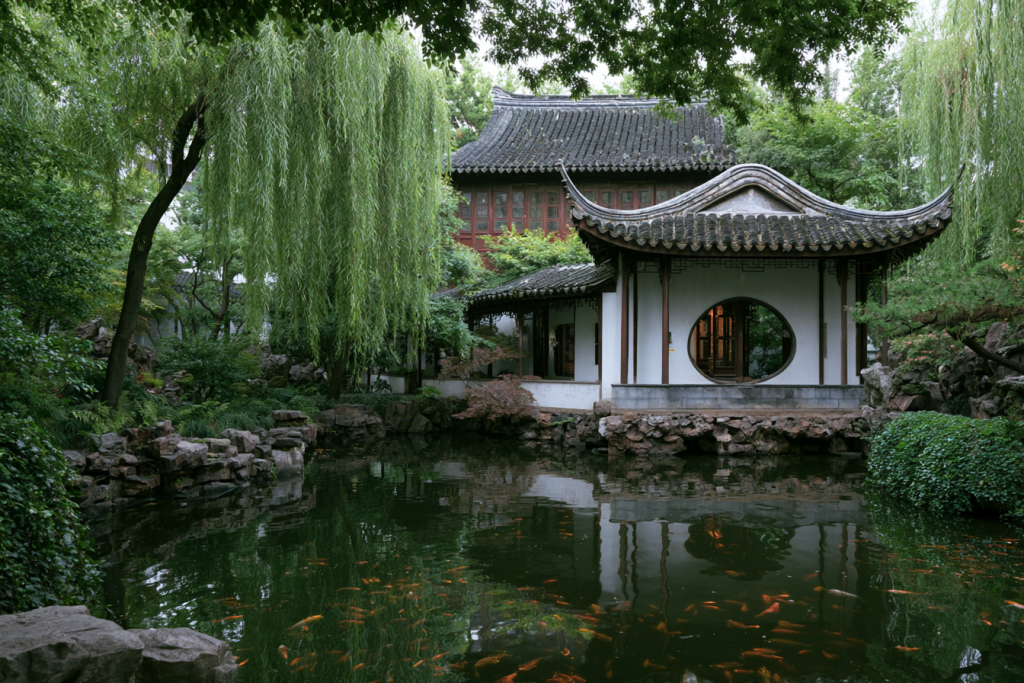
Location: Suzhou — The Venice of the East
Chinese desserts rarely try to overwhelm. Where Western pastry often reaches for maximum sweetness and richness, Chinese sweets tend toward the opposite: light jellies, barely-sweet custards, warming sesame soups, fragrant florals. Ten recipes close this book, and every one of them is built for a small portion at the end of a meal, not a slice the size of your head.
Suzhou has been called the “Venice of the East” since Marco Polo supposedly passed through it in the 13th century, praising a city crossed by canals and framed by some of the most refined gardens ever built. Nine of those classical gardens — small, walled, meticulously composed worlds of rock, water, and pavilion — are now UNESCO World Heritage sites, designed over centuries by scholars and officials who treated garden-building as seriously as poetry.
The city’s food carries that same sensibility of restraint and precision. Suzhou cuisine, part of the broader Jiangnan tradition, leans sweeter and more delicate than almost anywhere else in China — a reputation the city has earned honestly, since Suzhou pastry shops have been refining osmanthus cakes, sesame candies, and delicate jellies for centuries, treating dessert with the same quiet elegance as one of its gardens.
It felt like the right note to end the book on. After seven chapters of fire, spice, and celebration, Suzhou’s gardens — and its desserts — offer something gentler: a place built entirely around the idea that beauty rewards patience. Several of these carry real ceremony, the kind of dish that shows up at festivals and banquet tables. Others are the sort of thing worth keeping in the fridge for a Tuesday. Either way, this is where the book ends: quietly, elegantly, and sweetly.
Recipes in This Chapter
- Egg Custard Tarts
- Sesame Balls
- Almond Cookies
- Mango Pudding
- Black Sesame Soup
- Osmanthus Jelly
- Sweet Walnut Soup
- Coconut Tang Yuan
- Eight Treasure Pudding
- Chinese Almond Tofu
That closes all eight chapters — one last stop before we say goodbye, in the Conclusion.