
Discover the history of this region →
Vaca atolada, or stuck cow, is a rustic beef rib stew from the countryside of Minas Gerais. Beef ribs are braised until they fall from the bone, and the vegetables cook down into a thick sauce that the meat seems to sink into, like a cow stuck in the mud. Here tender chayote replaces the cassava for a hearty, low-carb version.
Per serving: 837 calories · 6.6 g net carbs · 30 g protein · 75 g fat (calculated from the ingredients)
What You’ll Need
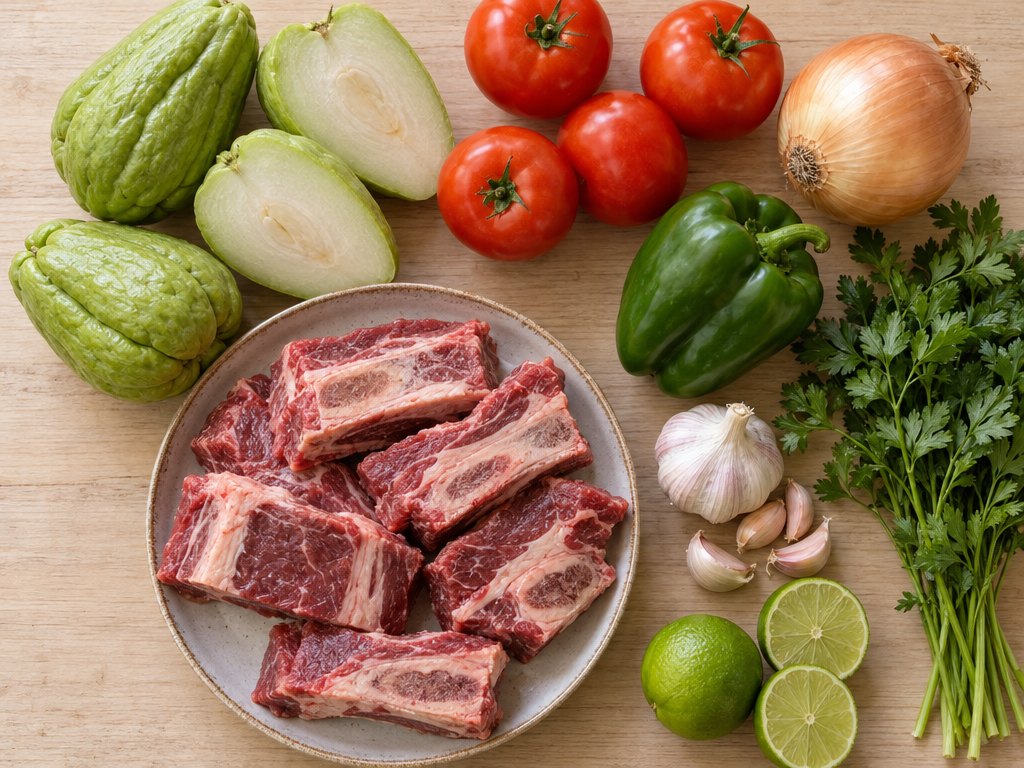
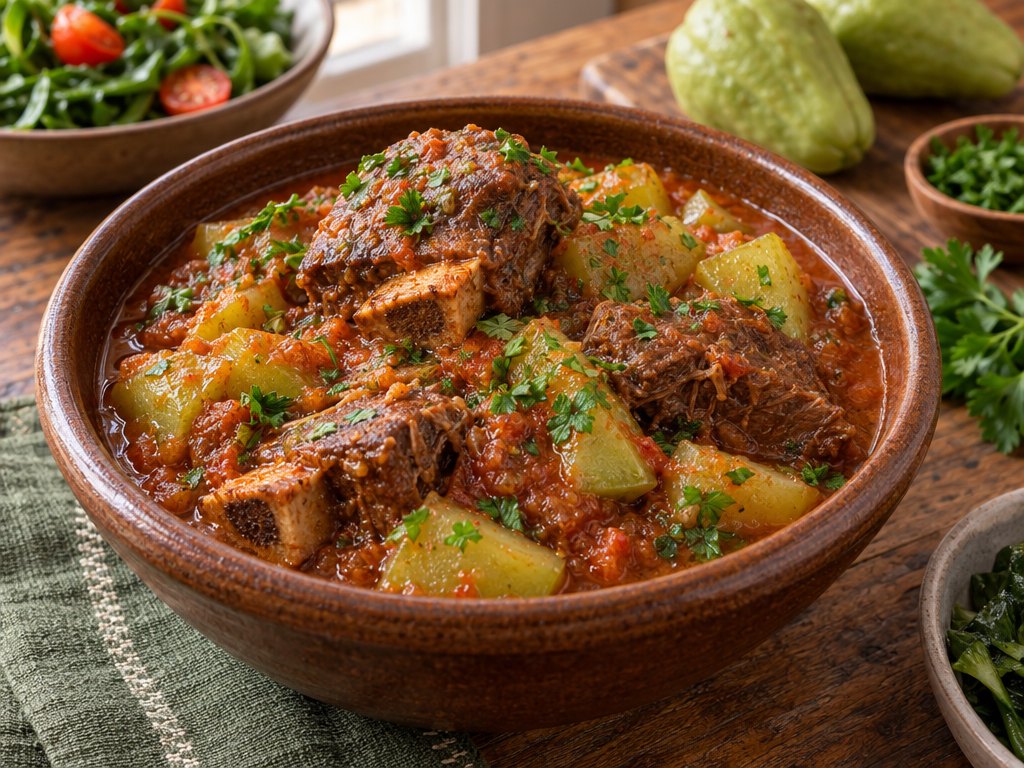
Ingredients
- 4 pounds bone-in beef short ribs (about 2 1/2 pounds meat)
- Juice of 1 lime
- 4 garlic cloves minced
- 2 teaspoons salt
- 1/2 teaspoon black pepper
- 1 teaspoon sweet paprika
- 1 tablespoon olive oil
- 1 large onion chopped
- 2 medium tomatoes chopped
- 1/2 green bell pepper chopped
- 4 cups water
- 2 medium chayotes peeled and cut into large chunks
- 1/3 cup chopped parsley and scallion

Instructions
- Season the ribs with the lime juice, garlic, salt, pepper and paprika and let them sit for 20 minutes.
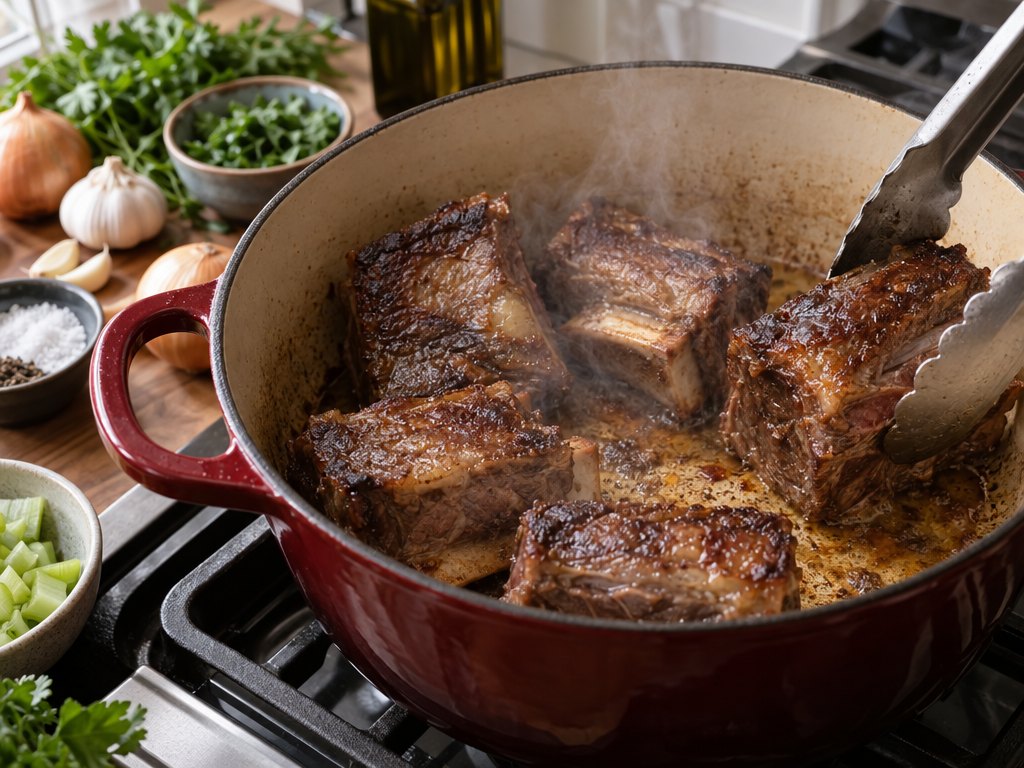
- Heat the oil in a large heavy pot or pressure cooker over medium-high heat. Brown the ribs well on all sides in batches, about 8 minutes per batch, and set aside.
- Add the onion to the pot and cook for 5 minutes, scraping up the browned bits. Add the tomatoes and pepper and cook 5 minutes more, until softened.
- Return the ribs to the pot, add the water and bring to a boil. Cover and simmer over low heat for about 2 hours, until the meat is very tender. (In a pressure cooker, cook for 45 minutes.)
- Add the chayote and simmer, uncovered, for 20 to 25 minutes, until it is very soft and the sauce has thickened. Mash a few pieces of chayote against the side of the pot to thicken the sauce further.
- Skim off excess fat, taste for salt and stir in the parsley and scallion. Serve hot in deep bowls.
Notes
Nutrition
About This Dish
Vaca atolada is considered a typical dish of Minas Gerais, though versions are found across much of Brazil. Its roots are traced to the trail food of travelers and pioneers in the region, who relied on dried meat, lard and cassava. The name means stuck cow, a playful image of chunks of beef sunk in a thick cassava stew. Today it is usually made with beef ribs rather than dried meat. It is a popular dish at roadside restaurants and on cold winter nights in the countryside.
This recipe is from The Ultimate Brazilian Keto Cookbook by Gisele Costello, Chapter 3: Soups & Stews (Ver-o-Peso Market). See all Brazilian recipes