
Discover the history of this region →
Bobó de camarão is pure comfort: plump shrimp folded into a silky purée enriched with coconut milk and dendê. In Bahia the purée is made from cassava, which is far too starchy for keto. Cauliflower, cooked until very soft and blended smooth, takes its place beautifully and soaks up every bit of flavor.
Per serving: 390 calories · 7.6 g net carbs · 38 g protein · 24 g fat (calculated from the ingredients)
What You’ll Need
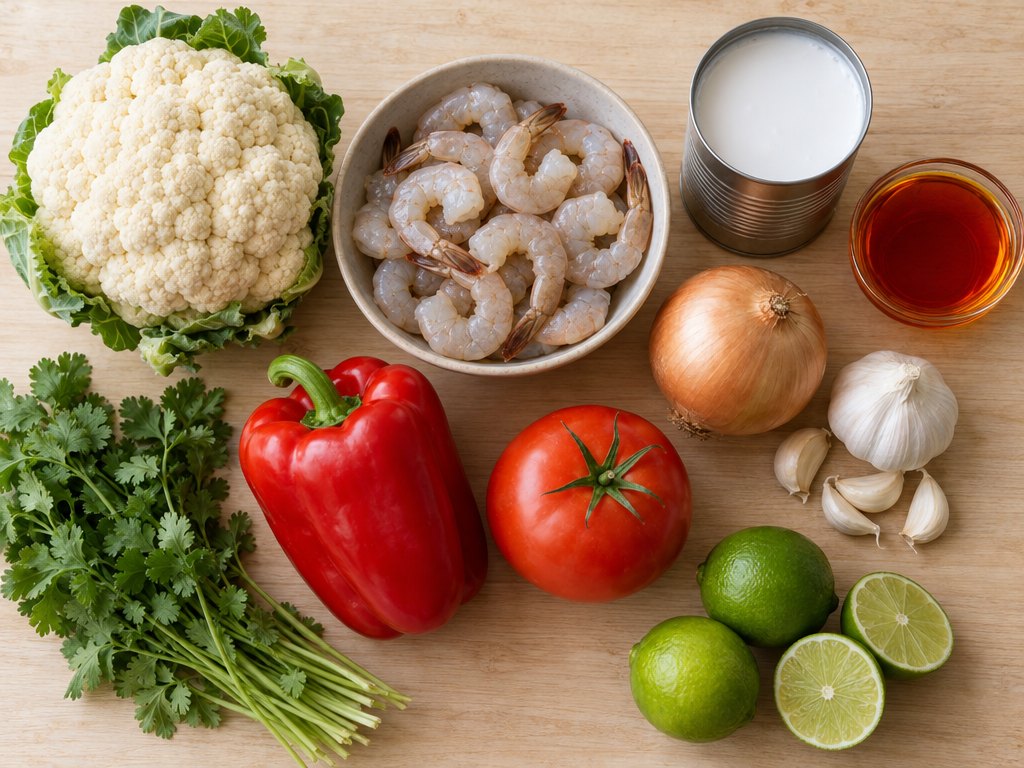
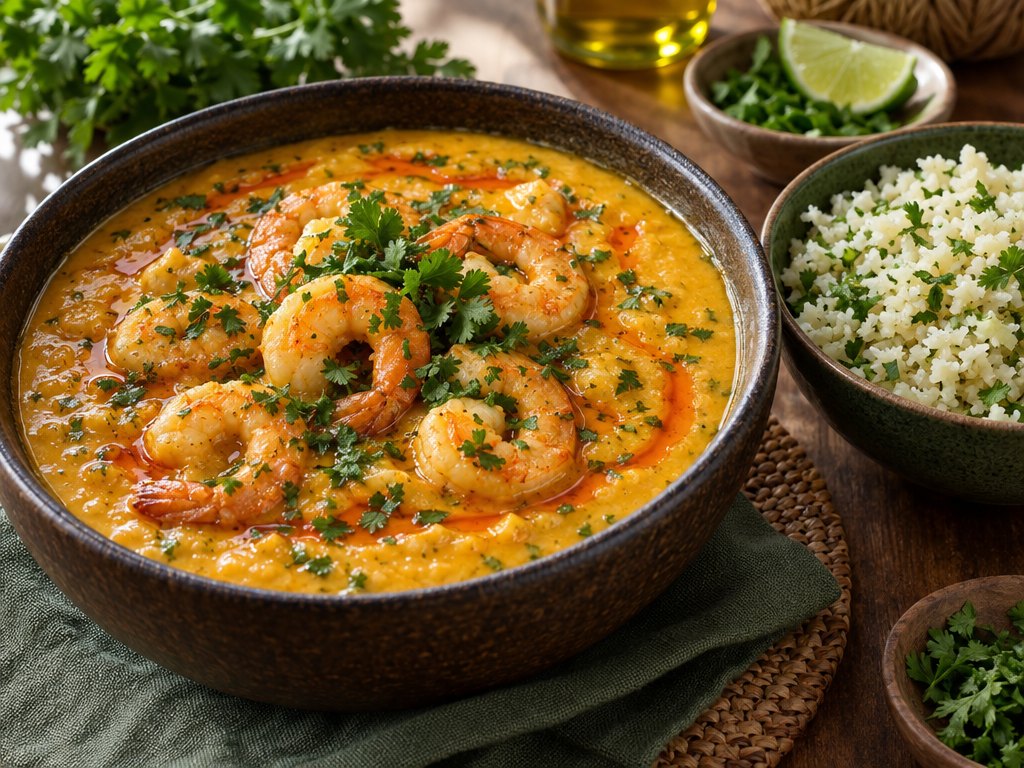
Ingredients
- 1 1/2 pounds large shrimp peeled and deveined
- 2 tablespoons lime juice
- 1 teaspoon fine sea salt divided
- 3 1/2 cups cauliflower florets
- 1 1/4 cups full-fat coconut milk divided
- 2 tablespoons dendê (red palm) oil
- 1 small onion finely chopped
- 2 garlic cloves minced
- 1 small tomato seeded and chopped
- 1/2 red bell pepper finely chopped
- 1/4 cup chopped fresh cilantro

Instructions
- Toss the shrimp with the lime juice and half of the salt and set aside while you make the purée.
- Boil or steam the cauliflower until very tender, about 12 minutes. Drain well, then blend with 1/2 cup of the coconut milk until completely smooth.
- Heat the dendê oil in a large skillet over medium heat. Cook the onion, garlic, tomato and bell pepper, stirring, until soft, about 6 minutes.
- Add the shrimp and cook for 2 minutes, just until they begin to turn pink. Lift them out with a slotted spoon.
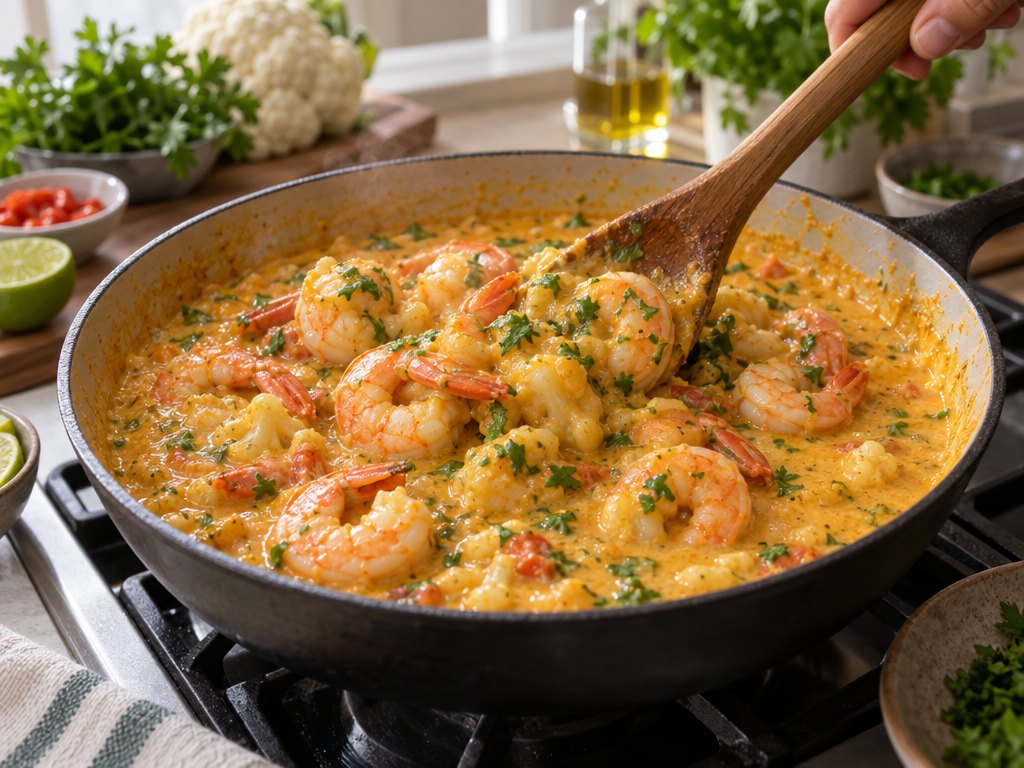
- Stir the cauliflower purée and the remaining coconut milk into the pan. Simmer for 5 minutes, stirring often, until thick and creamy. Season with the remaining salt.
- Return the shrimp to the pan and simmer for 2 to 3 minutes more, until just cooked through. Stir in the cilantro and serve.
Notes
Nutrition
About This Dish
Bobó belongs to the family of Bahian dishes cooked with dendê that grew out of African culinary traditions in Salvador. Its creamy texture comes from cassava, a root that Indigenous peoples of Brazil cultivated long before the Portuguese arrived. Bobó de camarão is now served in restaurants all over Brazil, far from Bahia. It is usually eaten with white rice and sometimes with farofa. The name is usually traced to West African languages, a reminder of how much of Bahia's table came across the Atlantic.
Pairs Well With
- Brazilian Salada de Maionese, Creamy Vegetable and Egg Salad
- Brazilian Tabule, Brazilian-Lebanese Parsley and Cauliflower Salad
This recipe is from The Ultimate Brazilian Keto Cookbook by Gisele Costello, Chapter 7: Seafood (Pelourinho). See all Brazilian recipes