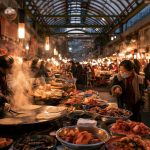
Discover the history of this region →
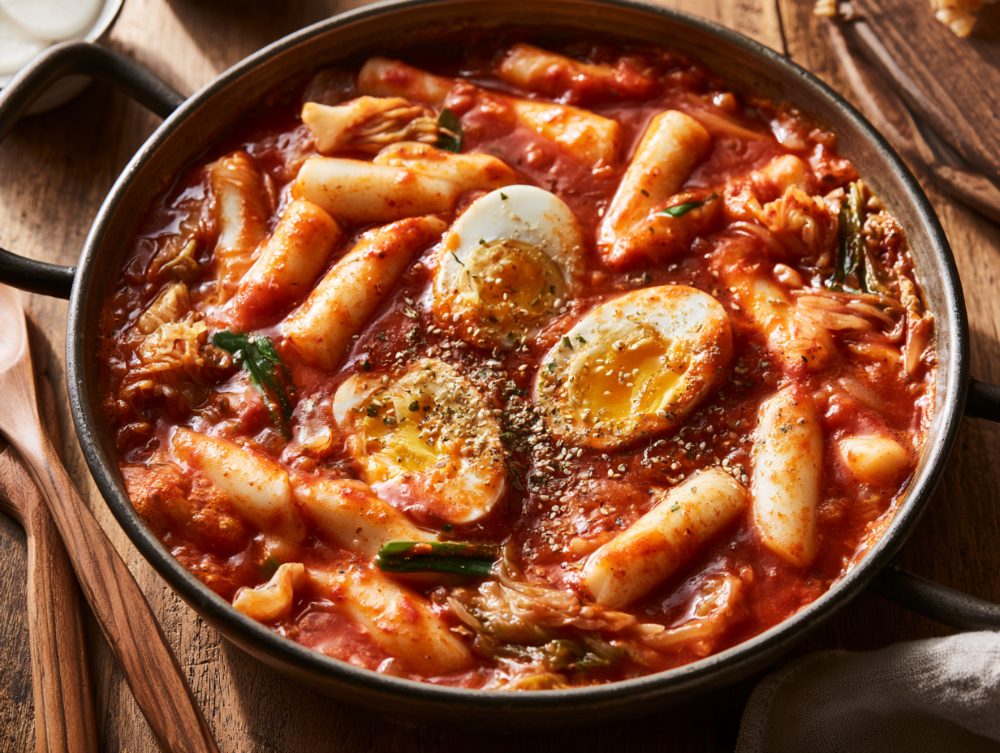
Tteokbokki is Korea’s most beloved street snack: chewy rice cakes simmered in a fiery, sweet red sauce. Regular rice cakes are pure starch, so this keto version uses chewy logs of mozzarella and almond-flour dough, baked first so they hold their shape, then tossed in the bubbling sauce with boiled eggs and cabbage.
Per serving: 403 calories · 7.6 g net carbs · 25 g protein · 29 g fat (calculated from the ingredients)
What You’ll Need
Ingredients
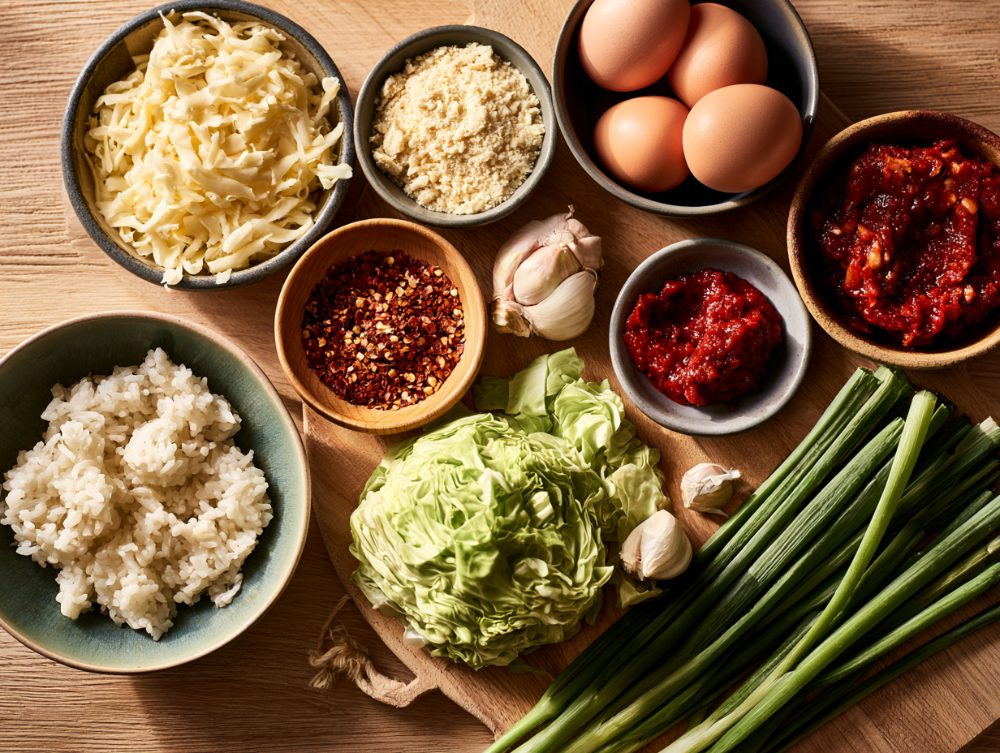
- 1 1/2 cups shredded low-moisture mozzarella
- 1 ounce cream cheese
- 3/4 cup blanched almond flour
- 1 large egg
- 1/2 teaspoon xanthan gum
- 1 1/2 cups anchovy-kelp broth or water
- 1 tablespoon Keto Gochujang-Style Paste (Chapter 10) or store-bought gochujang
- 1 1/2 tablespoons gochugaru
- 1 tablespoon soy sauce
- 2 tablespoons allulose
- 2 cloves garlic minced
- 2 cups green cabbage cut into squares
- 3 scallions cut into 2-inch pieces
- 4 hard-boiled eggs peeled
- 1 teaspoon toasted sesame seeds

Instructions
- Heat the oven to 400°F (200°C) and line a baking sheet with parchment.
- Melt the mozzarella and cream cheese together in the microwave in 30-second bursts, stirring, until smooth. Stir in the almond flour, egg and xanthan gum and knead into a soft dough.
- With oiled hands, roll the dough into ropes about 1/2 inch thick and cut into 2-inch pieces. Bake for 10 to 12 minutes, until set and lightly golden. These are your rice cakes.
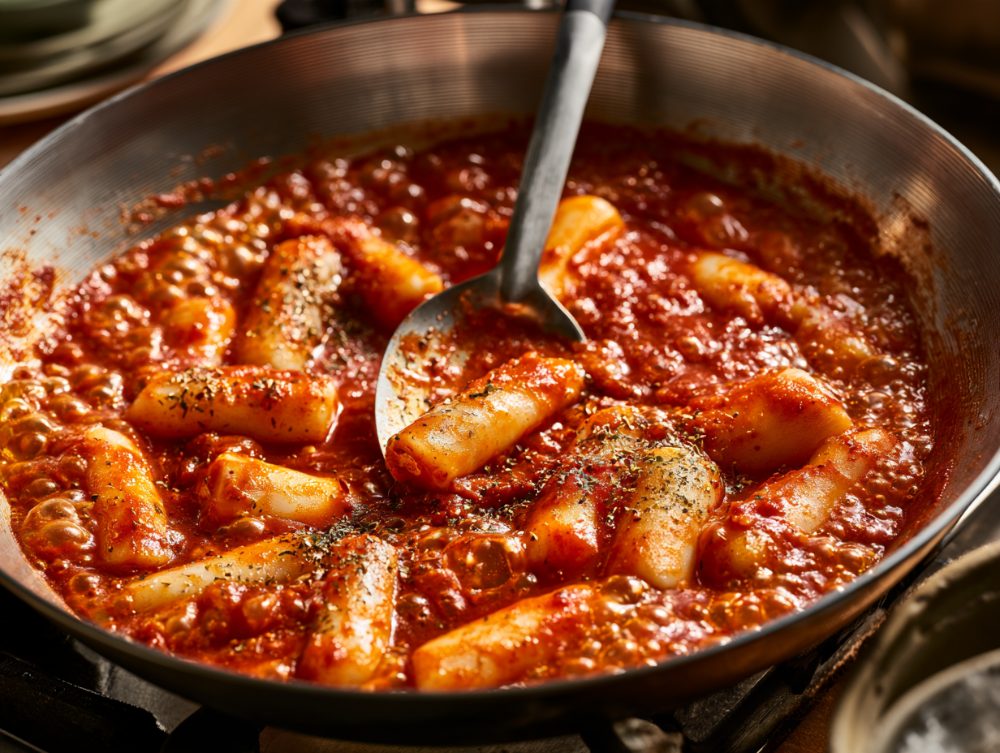
- In a wide, shallow pan, bring the broth to a boil. Whisk in the gochujang paste, gochugaru, soy sauce, allulose and garlic.
- Add the cabbage and simmer for 5 minutes, until the sauce thickens slightly. Add the hard-boiled eggs and scallions and spoon the sauce over them.
- Add the baked rice cakes and simmer just 1 to 2 minutes, turning to coat, until glossy. Sprinkle with sesame seeds and serve right away.
Notes
Nutrition
About This Dish
The oldest form of tteokbokki was a mild royal court dish of rice cakes stir-fried with beef and soy sauce, now called gungjung tteokbokki. The spicy red version became popular in the 1950s and is linked to Sindang-dong in Seoul, where a whole street of tteokbokki restaurants still operates. Today it is the signature dish of bunsik, Korea’s casual snack-bar food, alongside gimbap and fried dumplings. Students often stop for a cup of tteokbokki on the way home from school. Fish cakes, ramen noodles and boiled eggs are common additions.
This recipe is from The Ultimate Korean Keto Cookbook by Gisele Costello, Chapter 2: Snacks & Banchan (Gwangjang Market). See all Korean recipes