
Discover the history of this region →
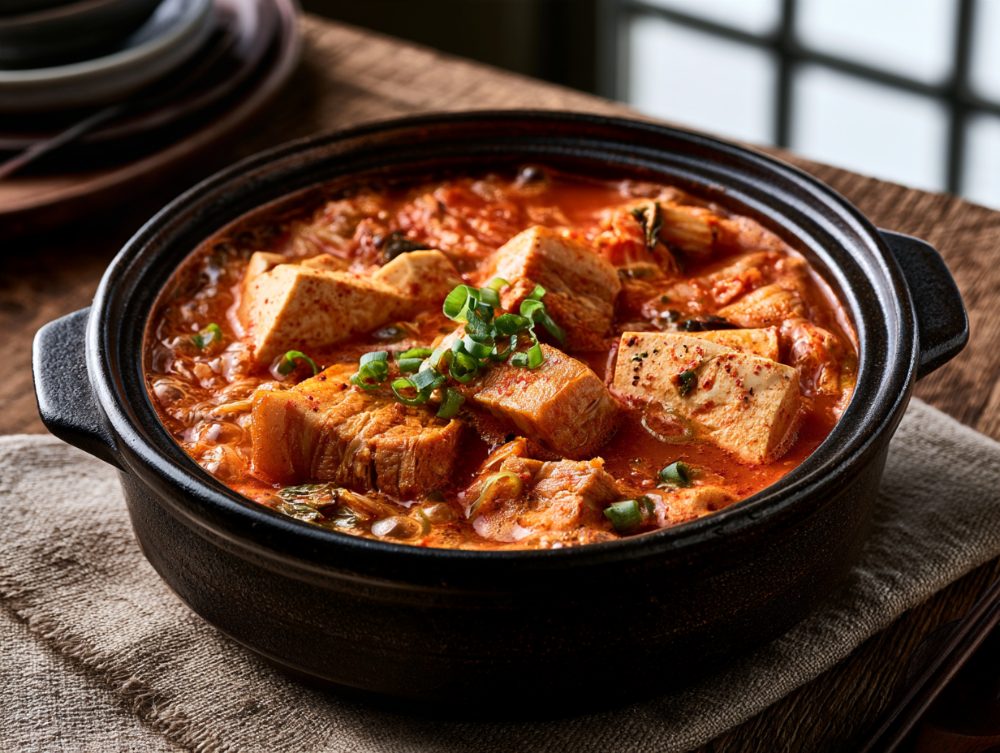
Kimchi jjigae is the stew that Korean home cooks make more than any other. Sour, well-aged kimchi simmers with pork belly until the broth turns rich, red and tangy, then soft cubes of tofu soak it all up. It is naturally low in carbs and tastes even better the next day.
Per serving: 427 calories · 4.1 g net carbs · 18 g protein · 37 g fat (calculated from the ingredients)
What You’ll Need
Ingredients
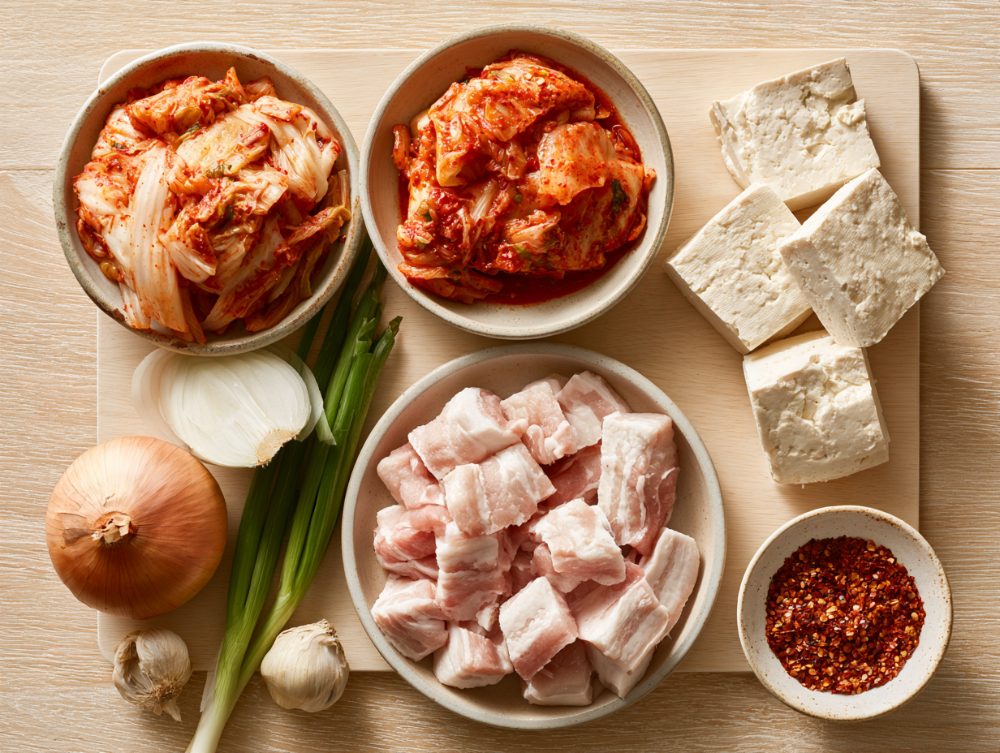
- 8 ounces pork belly sliced into bite-size pieces
- 2 cups well-fermented napa cabbage kimchi chopped
- 1/4 cup kimchi juice
- 1/2 small onion sliced
- 3 cloves garlic minced
- 1 tablespoon gochugaru
- 3 cups anchovy-kelp broth or water
- 1 tablespoon soy sauce
- 8 ounces firm tofu cut into 1/2-inch slices
- 2 scallions sliced
- 1 green chili sliced (optional)
- 1 teaspoon toasted sesame oil

Instructions
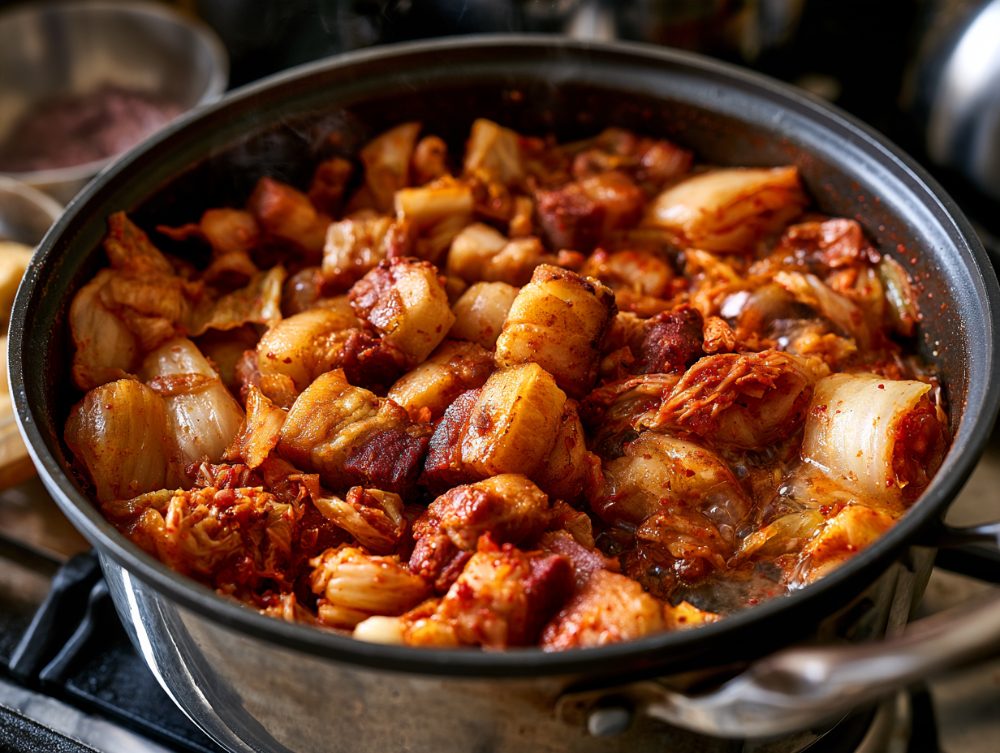
- Put the pork belly in a heavy pot over medium heat and cook for 4 to 5 minutes until the fat renders and the pork starts to brown.
- Add the kimchi, onion and garlic and stir-fry for 5 minutes, until the kimchi softens and smells toasty.
- Sprinkle in the gochugaru and stir for 30 seconds, then add the kimchi juice, broth and soy sauce. Bring to a boil.
- Reduce the heat and simmer, partly covered, for 15 minutes so the kimchi becomes tender and the broth deepens.
- Lay the tofu slices on top and add the scallions and chili. Simmer 5 minutes more. Drizzle with sesame oil and serve bubbling.
Notes
Nutrition
About This Dish
Jjigae is a thick Korean stew, usually served bubbling in the pot it was cooked in and shared from the middle of the table. Kimchi jjigae is so common that it is often the first dish Korean students learn to cook when they leave home. Koreans traditionally make kimchi in huge batches each autumn, a custom called gimjang, and stews like this one use up the older kimchi as spring approaches. Kimjang, the culture of making and sharing kimchi, was added to UNESCO’s Intangible Cultural Heritage list in 2013. A popular version adds canned tuna instead of pork.
This recipe is from The Ultimate Korean Keto Cookbook by Gisele Costello, Chapter 3: Soups & Stews (Gamcheon Culture Village). See all Korean recipes