
Discover the history of this region →
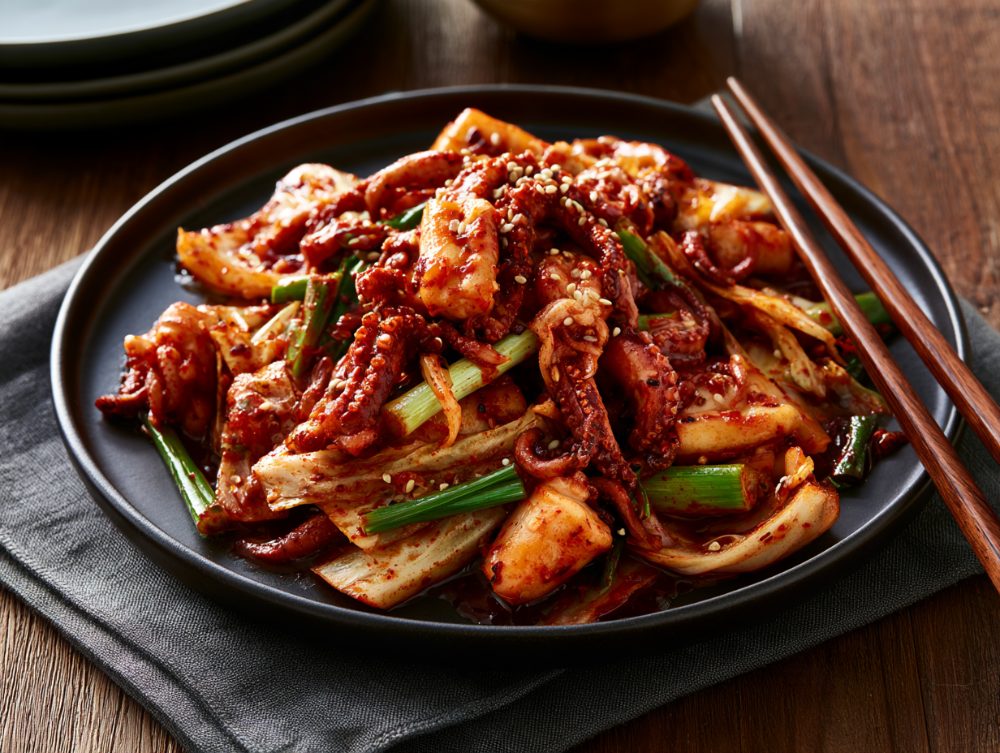
Jjukkumi-bokkeum is a fiery, glossy stir-fry of tender baby octopus coated in a garlicky red pepper sauce. It is a spring specialty along Korea’s west coast, when baby octopus are at their best. It cooks in minutes, so have everything ready before you light the stove.
Per serving: 346 calories · 14 g net carbs · 37 g protein · 14 g fat (calculated from the ingredients)
What You’ll Need
Ingredients
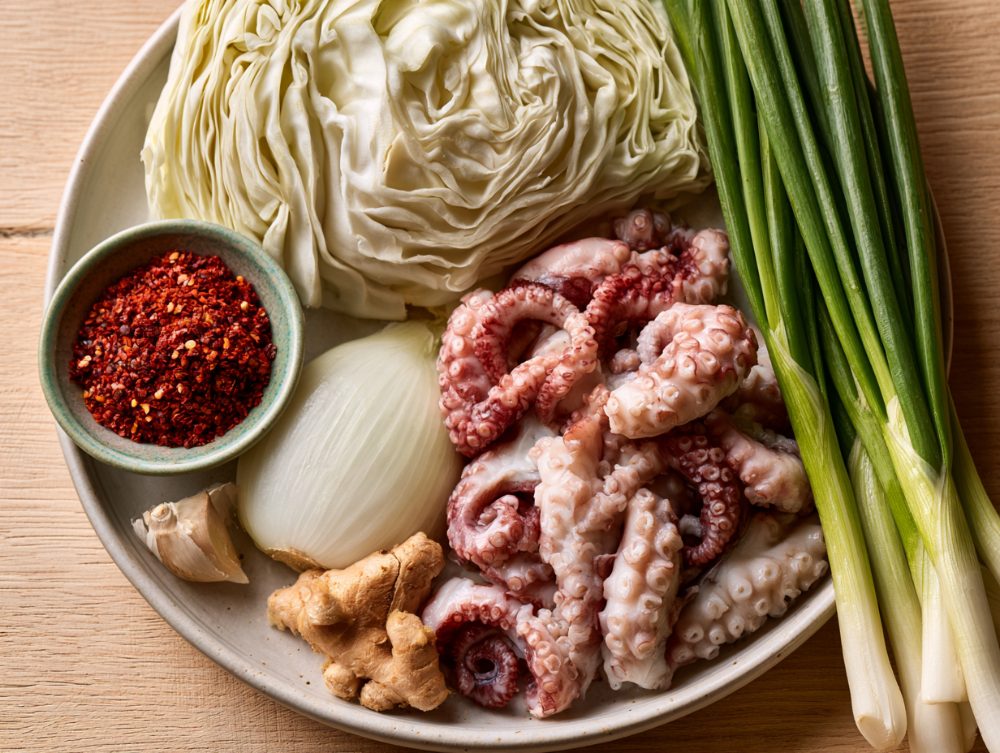
- 1 pound baby octopus cleaned
- 2 tablespoons coarse salt for cleaning
- 1/2 small onion sliced
- 1/2 small cabbage wedge cut into squares
- 2 scallions cut into 2-inch pieces
- 1 tablespoon avocado oil
- Sauce: 2 tablespoons gochugaru, 1 tablespoon Keto Gochujang-Style Paste (Chapter 10) or store-bought gochujang, 1 tablespoon soy sauce, 1 tablespoon allulose, 3 cloves garlic minced, 1 teaspoon grated ginger
- 1 teaspoon toasted sesame oil
- 1 teaspoon toasted sesame seeds

Instructions
- Rub the octopus with the coarse salt for 2 minutes to remove the slime, then rinse well. Cut into bite-size pieces.
- Bring a pot of water to a boil and blanch the octopus for 30 seconds. Drain immediately. This keeps it from releasing water into the sauce.
- Stir together all the sauce ingredients.
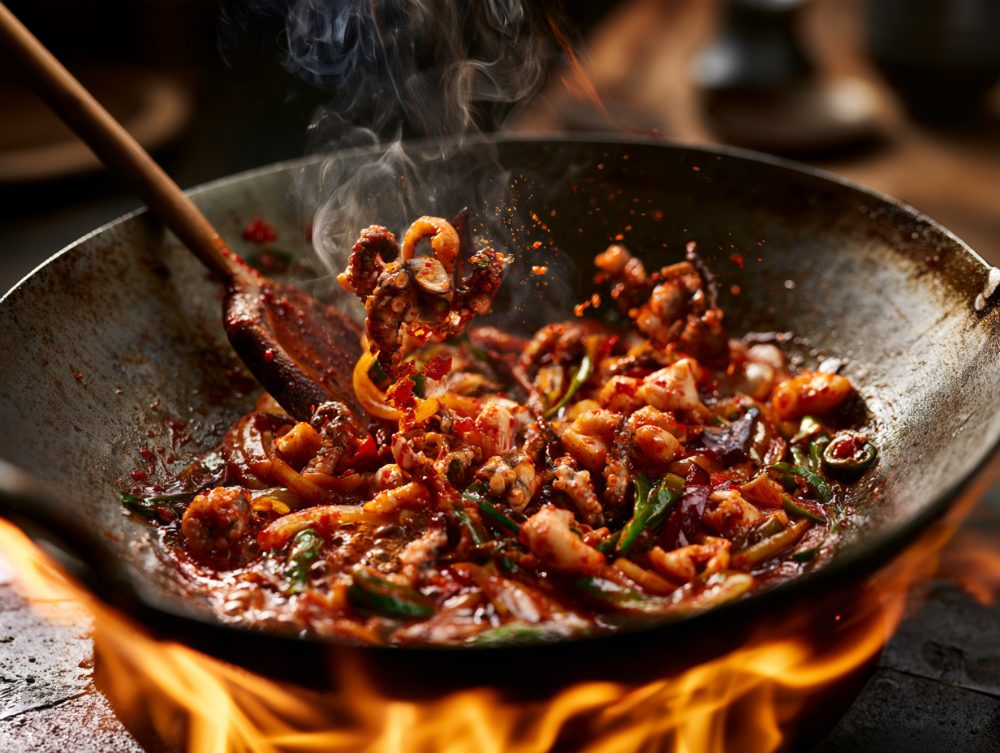
- Heat the oil in a wok over high heat. Add the onion and cabbage and stir-fry for 2 minutes.
- Add the octopus and sauce and stir-fry for 2 to 3 minutes, just until everything is glossy and coated. Add the scallions, toss, and turn off the heat. Finish with sesame oil and seeds.
Notes
Nutrition
About This Dish
Jjukkumi is the Korean name for webfoot octopus, a small species found along Korea’s west coast. In spring, the females are full of tiny eggs that look like grains of rice, a delicacy many diners seek out. Coastal towns hold jjukkumi festivals each spring to celebrate the season. In restaurants, the stir-fry is often cooked on a hot plate at the table. When most of it has been eaten, diners ask for rice to fry in the leftover sauce.
Pairs Well With
This recipe is from The Ultimate Korean Keto Cookbook by Gisele Costello, Chapter 4: Seafood (Jagalchi Fish Market). See all Korean recipes