
Discover the history of this region →
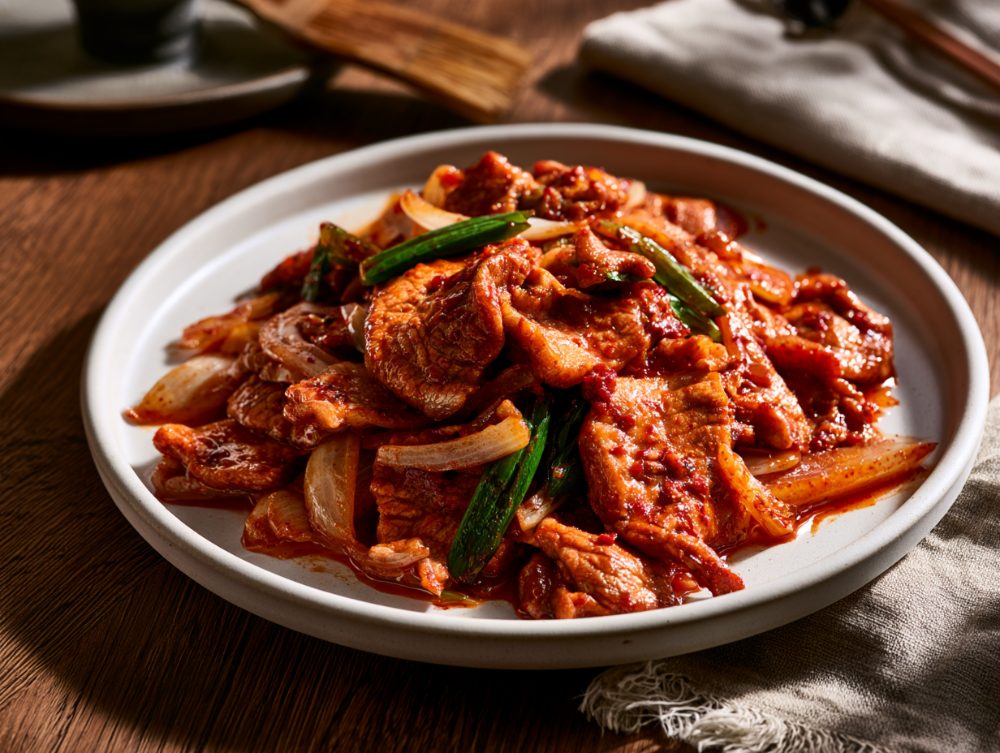
Jeyuk-bokkeum is thinly sliced pork stir-fried in a fiery, sweet gochujang sauce with onions and scallions. It is one of the most popular lunch specials in Korea and a staple of home cooking. It comes together in 15 minutes and is fantastic wrapped in lettuce.
Per serving: 544 calories · 7.7 g net carbs · 42 g protein · 36 g fat (calculated from the ingredients)
What You’ll Need
Ingredients
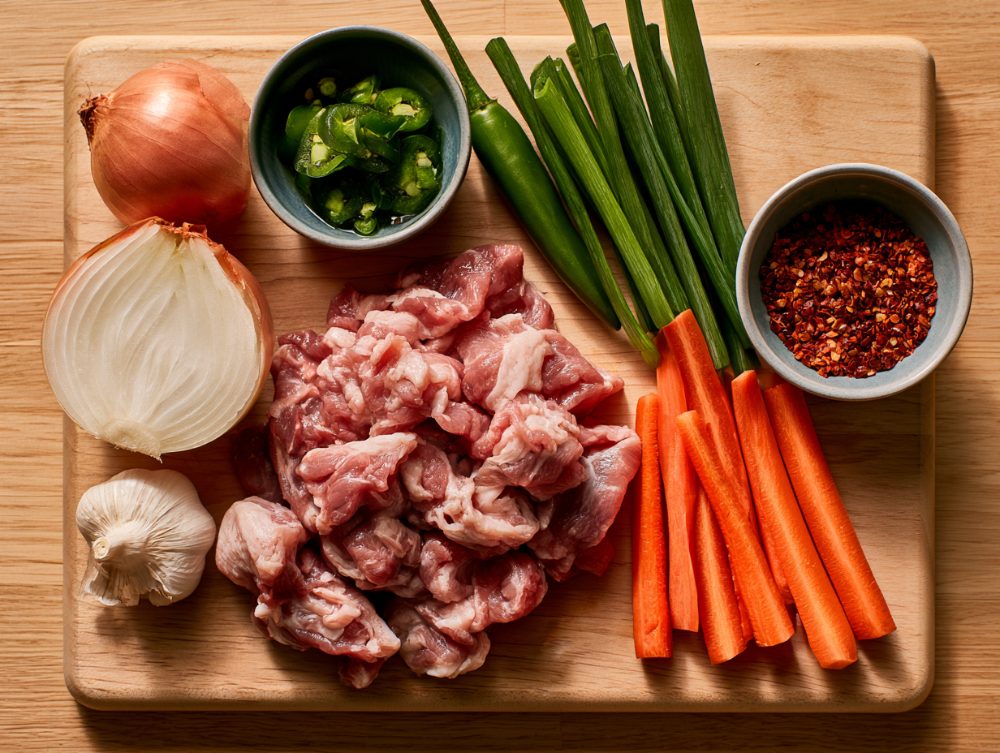
- 2 pounds pork shoulder or belly thinly sliced
- 1 onion sliced
- 1 small carrot thinly sliced
- 4 scallions cut into 2-inch pieces
- 1 green chili sliced
- Sauce: 3 tablespoons Keto Gochujang-Style Paste (Chapter 10) or store-bought gochujang, 2 tablespoons gochugaru, 2 tablespoons soy sauce, 2 tablespoons allulose, 6 cloves garlic minced, 1 tablespoon grated ginger, 1 tablespoon sesame oil
- 1 tablespoon avocado oil
- 1 teaspoon toasted sesame seeds

Instructions
- Mix the sauce ingredients in a large bowl. Add the pork and massage the sauce into the meat. Refrigerate for at least 30 minutes.
- Heat the avocado oil in a large skillet or wok over medium-high heat.
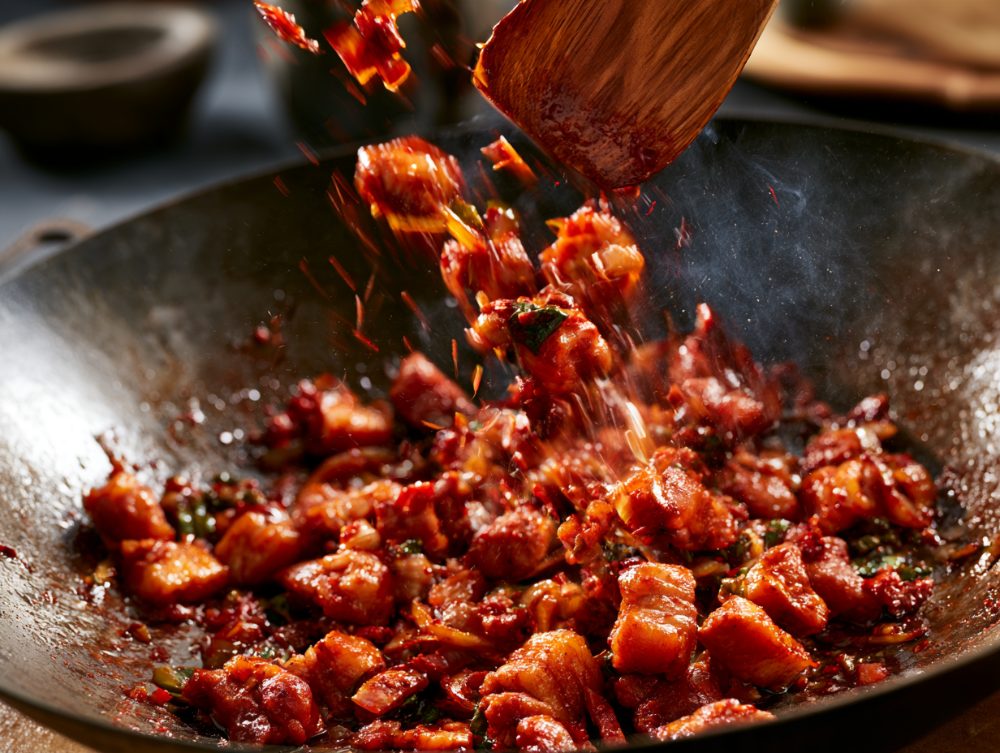
- Add the pork and cook, stirring often, for 6 to 7 minutes until it is nearly cooked through.
- Add the onion and carrot and stir-fry for 3 minutes, until the onion softens and the sauce caramelizes.
- Add the scallions and chili and stir-fry 1 minute more. Sprinkle with sesame seeds.
Notes
Nutrition
About This Dish
Jeyuk means pork, and bokkeum means stir-fry. Jeyuk-bokkeum is one of the most common dishes at Korean cafeterias, roadside restaurants and military dining halls, often served with rice, soup and banchan. It is also a favorite at gisa sikdang, restaurants for taxi drivers, known for fast, generous meals. Lettuce wraps with jeyuk-bokkeum are called jeyuk ssam.
Pairs Well With
This recipe is from The Ultimate Korean Keto Cookbook by Gisele Costello, Chapter 7: Pork (Seongsan Ilchulbong). See all Korean recipes