Discover the history of this region →
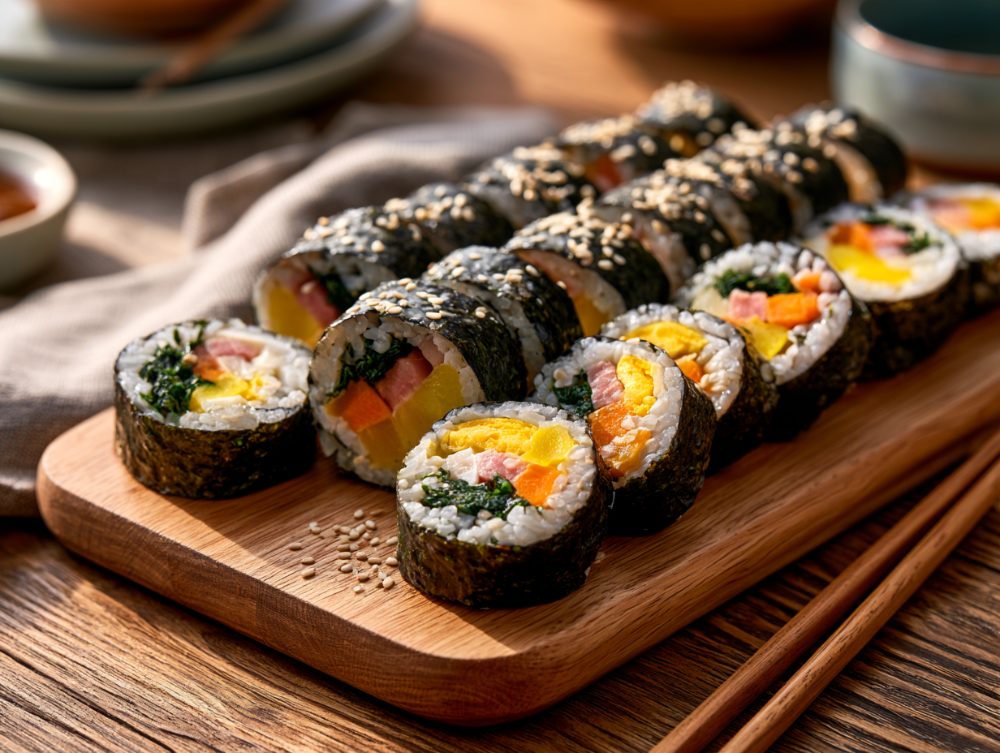
Gimbap is Korea’s favorite picnic food: seaweed rolled around seasoned rice and colorful strips of egg, vegetables and ham, then sliced into bite-size rounds. It looks a little like sushi, but it is seasoned with sesame oil instead of vinegar and filled with cooked ingredients. This keto version uses cauliflower rice bound with a little cream cheese so the rolls slice cleanly.
Per serving: 268 calories · 8.7 g net carbs · 15 g protein · 18 g fat (calculated from the ingredients)
What You’ll Need
Ingredients
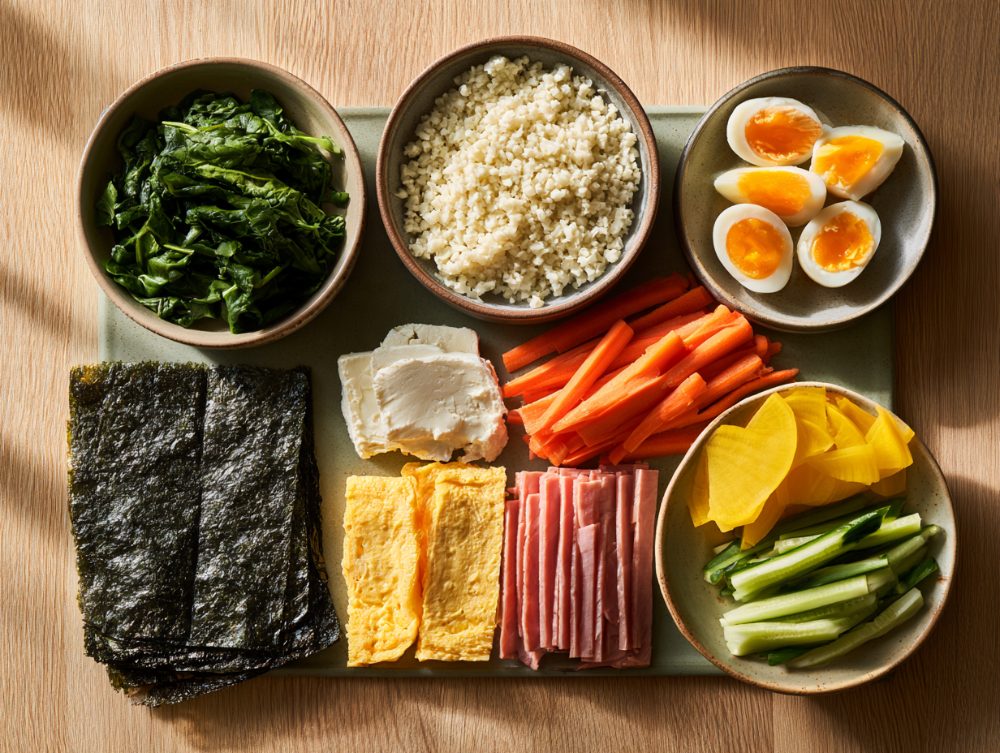
- 4 sheets roasted seaweed for gimbap (gim)
- 4 cups riced cauliflower
- 4 ounces cream cheese softened
- 1 tablespoon toasted sesame oil divided
- 1/2 teaspoon salt divided
- 3 large eggs beaten
- 5 ounces fresh spinach
- 1 small carrot cut into matchsticks
- 4 ounces daikon radish cut into long 1/2-inch strips
- 2 tablespoons rice vinegar
- 1 tablespoon allulose
- Pinch of ground turmeric
- 4 long strips deli ham (about 3 ounces)
- 1 small cucumber seeded and cut into long strips
- 1 teaspoon toasted sesame seeds

Instructions
- Make the quick yellow pickle: toss the daikon strips with the rice vinegar, allulose, turmeric and a pinch of salt. Set aside for at least 20 minutes, then pat dry.
- Cook the cauliflower rice in a dry nonstick skillet over medium heat for 6 to 8 minutes, stirring, until tender and completely dry. Cool for 5 minutes, then mix in the cream cheese, half the sesame oil and 1/4 teaspoon salt.
- Pour the beaten eggs into a lightly oiled skillet over low heat to make a thin omelet. Cook until set, flip briefly, then cut into long 1/2-inch strips.
- Blanch the spinach for 30 seconds, rinse in cold water and squeeze dry. Season with the remaining sesame oil and salt. Sauté the carrot for 2 minutes until just soft.
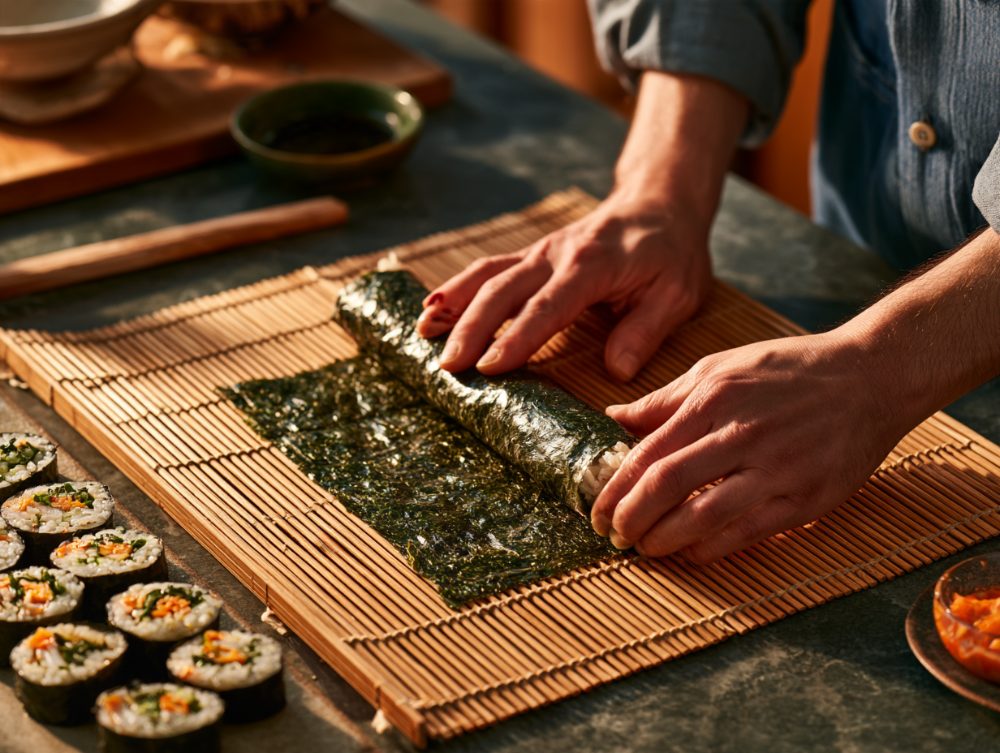
- Lay a seaweed sheet shiny side down on a bamboo mat. Spread a quarter of the cauliflower mixture thinly over the bottom two thirds, leaving a 1-inch strip at the top.
- Line up a quarter of the egg, spinach, carrot, pickled daikon, ham and cucumber across the middle. Roll firmly away from you using the mat, pressing as you go. Dab the top edge with water to seal.
- Brush the roll with a little sesame oil and sprinkle with sesame seeds. Use a sharp, damp knife to cut into 1/2-inch slices. Repeat with the remaining sheets.
Notes
Nutrition
About This Dish
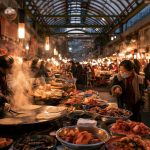
Gimbap gets its name from two words: gim, the roasted seaweed sheet, and bap, cooked rice. It is the classic food for school picnics and field trips, and many Koreans have warm memories of their mothers rolling it early in the morning. Every family has its own favorite fillings, from bulgogi and tuna to kimchi and cheese. At Gwangjang Market, vendors sell mayak gimbap, a tiny version with just a few fillings served with a mustard-soy dipping sauce. Gimbap is usually sliced into bite-size rounds, which makes it easy to share.
This recipe is from The Ultimate Korean Keto Cookbook by Gisele Costello, Chapter 2: Snacks & Banchan (Gwangjang Market). See all Korean recipes