
Discover the history of this region →
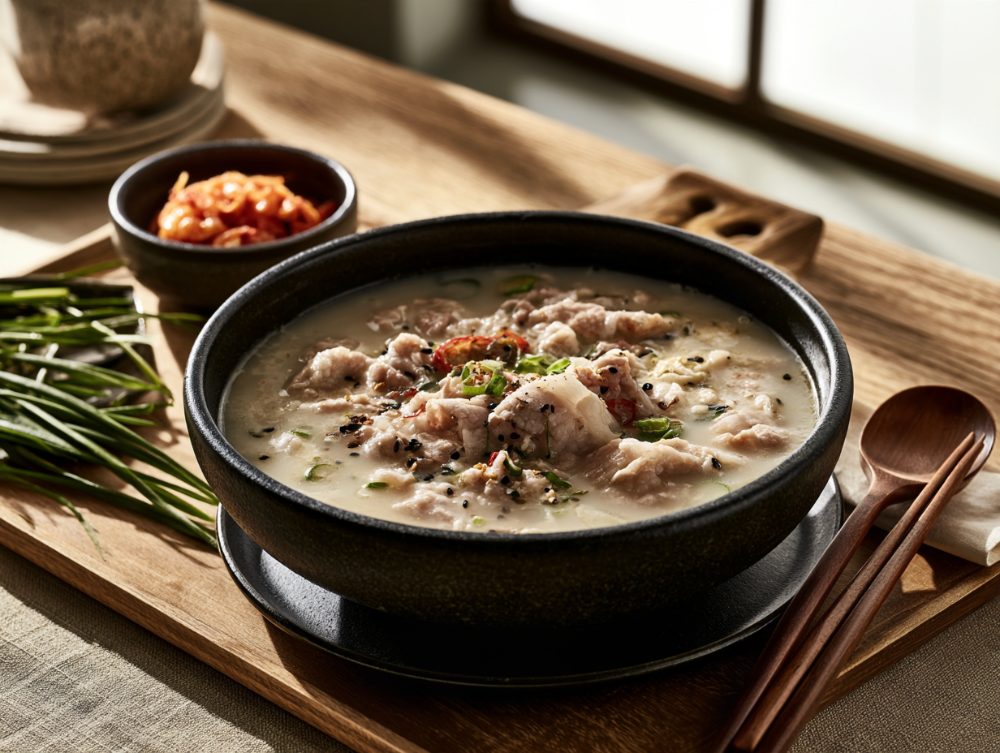
Dwaeji gukbap is Busan’s signature soup: a milky, deeply savory pork broth poured over tender slices of pork, then seasoned at the table with salted shrimp, chives and chili paste. It is warming, filling and nearly carb-free. Serve the cauliflower rice on the side or drop it into the bowl, just as Busan locals do with rice.
Per serving: 253 calories · 6.5 g net carbs · 22 g protein · 14 g fat (calculated from the ingredients)
What You’ll Need
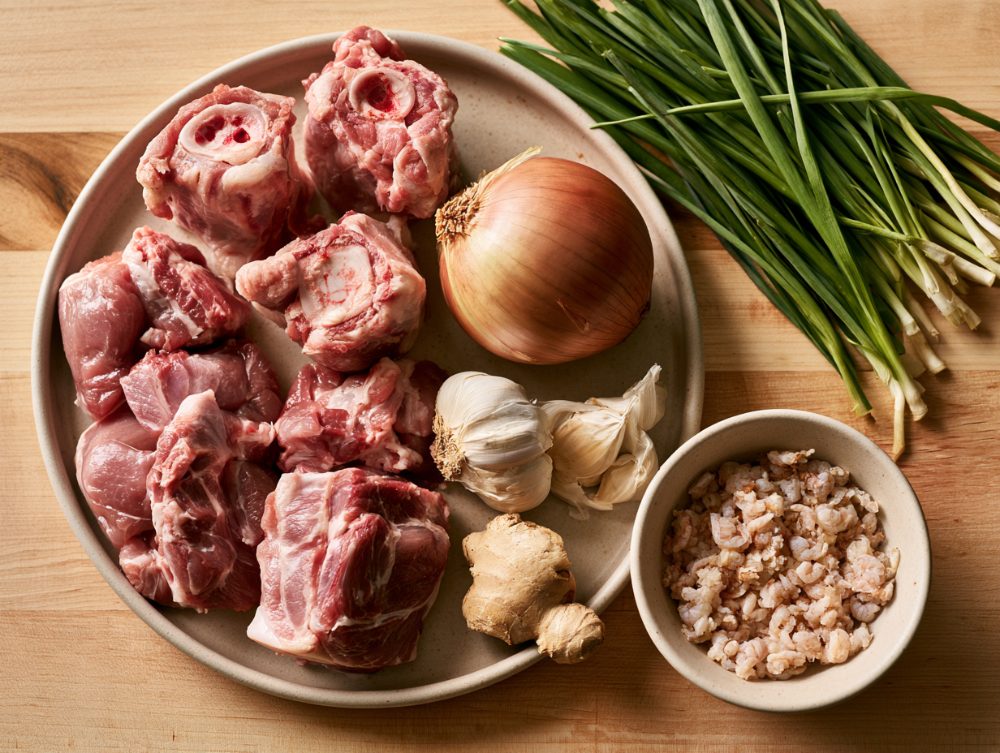
Ingredients
- 2 pounds pork neck bones or trotters for the broth
- 1 1/2 pounds boneless pork shoulder in one piece
- 1 onion halved
- 1 head garlic halved crosswise
- 2-inch piece ginger sliced
- 3 scallions whites for the broth, greens chopped for serving
- 10 cups water
- 2 tablespoons salted shrimp (saeujeot) for serving
- 1 cup garlic chives (buchu) chopped, for serving
- 1 teaspoon gochugaru for serving
- Salt and black pepper to taste
- 3 cups cooked cauliflower rice for serving (optional)

Instructions
- Soak the pork bones in cold water for 1 hour to draw out the blood. Put them in a large pot, cover with water, and boil for 5 minutes. Drain and rinse the bones and the pot.
- Return the bones to the pot with the pork shoulder, onion, garlic, ginger, scallion whites and 10 cups of water. Bring to a boil, then reduce to a steady simmer.
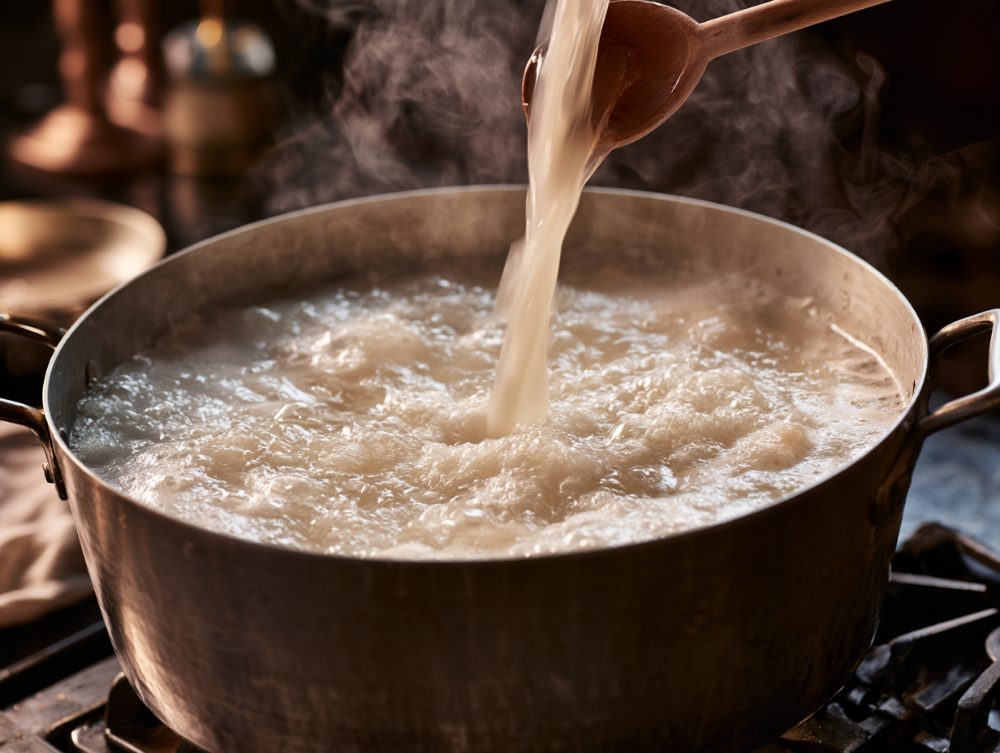
- After 1 hour, remove the pork shoulder, let it cool slightly, and refrigerate. Keep simmering the bones for 1 to 1 1/2 hours more, skimming occasionally, until the broth turns cloudy and white.
- Strain the broth and discard the bones and aromatics. Thinly slice the pork shoulder.
- To serve, place cauliflower rice (if using) and slices of pork in each bowl and ladle in the hot broth. Let everyone season their own bowl with salted shrimp, chives, gochugaru, salt and pepper.
Notes
Nutrition
About This Dish
Dwaeji means pork, and gukbap means soup with rice. Busan is famous for this soup, and it is widely believed to have spread there during the Korean War, when refugees made broth from inexpensive pork bones. Busan has hundreds of gukbap restaurants, and locals argue fiercely about which is best. Customers season their own bowls at the table with salted shrimp, chives and spicy paste. Many restaurants serve it with a side of thin noodles and a plate of raw onions, green chilies and soybean paste.
This recipe is from The Ultimate Korean Keto Cookbook by Gisele Costello, Chapter 3: Soups & Stews (Gamcheon Culture Village). See all Korean recipes