
📍 Where this dish comes from: The Peloponnese · Ancient Olympia / Mystras / Sparta (Kalamata olive country)
Discover the history of this region →
Discover the history of this region →
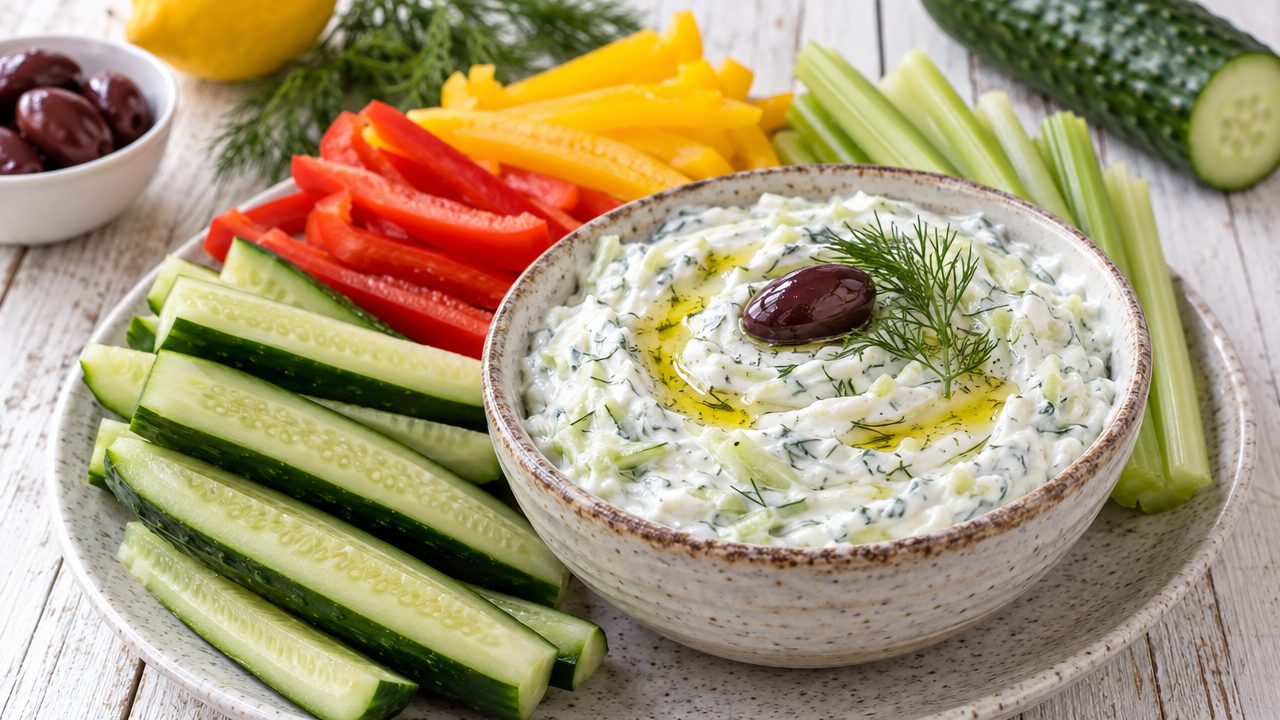
Chapter 2 introduced the classic tzatziki. This pantry entry is the master version — made with even more care, even thicker yogurt, and the tips and techniques that elevate it from very good to truly exceptional. Make this on Sunday and use it all week as a sauce, a dip, a marinade base, and a companion to virtually everything in this book.
What You’ll Need
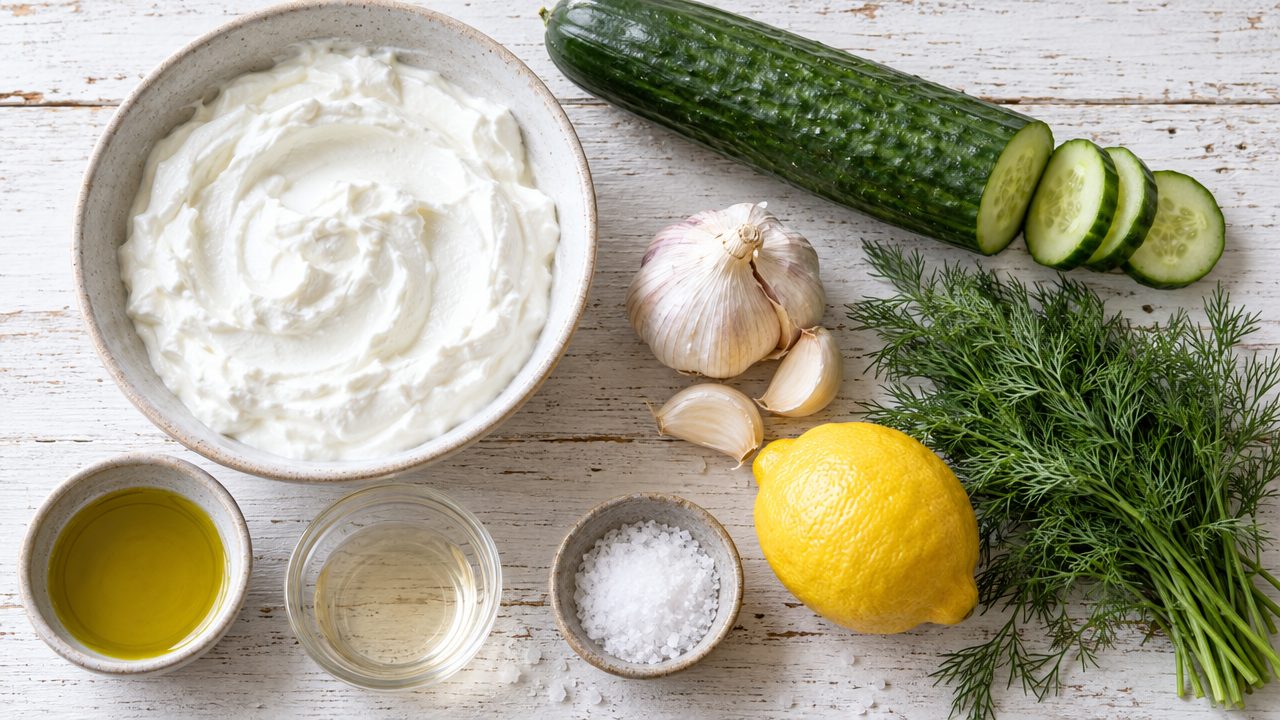
Servings: 2.5 cups
Calories: 75kcal
Ingredients
- 3 cups full-fat Greek yogurt strained overnight through cheesecloth if possible
- 1 large English cucumber grated and squeezed absolutely dry (wring twice)
- 4 garlic cloves minced then worked with salt into a paste
- 3 tbsp fresh dill finely chopped
- 2 tbsp fresh mint finely chopped
- 3 tbsp extra-virgin olive oil
- 2 tbsp white wine vinegar
- 1 tsp sea salt plus more to taste

Instructions
- The night before: Strain yogurt in cheesecloth over a bowl in the refrigerator. This removes excess whey and creates the thickest, creamiest base.
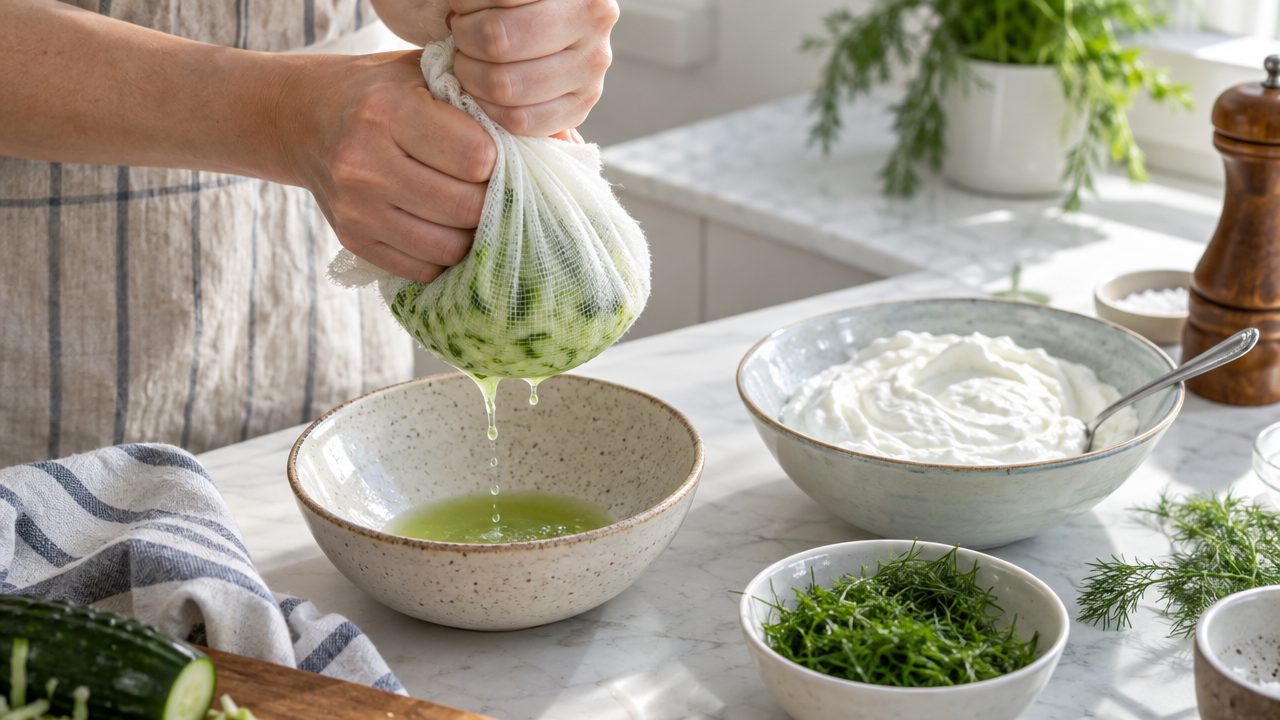
- Grate cucumber on the large holes of a box grater. Wring in a kitchen towel — squeeze hard, release, squeeze again. All the water must come out.
- Work minced garlic with salt on a cutting board until it becomes a smooth paste (or use a mortar). This removes harshness.
- Combine strained yogurt, squeezed cucumber, garlic paste, dill, mint, olive oil, and vinegar.
- Mix well. Taste and adjust — it should be cool, tangy, garlicky, and herbaceous.
- Refrigerate at least 2 hours before serving. Always serve cold with a fresh drizzle of olive oil.
Nutrition
Serving: 1cup | Calories: 75kcal | Protein: 5g | Fat: 5g
Tried this recipe?Let us know how it was!
Health Benefits
- Strained yogurt concentrates all the probiotics, protein, and calcium of regular Greek yogurt while removing much of the lactose — making it even more keto-friendly.
- Raw garlic paste preserves maximum allicin potency.
- Dill’s essential oils, particularly carvone and limonene, actively support digestive health and have natural antimicrobial properties.