
📍 Where this dish comes from: Mumbai
Discover the history of this region →
Discover the history of this region →
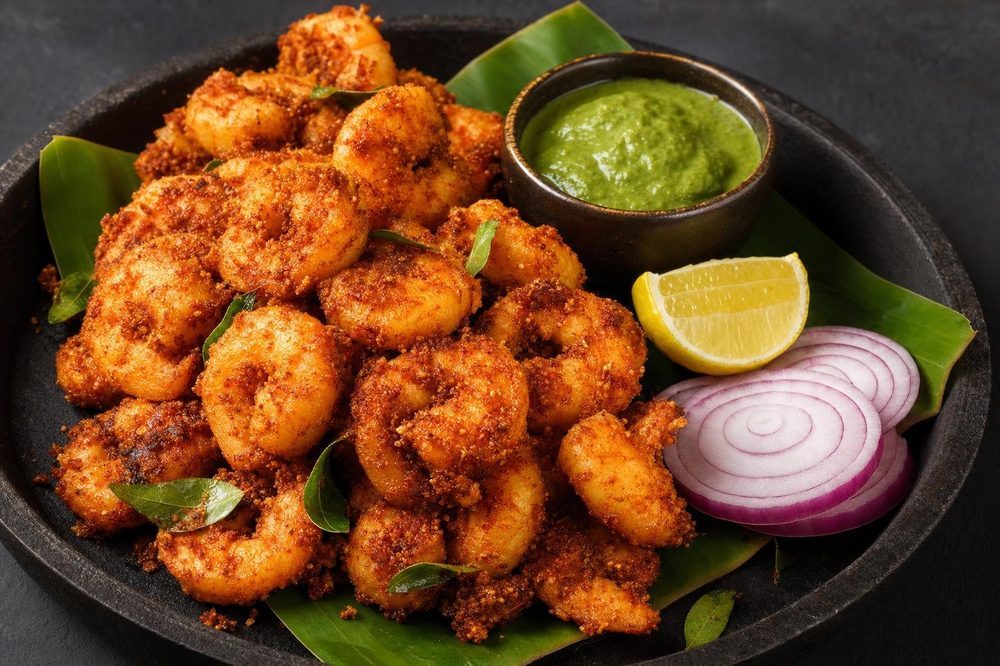
Koliwada refers to the fishing villages of Mumbai where this style of fried seafood originated. The Koli fishing community developed a simple but brilliant spice rub and frying technique that became a citywide obsession. Fat, firm prawns wrapped in a crimson, chili-fired almond batter and fried until the coating shatters with a crack, while the prawn within stays sweet, succulent, and steaming with a fragrance that is pure seaside celebration — Mumbai’s beloved waterfront snack.
What You’ll Need
Servings: 3 servings
Calories: 195kcal
Ingredients
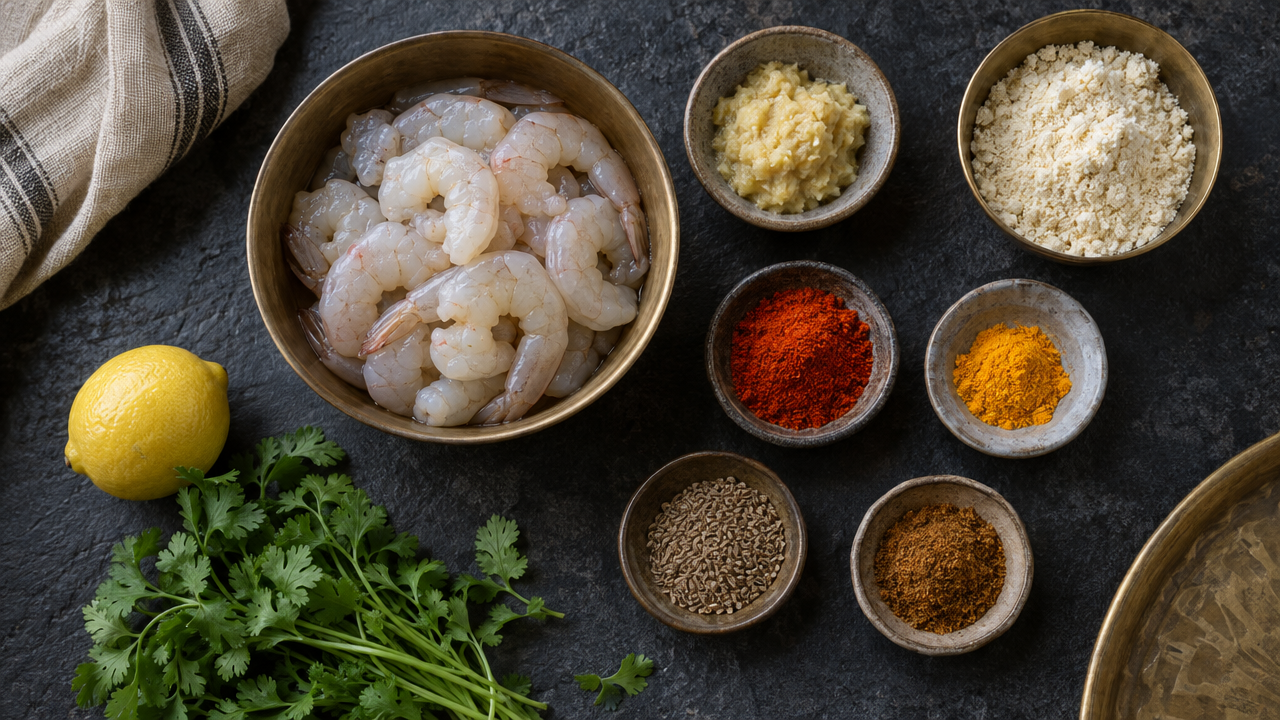
- 400 g large prawns cleaned and deveined
- 1 tbsp ginger-garlic paste Marinade
- 1 tsp red chili powder Marinade
- 1/2 tsp turmeric Marinade
- 1 tbsp lemon juice Marinade
- Salt Marinade
- 1/4 cup almond flour Batter
- 2 tbsp psyllium husk Batter
- 1 tsp red chili powder Batter
- 1/2 tsp cumin powder Batter
- Salt Batter
- Water to make paste Batter
- Ghee for frying Batter

Instructions
- Marinate prawns 20 minutes.
- Prepare thick batter from almond flour, psyllium, spices, and water.
- Pat marinated prawns dry and coat in batter.
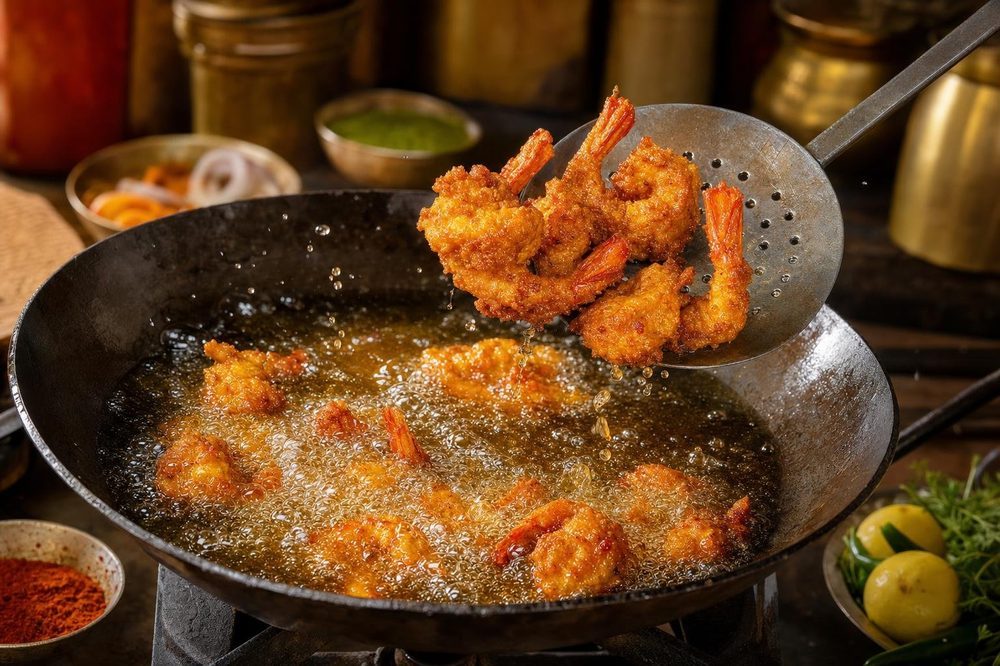
- Heat generous ghee in pan on medium-high.
- Fry prawns 2–3 minutes per side until golden and crispy.
- Drain; serve immediately with lemon and green chutney.
Nutrition
Serving: 1serving | Calories: 195kcal | Protein: 24g | Fat: 10g | Fiber: 2g
Tried this recipe?Let us know how it was!
Health Benefits
- Prawns are one of the best sources of iodine for thyroid hormone production.
- Prawns contain astaxanthin, a carotenoid studied for its antioxidant properties.
- Protein has a higher thermic effect than fat or carbohydrates, meaning the body burns more calories digesting it.