
📍 Where this dish comes from: Bangkok · Wat Phra Kaew (Emerald Buddha)
Discover the history of this region →
Discover the history of this region →
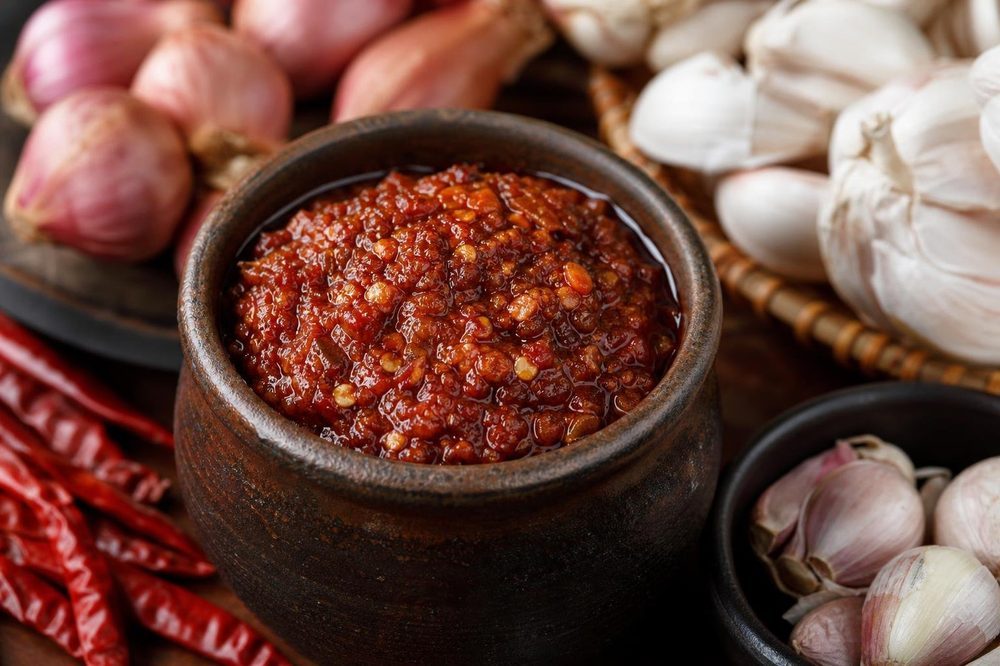
Nam Prik Pao is arguably Thailand’s most important condiment — a slow-roasted paste of dried chilies, garlic, shallots, and shrimp paste that provides the smoky, sweet, deeply savoury base note that defines Bangkok’s central Thai cuisine. It appears in Tom Yum, on fried rice, spread on omelettes, and as a dipping sauce base. Make a large batch and refrigerate for months.
What You’ll Need
Servings: 16 servings
Calories: 85kcal
Ingredients
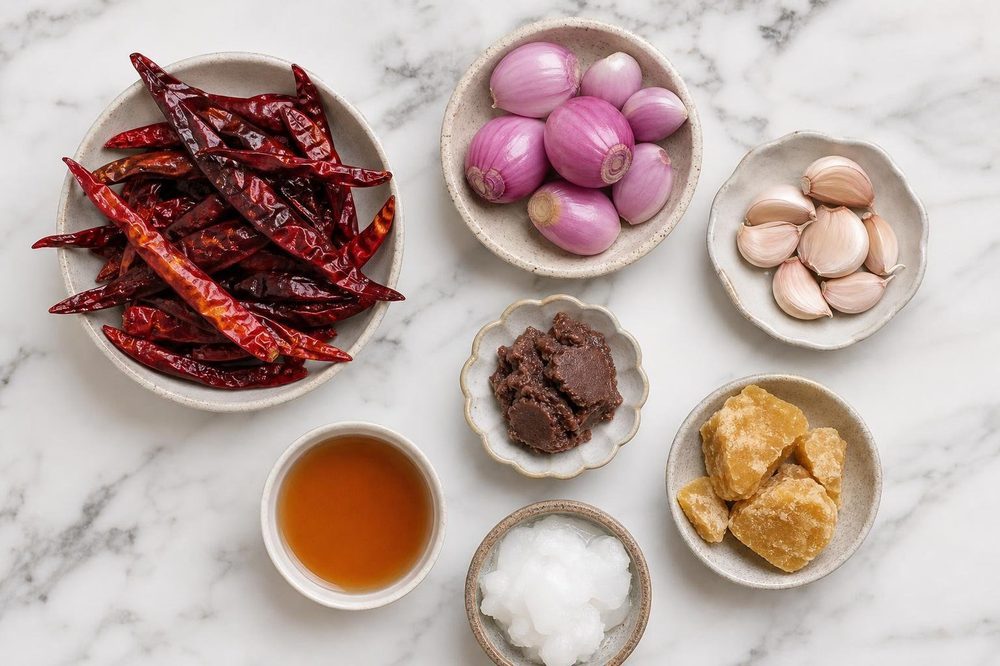
- 100 g dried long red chilies
- 8 shallots unpeeled
- 8 garlic cloves unpeeled
- 2 tbsp shrimp paste (kapi)
- 3 tbsp fish sauce
- 1 tbsp erythritol
- 4 tbsp coconut oil
- 1 tbsp tamarind paste

Instructions
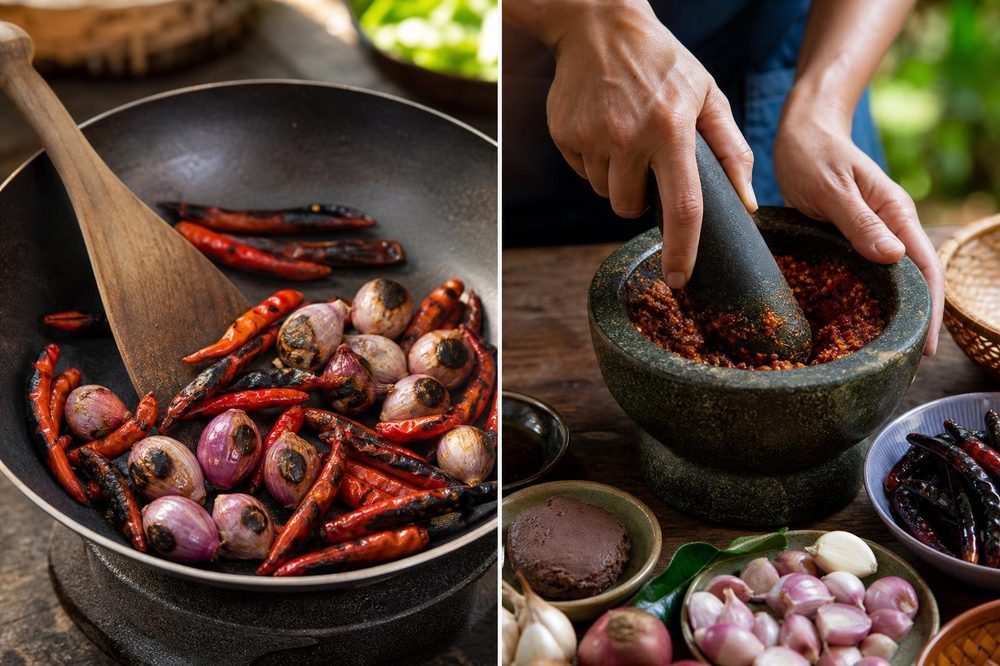
- Dry-roast shallots and garlic (skin on) in a pan until charred. Cool and peel.
- Toast dried chilies in a dry pan until fragrant. Cool. Remove stems.
- Blend or pound all ingredients except oil to a rough paste.
- Fry the paste in coconut oil over medium-low heat, stirring constantly, 15–20 minutes.
- The paste should darken significantly and the oil should separate.
- Add fish sauce, erythritol, and tamarind. Cook 5 more minutes.
- Cool and store in a sterilised jar.
Nutrition
Serving: 1serving | Calories: 85kcal | Protein: 2g | Fat: 7g | Fiber: 1g
Tried this recipe?Let us know how it was!
Health Benefits
- Slow-roasting concentrates the capsaicin content of the dried chilies.
- Shrimp paste fermentation produces bioactive peptides that contribute to the paste’s deep umami character.
- The long cooking time develops Maillard compounds in the shallots and garlic, deepening the flavour considerably.