
📍 Where this dish comes from: Normandy (Normandie)
Discover the history of this region →
Discover the history of this region →
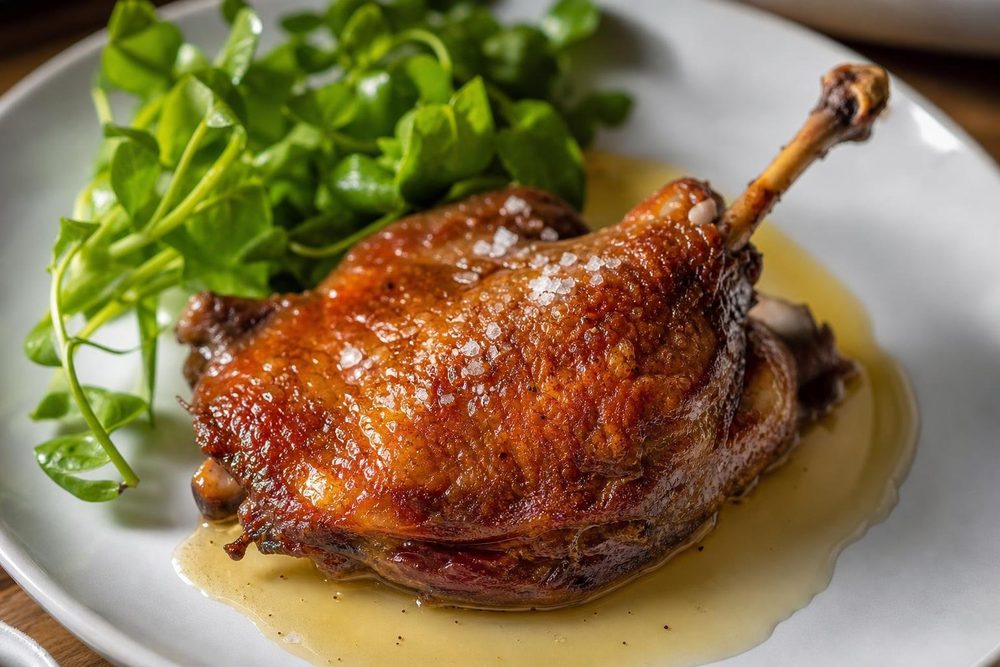
The ancient Gascon preservation technique elevated to culinary art — duck legs slow-cooked submerged in their own rendered fat until falling from the bone, then crisped skin-side down in a scorching hot pan to create the most extraordinary combination of textures: lacquered, shatteringly crisp skin over melting, succulent, deep-flavored meat.
What You’ll Need

Servings: 4 servings
Calories: 680kcal
Ingredients
- 4 duck legs
- 2 tbsp fleur de sel Cure
- 1 tsp black pepper Cure
- 4 sprigs thyme Cure
- 2 bay leaves Cure
- 4 garlic cloves crushed Cure
- 1 pinch sugar substitute Cure
- Duck fat (about 1 liter, rendered), or a mixture of duck fat and olive oil
- fleur de sel To serve
- fresh thyme To serve
- watercress To serve

Instructions
- Rub duck legs with cure mixture. Place in a snug dish. Refrigerate uncovered 8–12 hours.
- Preheat oven to 100°C. Rinse duck legs, pat completely dry. Remove garlic and herbs.
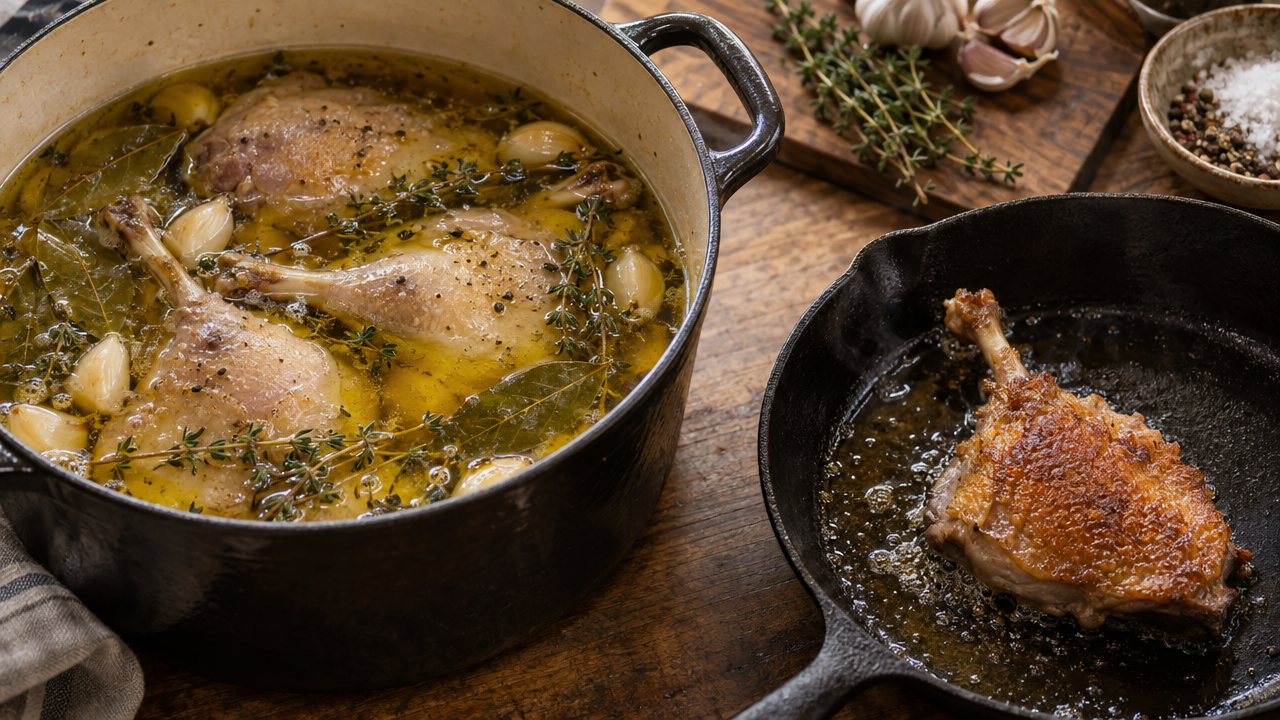
- Place duck legs in a deep ovenproof dish in a single layer. Melt duck fat and pour over to completely submerge.
- Cook in oven 2.5–3 hours until meat is very tender and pulls easily from the bone.
- Cool in the fat. Store refrigerated (will keep months).
- To serve: remove from fat. Place skin-side down in a cold pan. Slowly raise heat. Cook 15 minutes until skin is deep mahogany and shatteringly crisp.
- Serve skin-side up with watercress and fleur de sel.
Nutrition
Serving: 1serving | Calories: 680kcal | Protein: 48g | Fat: 52g
Tried this recipe?Let us know how it was!
Health Benefits
- Duck fat is roughly a third monounsaturated and a third saturated fat, similar in profile to olive oil.
- The extended low-temperature cooking is gentler on heat-sensitive B vitamins than high-heat methods.
- Confit duck contains oleic acid, a fat studied for its potential role in supporting healthy inflammatory markers.
Pairs Well With
- Asperges Vinaigrette Dijon
- Ratatouille Provençale