
Discover the history of this region →
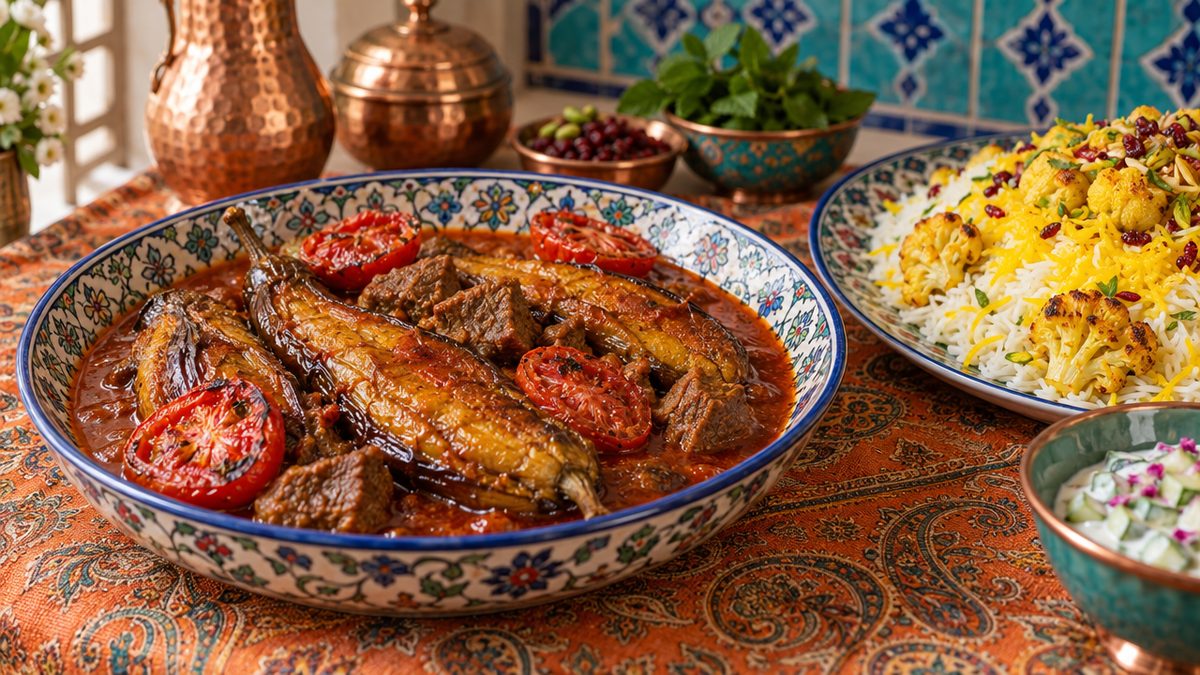
Khoresh-e bademjan is a much-loved Persian stew of tender beef in a tangy tomato and saffron sauce, crowned with silky golden-fried eggplant. Eggplant is naturally low in carbs, so this classic needs no changes beyond serving it with cauliflower rice.
Per serving: 511 calories · 9.4 g net carbs · 31 g protein · 37 g fat (calculated from the ingredients)
What You’ll Need
Ingredients
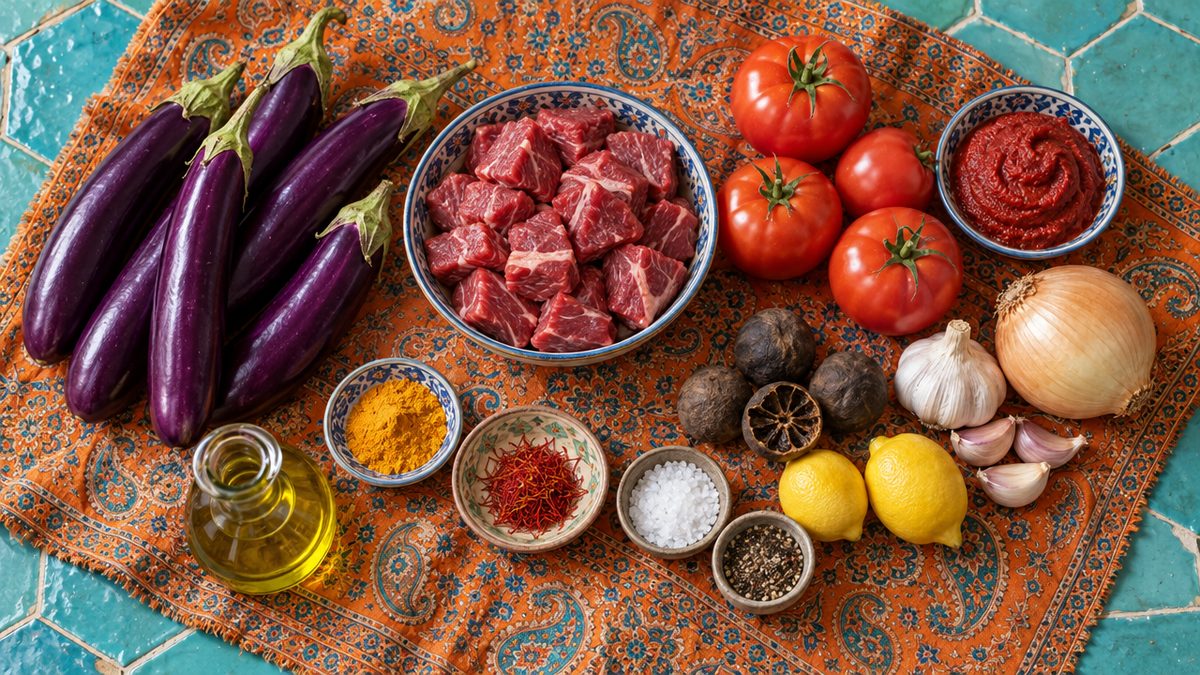
- 2 pounds beef chuck cut into 1 1/2-inch pieces
- 2 medium eggplants about 2 pounds, peeled and cut lengthwise into thick slices
- 1 teaspoon salt for the eggplant
- 6 tablespoons olive oil divided
- 1 large onion sliced
- 2 cloves garlic minced
- 1 teaspoon ground turmeric
- 2 tablespoons tomato paste
- 3 cups water
- 2 dried limes pierced
- 1 teaspoon salt for the stew
- 1/2 teaspoon black pepper
- 2 medium tomatoes halved
- 1/4 teaspoon saffron threads ground and steeped in 2 tablespoons hot water
- 2 tablespoons fresh lemon juice or verjuice

Instructions
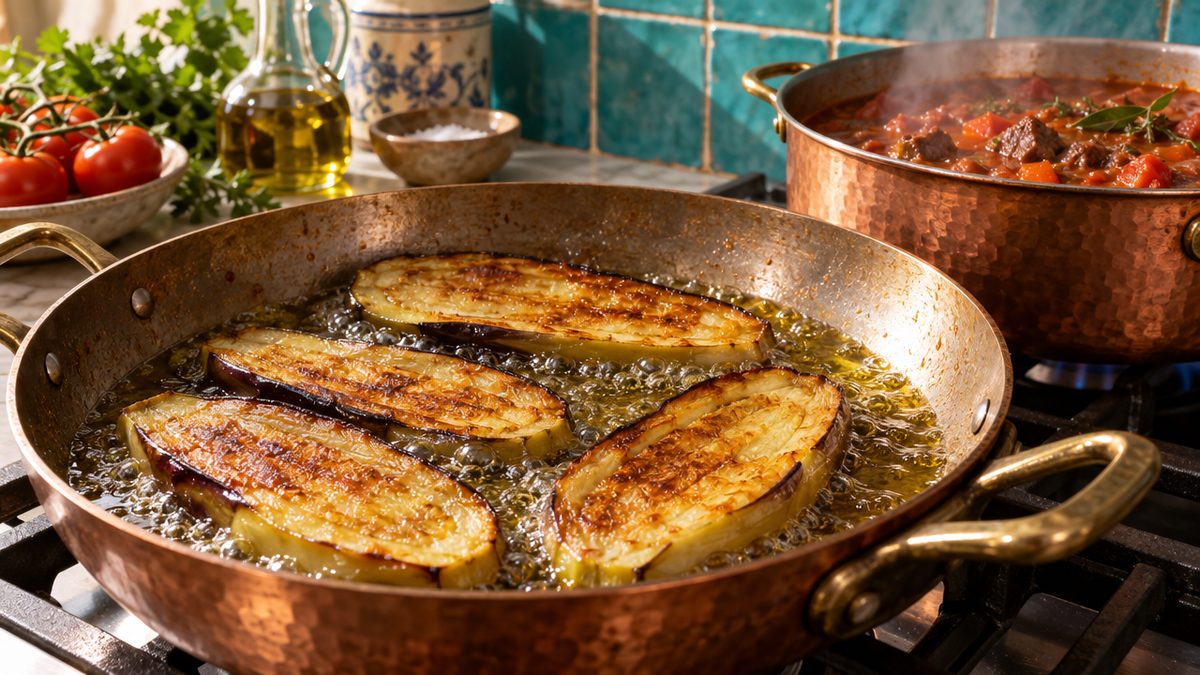
- Sprinkle the eggplant slices with 1 teaspoon salt and leave in a colander for 30 minutes. Rinse and pat very dry. This draws out bitterness and stops them soaking up too much oil.
- Meanwhile, heat 2 tablespoons of the oil in a heavy pot over medium heat. Cook the onion for 8 minutes until golden. Add the garlic and turmeric, then the beef, and brown for 8 minutes.
- Stir in the tomato paste and fry for 2 minutes. Add the water, dried limes, salt and pepper. Bring to a boil, cover and simmer over low heat for 1 1/2 hours.
- Heat the remaining 4 tablespoons of oil in a wide skillet over medium-high heat. Fry the eggplant in batches for 3 to 4 minutes per side until deep golden. Drain on paper towels. Sear the tomato halves in the same pan for 2 minutes.
- Stir the saffron water and lemon juice into the stew. Lay the eggplant and tomatoes on top, cover and simmer gently for 20 to 25 minutes without stirring, so the eggplant stays whole.
- Taste the sauce for salt and sourness.
- Serve the stew with the eggplant on top and saffron cauliflower rice on the side.
Notes
Nutrition
About This Dish
Khoresh-e bademjan is one of the most popular stews in Iran and appears at family dinners, parties and religious gatherings alike. Eggplant came to Persia from India long ago and became central to the cuisine, and the Persian name bademjan is the root of the Arabic word for the vegetable and, through it, of words such as aubergine and the Spanish berenjena. Many cooks add ghooreh, sour unripe grapes, for a sharp tang that balances the rich fried eggplant. The eggplant is usually fried or roasted separately and laid on top just before serving. It is eaten with saffron rice.
This recipe is from The Ultimate Persian Keto Cookbook by Gisele Costello, Chapter 4: Khoresh: Persian Stews (Naqsh-e Jahan Square). See all Persian recipes
FREE · EVERY SUNDAY
Get the free weekly Passport Menu
3 keto dinners from one country each week, with one-tap Instacart ordering. Unsubscribe anytime.