
Discover the history of this region →
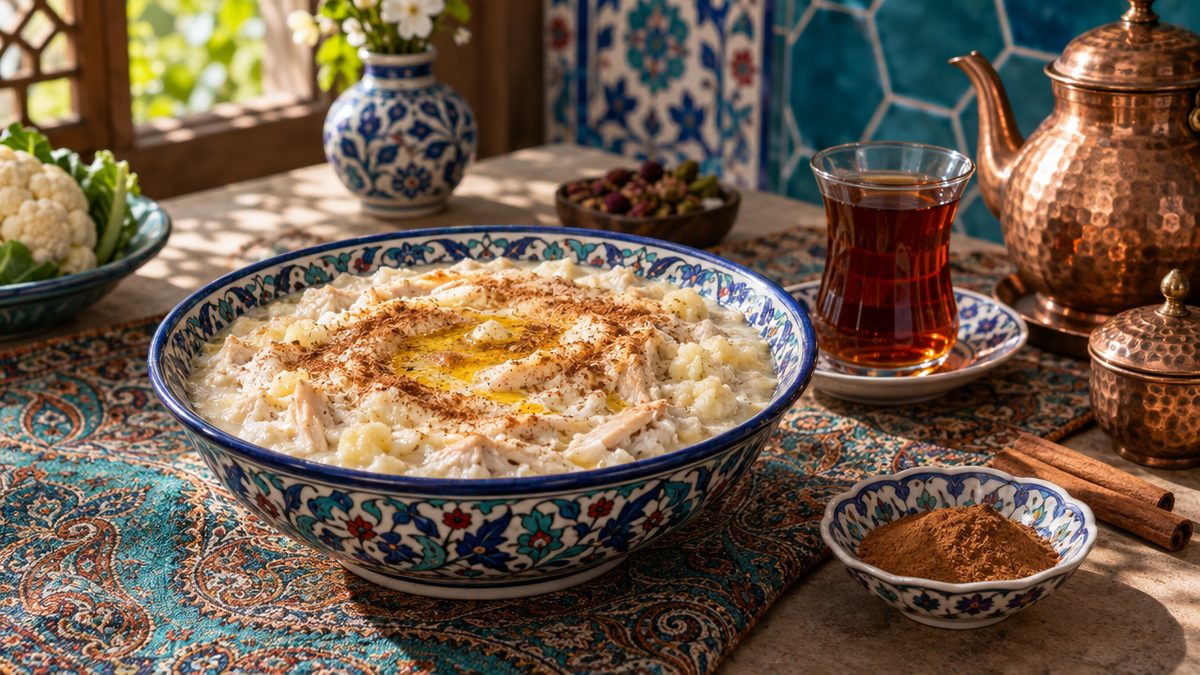
Halim is Iran’s famous winter breakfast: a thick, silky porridge of slow-cooked meat beaten until stretchy, then finished with melted butter, cinnamon and a sweet sprinkle. This grain-free version swaps the wheat for cauliflower and a splash of cream, keeping the cozy, comforting bowl at about 5 g net carbs.
Per serving: 439 calories · 5 g net carbs · 36 g protein · 29 g fat (calculated from the ingredients)
What You’ll Need
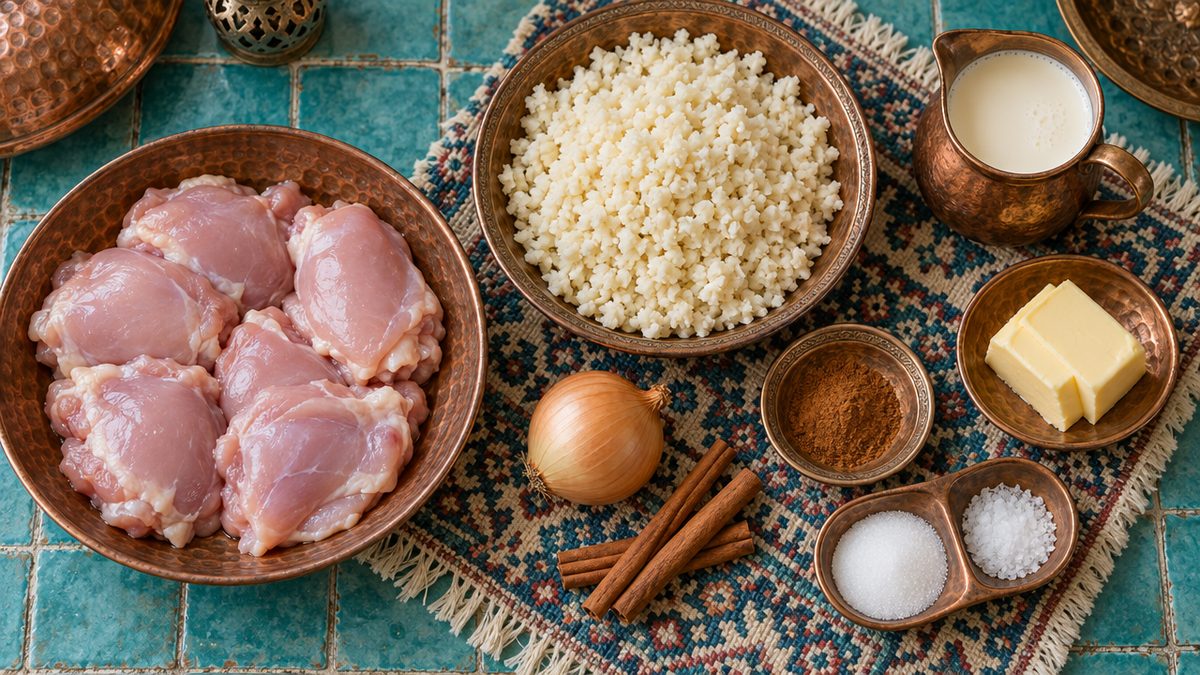
Ingredients
- 1 1/2 pounds boneless skinless chicken thighs
- 1 small onion halved
- 1 cinnamon stick
- 1 teaspoon salt
- 4 cups water
- 3 cups riced cauliflower fresh or frozen
- 1/2 cup heavy cream
- 4 tablespoons butter melted, for serving
- 1 teaspoon ground cinnamon for topping
- 2 tablespoons allulose for topping, or to taste

Instructions
- Put the chicken, onion, cinnamon stick, salt and water in a medium pot. Bring to a boil and skim off any foam.
- Lower the heat, cover and simmer for 35 minutes, until the chicken falls apart easily.
- Lift out the chicken. Discard the onion and cinnamon stick and keep 2 cups of the broth in the pot.
- Add the riced cauliflower to the broth and simmer for 10 to 12 minutes, until very soft.
- Shred the chicken very finely with two forks, or pulse it a few times in a food processor.
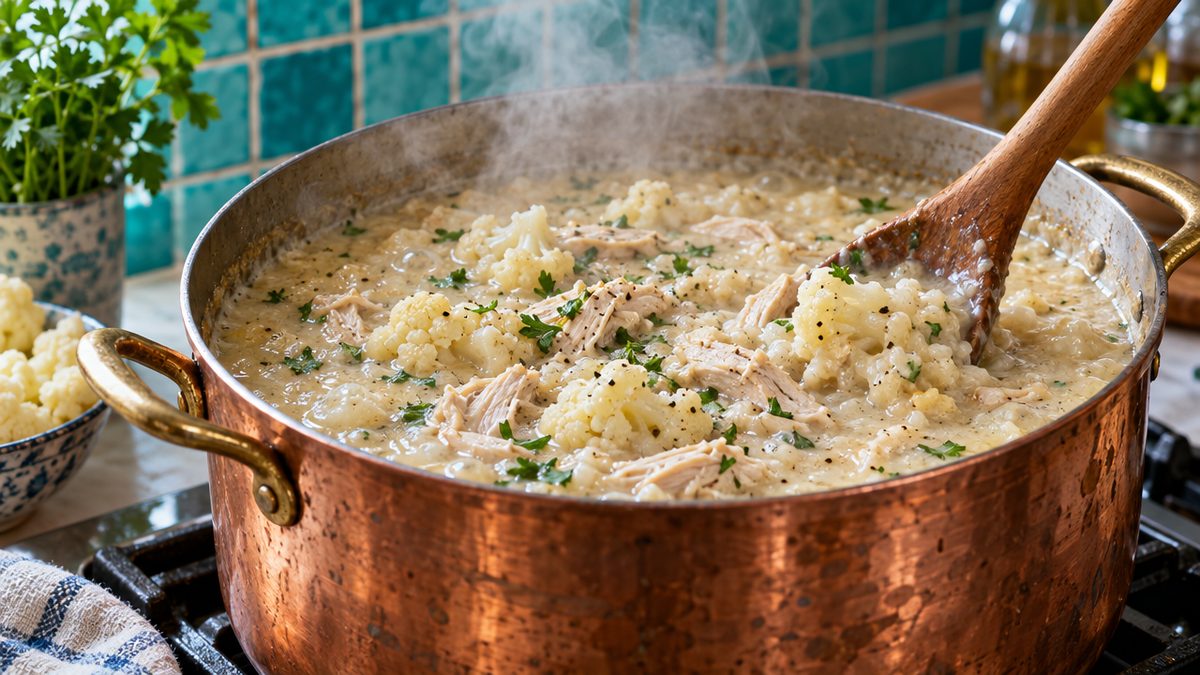
- Stir the chicken and cream into the cauliflower. Cook over low heat for 10 minutes, beating hard with a wooden spoon or giving it a few pulses with an immersion blender, until thick, smooth and slightly stretchy.
- Ladle into bowls and top each with melted butter, a dusting of cinnamon and a sprinkle of allulose. Serve hot.
Notes
Nutrition
About This Dish
Halim is a thick porridge of wheat and shredded meat that Iranians eat for breakfast on cold winter mornings. In Iran it is usually made with turkey or lamb, cooked for hours and beaten until it becomes smooth and stretchy. Street vendors and dedicated halim shops start cooking before dawn in huge pots, and customers top their bowls with melted butter, cinnamon and sugar. Halim is also prepared in large batches as nazri, food given away to neighbors and the poor, especially during Ramadan and the month of Muharram. Related dishes include haleem in South Asia and harees in the Arab world.
This recipe is from The Ultimate Persian Keto Cookbook by Gisele Costello, Chapter 1: Breakfast (Tabriz Historic Bazaar). See all Persian recipes
FREE · EVERY SUNDAY
Get the free weekly Passport Menu
3 keto dinners from one country each week, with one-tap Instacart ordering. Unsubscribe anytime.