
Discover the history of this region →
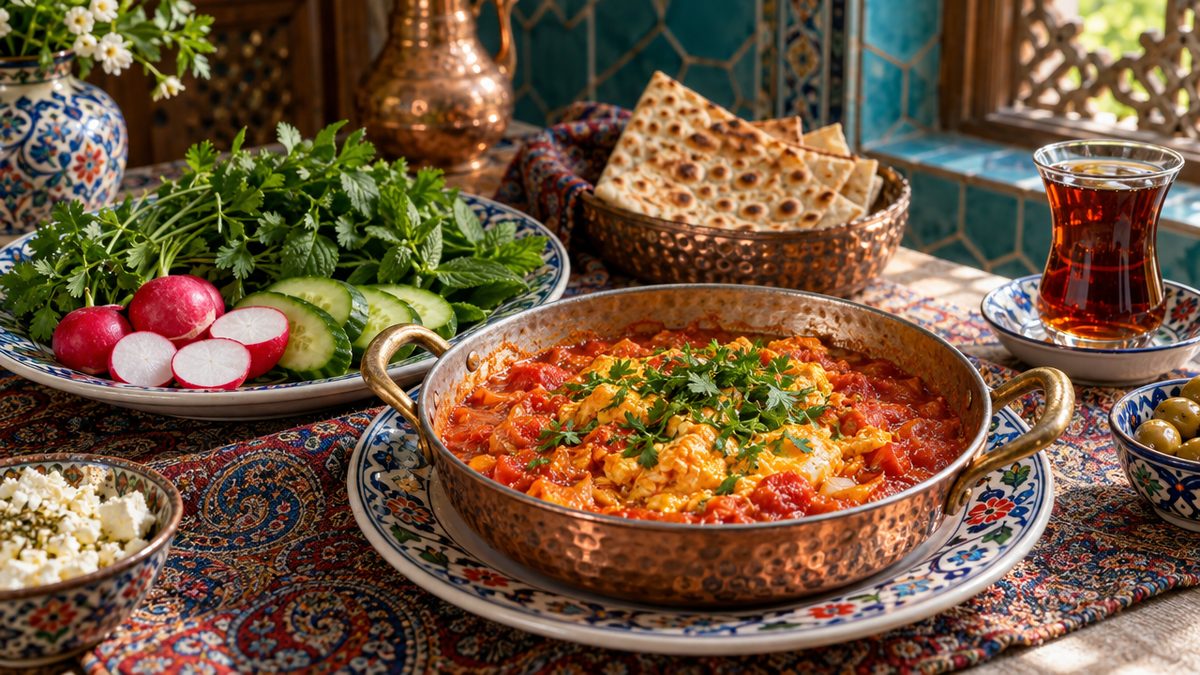
In Iran an “omlet” is not a folded French omelet but a juicy scramble of eggs cooked into a rich tomato, onion and garlic sauce. It is fast, cheap and naturally low in carbs, the dish every Iranian student learns to make first. Serve it in the pan with keto flatbread and fresh herbs.
Per serving: 264 calories · 7.8 g net carbs · 15 g protein · 19 g fat (calculated from the ingredients)
What You’ll Need
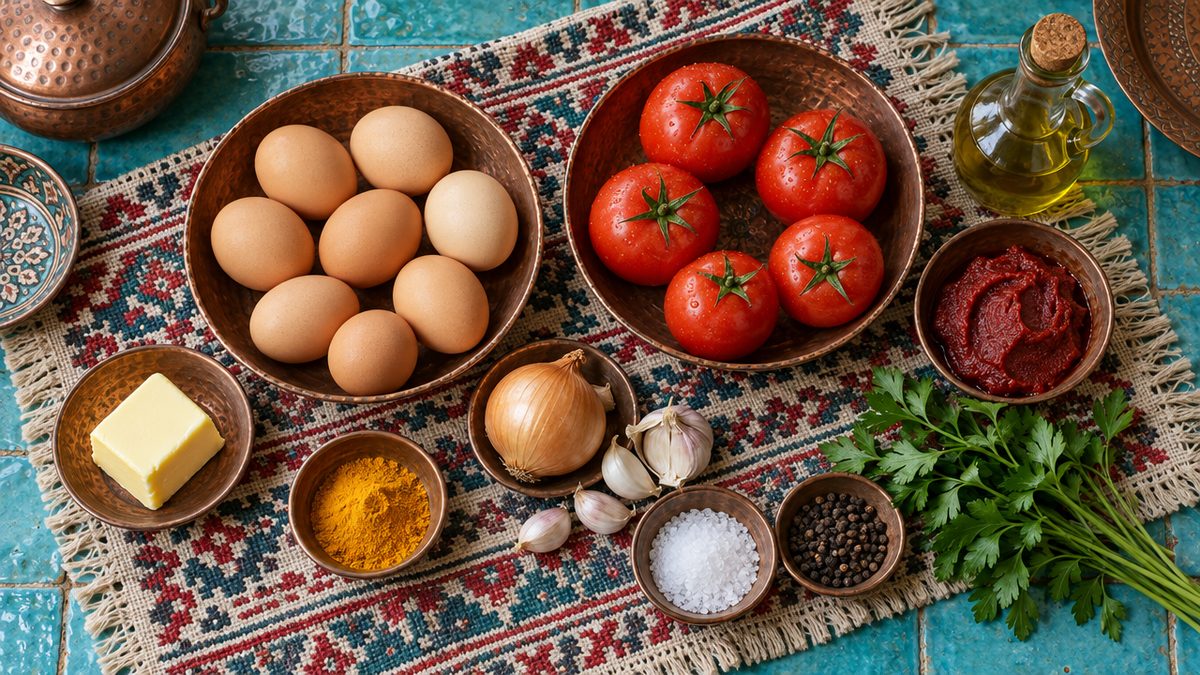
Ingredients
- 2 tablespoons butter
- 1 tablespoon olive oil
- 1 small onion finely chopped
- 2 cloves garlic minced
- 1/2 teaspoon ground turmeric
- 1 tablespoon tomato paste
- 5 ripe medium tomatoes grated or finely chopped, skins discarded
- 8 large eggs
- 1 teaspoon salt
- 1/2 teaspoon black pepper
- 2 tablespoons fresh parsley chopped

Instructions
- Cut the tomatoes in half and grate the cut sides on a box grater into a bowl, discarding the skins.
- Heat the butter and olive oil in a large skillet over medium heat. Add the onion and cook for 5 minutes until soft and translucent.
- Add the garlic and cook for 1 minute. Stir in the turmeric and tomato paste and cook for 1 minute more until the paste darkens slightly.
- Pour in the grated tomatoes and half the salt. Simmer for 10 to 12 minutes, stirring often, until most of the liquid has cooked off and the sauce is thick.
- Lightly beat the eggs with the remaining salt and the pepper. Pour them over the tomato sauce and leave undisturbed for 30 seconds.
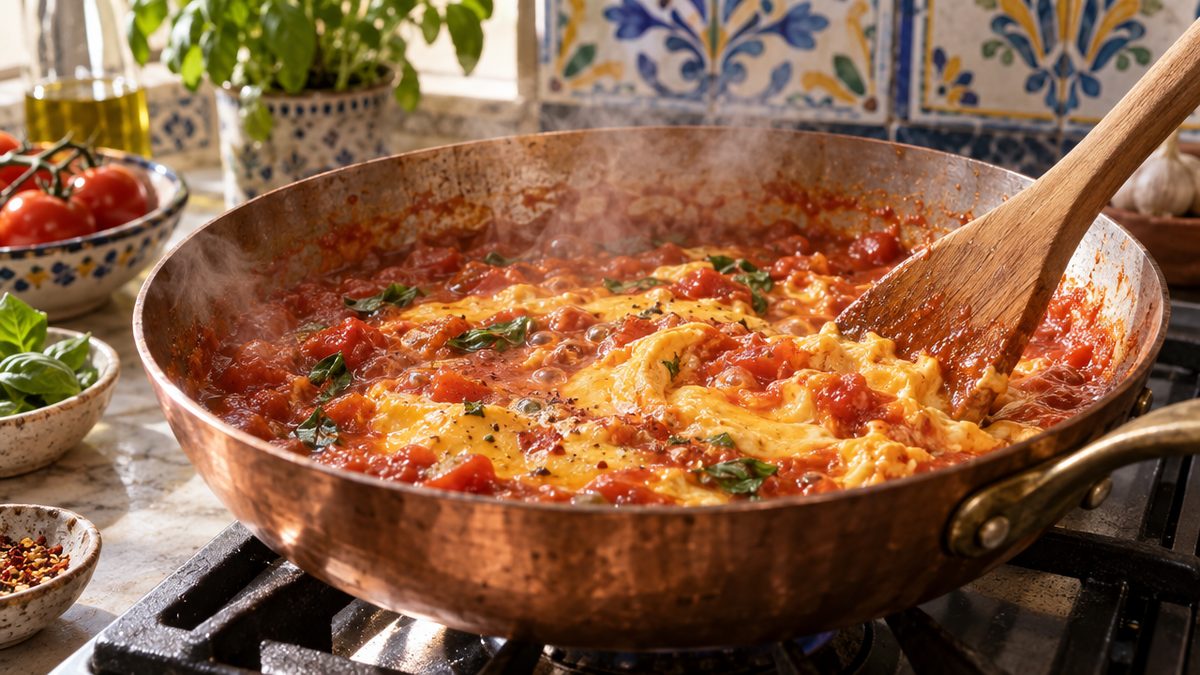
- Gently fold the eggs into the sauce with a spatula for 2 to 3 minutes, until they form soft, large curds that are just set. Do not overcook.
- Sprinkle with parsley and serve hot in the pan with keto flatbread, cucumber and fresh herbs.
Notes
Nutrition
About This Dish
The word omlet comes from the French omelette, but in Iran it describes this soft tomato and egg scramble rather than a folded omelet. It is one of the most common quick meals in the country, eaten for breakfast, lunch or a late supper, and often cooked in a small two-handled pan and set straight on the table. Tomatoes, called gojeh farangi, meaning “foreign plum,” reached Iran in the 19th century and are now essential in everyday cooking. Variations add sliced potato, green pepper or a little cheese. Like most Iranian egg dishes, it is scooped up with flatbread rather than eaten with a fork.
This recipe is from The Ultimate Persian Keto Cookbook by Gisele Costello, Chapter 1: Breakfast (Tabriz Historic Bazaar). See all Persian recipes
FREE · EVERY SUNDAY
Get the free weekly Passport Menu
3 keto dinners from one country each week, with one-tap Instacart ordering. Unsubscribe anytime.